

🌿What is leaf and flower eco-printing?
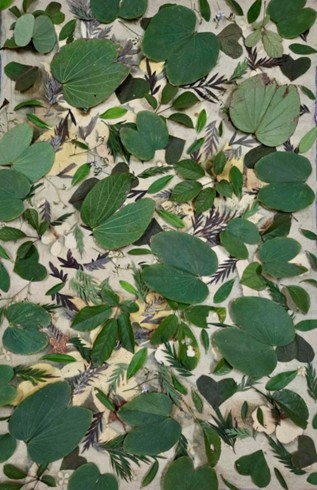
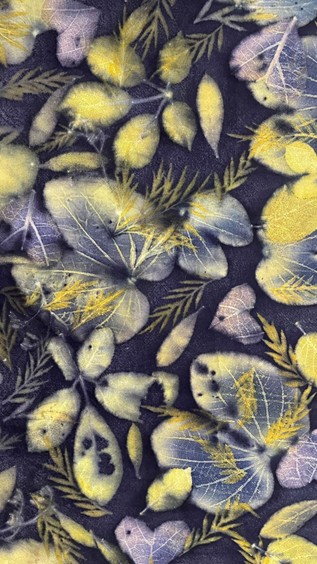
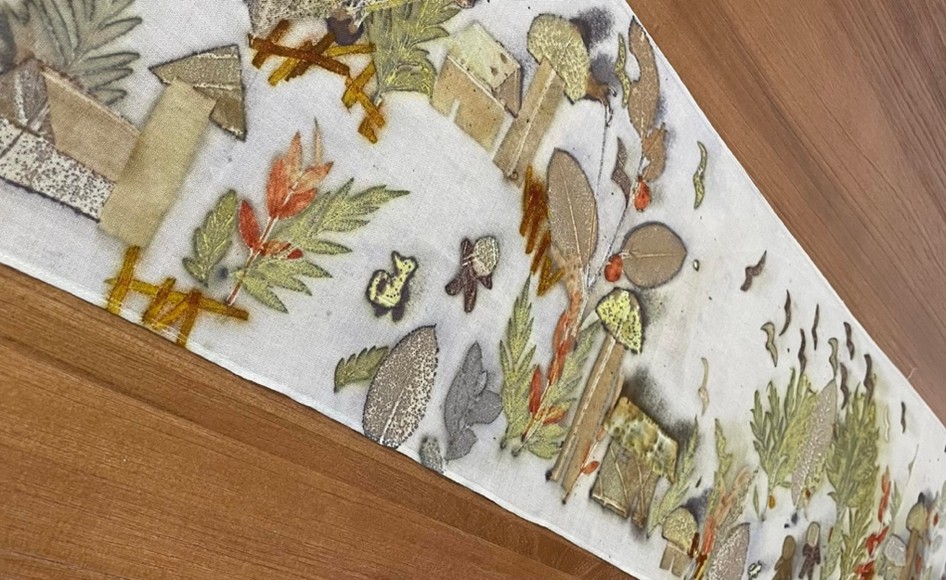
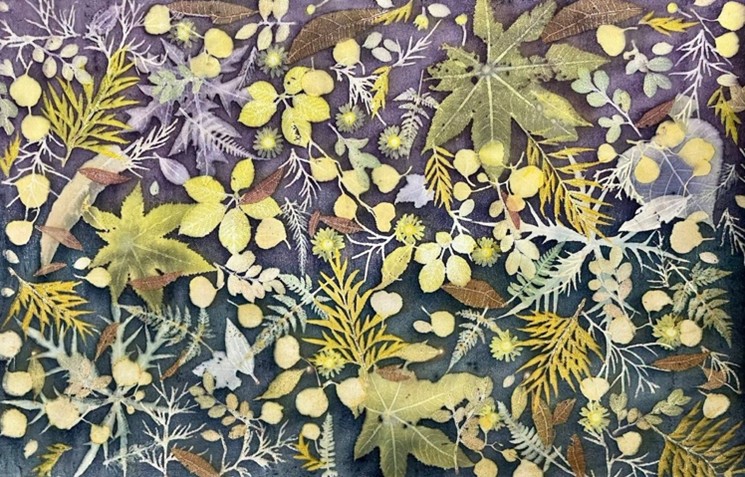
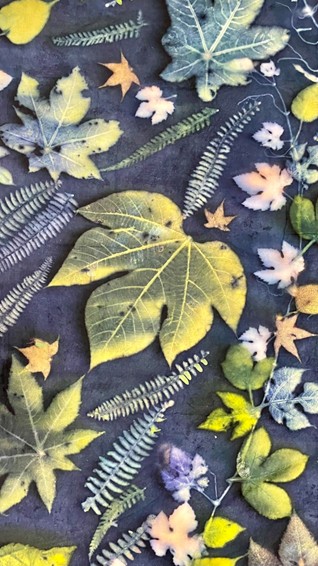
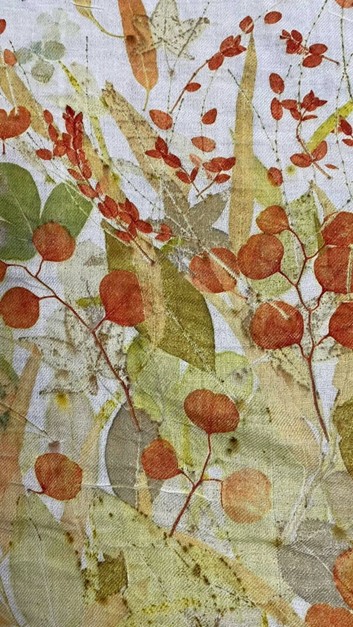
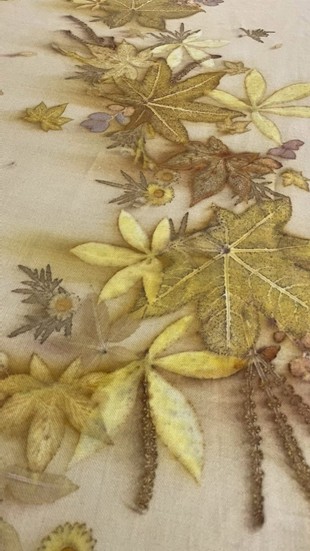
Botanical contact printing—often referred to as “Eco Printing”—is a dyeing technique that creates natural imprints on fabric using the pigments, tannins, shapes, and vein patterns of the plants themselves.
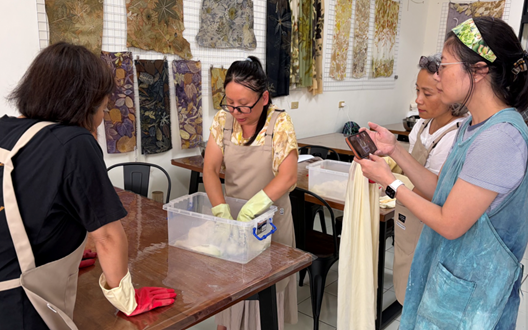
Unlike conventional printing, which relies on the mass reproduction of artificial designs or the simple application of pigment onto fabric, this process involves direct contact between real plants and the textile. Through a combination of mordanting, bundling, steaming, and the passage of time, the plant’s colors and forms are transferred onto the fibers.
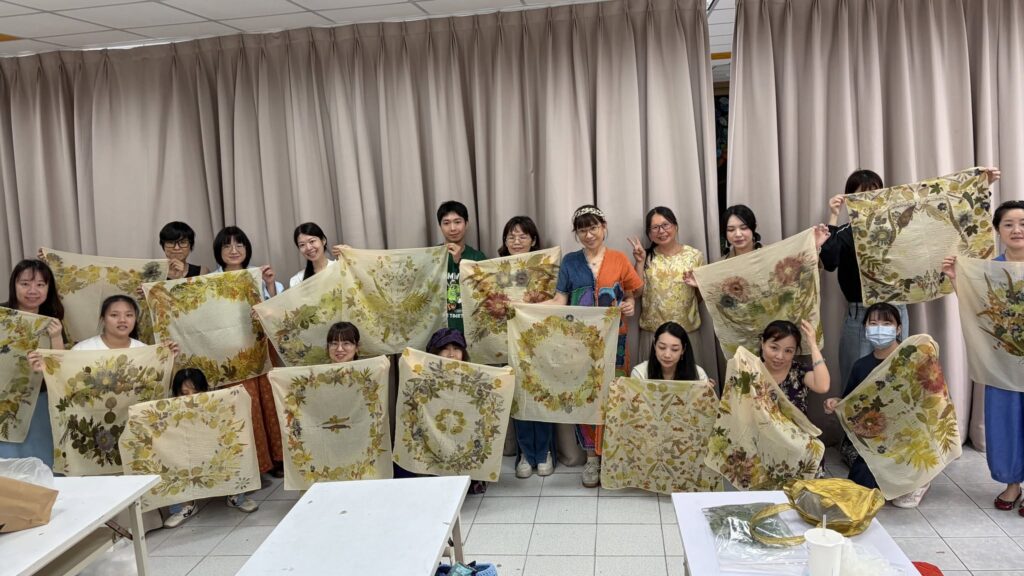
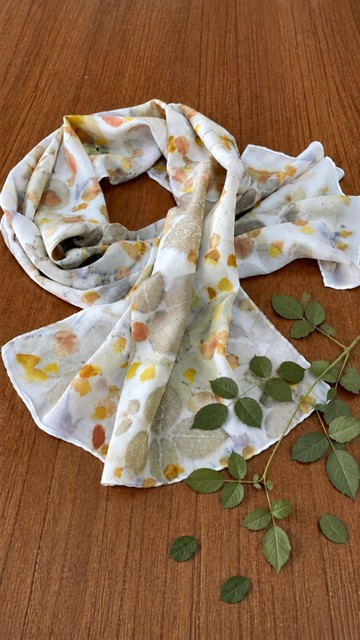
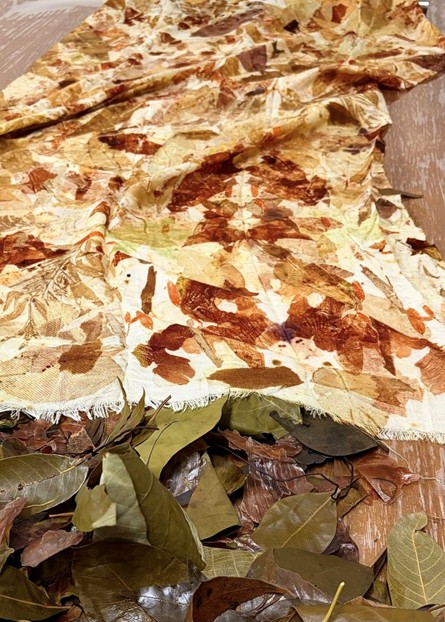
The outcome varies with every leaf, flower, and piece of fabric, influenced by factors such as plant species, the season, fiber material, the mordanting method, humidity, and steaming duration. Consequently, the most captivating aspect of botanical contact printing is that it cannot be perfectly replicated; every single piece is unique.
🌿Why is leaf and flower eco-printing suitable for those new to botanical dyeing?
For beginners, botanical contact printing (eco-printing) is an ideal entry point into the world of plant-based dyeing; it is more intuitive than traditional vat dyeing and allows one to more easily observe the interaction between the plant material and the fabric.
From the very first attempt, you can clearly see the relationship between the arrangement of leaves, the composition, the wrapping technique, and the final result. The moment you unwrap the bundle, the clarity of the leaf veins, the cleanliness of the background, and the depth of the colors provide immediate, tangible feedback for your learning process.
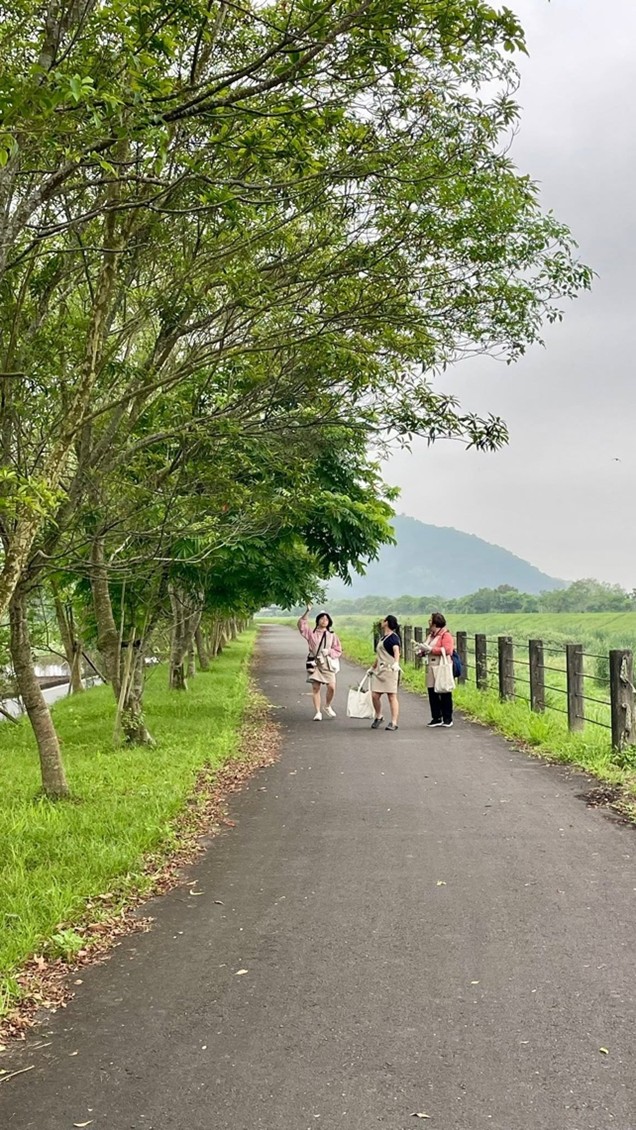
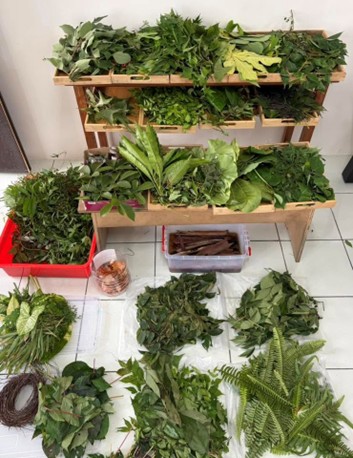
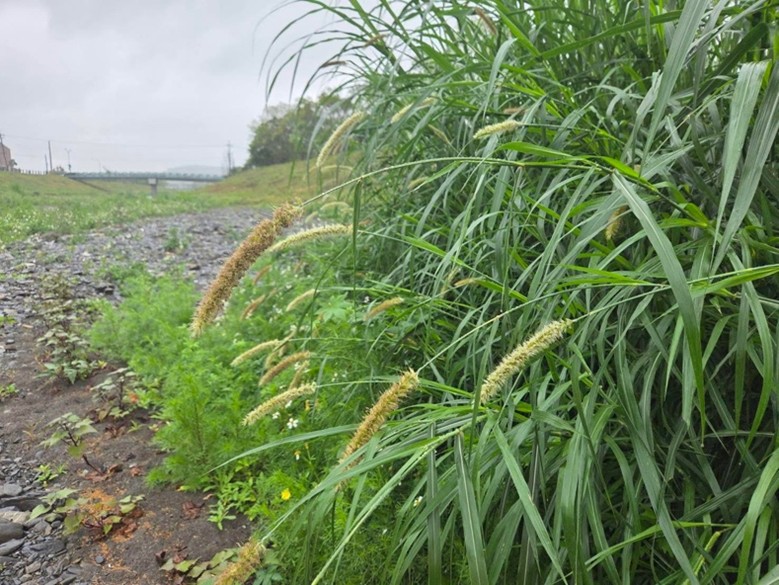
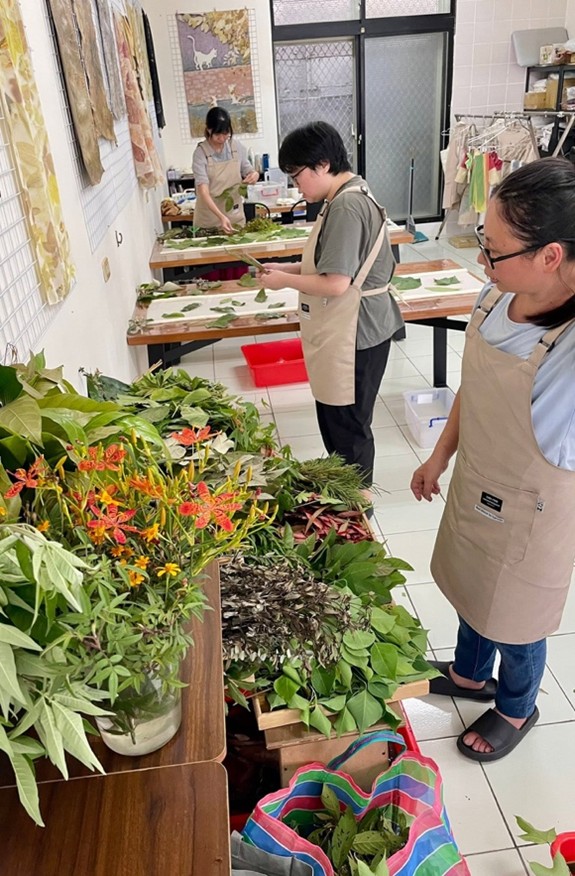
Furthermore, you do not need to travel to remote mountains or specialized botanical gardens to practice this craft. Common plants found in local parks, community green spaces, gardens, or even along the roadside can serve as creative materials. With the right knowledge of plant identification and safe harvesting practices, a wide variety of plants can be used to imprint unique, natural patterns onto fabric.
🌿What is the difference between botanical contact printing (eco-printing) and standard plant-based dyeing?
Conventional botanical dyeing typically involves boiling plant matter to create a dye bath, then immersing the fabric to absorb the color, resulting in an overall dyed effect.
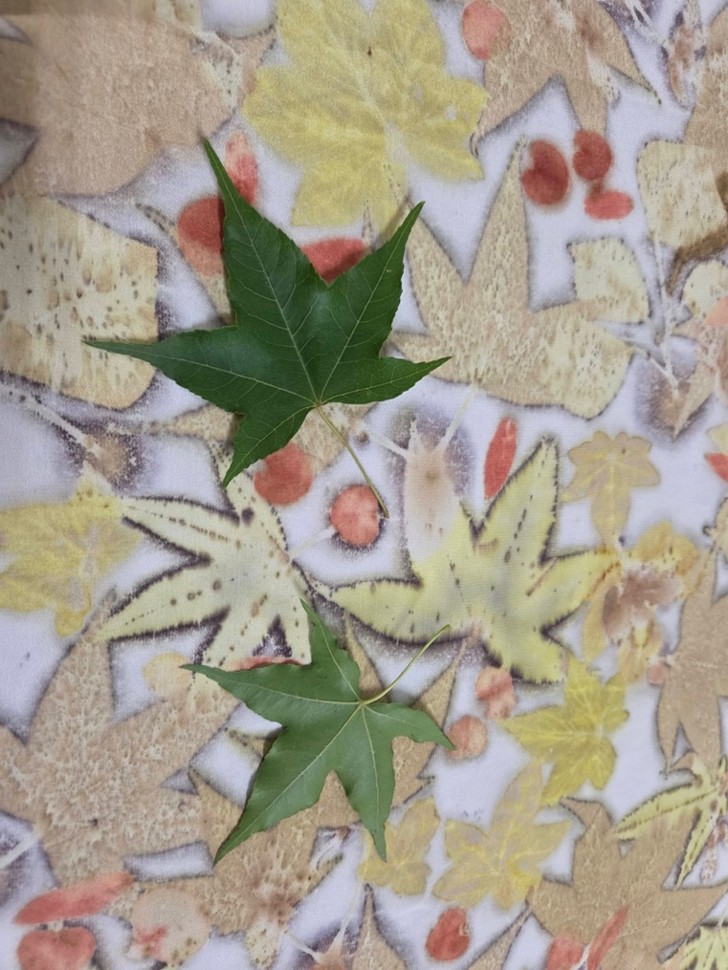
In contrast, botanical contact printing (eco-printing) focuses more on the “shapes” of the plants and the process of direct transfer. Leaves or flowers are placed directly onto the fabric; through a combination of pressure, moisture, mordants, and heat, the plant’s pigments and textures are transferred onto the fabric surface.
Simply put:
Botanical dyeing tends to focus on “creating an overall color.”
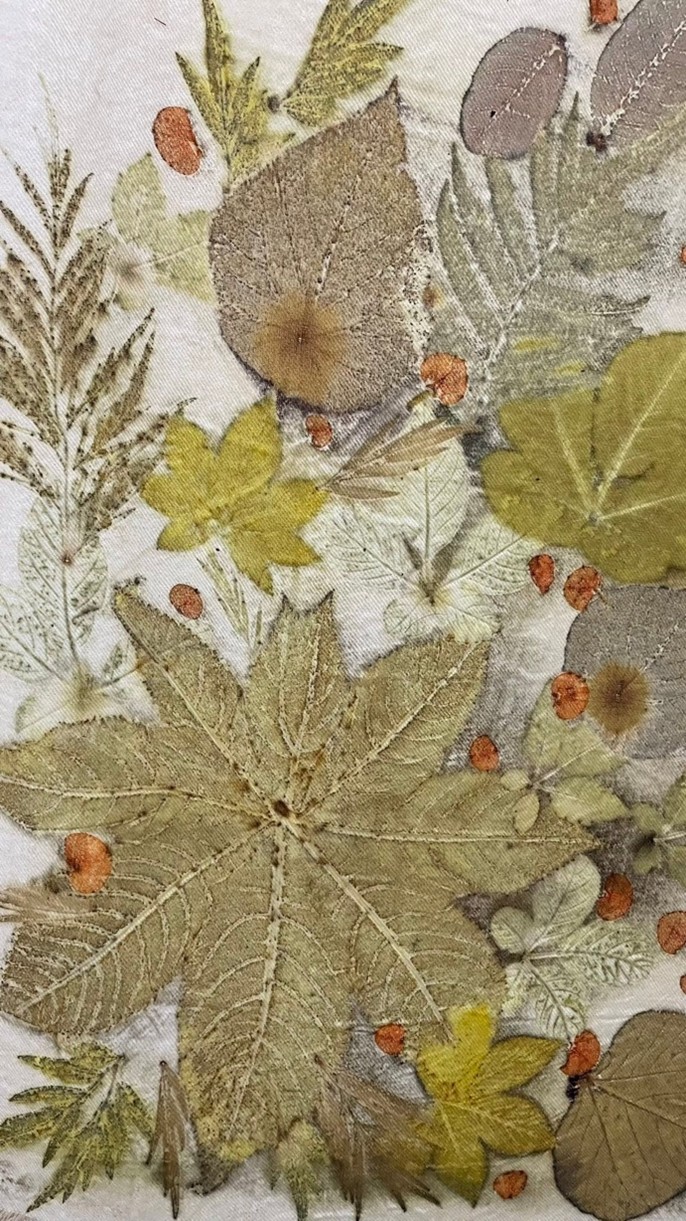
Botanical contact printing tends to focus on “capturing the plant’s shape, veins, and natural textures.” Therefore, botanical contact printing is not merely about dyeing; it also encompasses composition, the arrangement of elements on the fabric, plant selection, and visual design.
🌿Which fabrics are suitable for beginners?
If you are trying botanical contact printing (eco-printing) for the first time, it is recommended to start with natural fibers—such as cotton, linen, silk, or wool—as they react more readily with plant pigments than synthetic fibers do.
Among these, animal fibers like silk and wool tend to capture botanical details and color nuances more easily; conversely, plant-based fibers like cotton and linen require greater attention to pre-treatment, mordanting, and fiber preparation to ensure color stability.
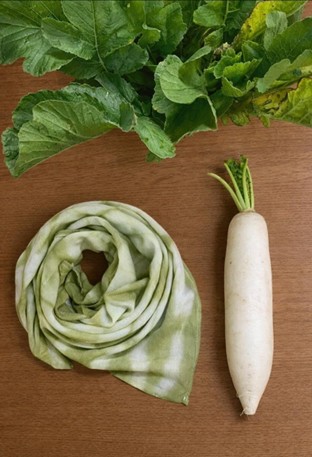
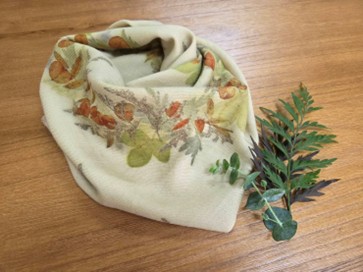
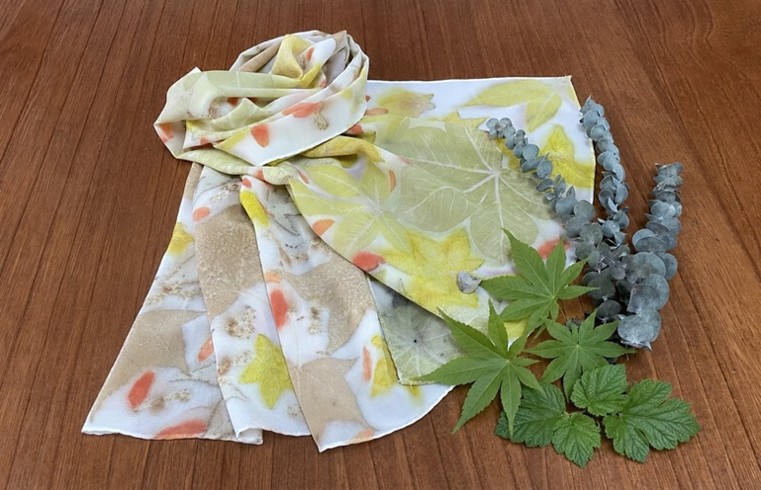
For absolute beginners, it is advisable to start with smaller items, such as small square cloths, silk scarves, drawstring bags, tote bags, or fabric test swatches. Smaller projects are easier to manage and allow you to gain experience observing the interactions between plants, mordants, and steaming conditions.
🌿Common plant materials worth trying
Botanical contact printing (eco-printing) typically utilizes leaves, petals, twigs, bark, or plant materials rich in tannins. Different plants yield varying results; some leaves readily leave behind distinct vein patterns, while others are better suited for creating background hues or subtle, faint impressions.
Beginners might consider the following points:
Leaves with prominent veins usually produce clearer, more defined shapes.
Plant materials with high tannin content often yield more pronounced color reactions after the mordanting process.
Fresh leaves and fallen leaves produce different effects, and the season also influences how plant pigments manifest.
Although flowers may be brightly colored, they do not always transfer their color reliably, so testing is required. It is important to note that not all visually appealing plants are suitable for dyeing. Some beautiful flowers may fade, turn gray, or leave almost no trace after steaming or boiling, whereas some unassuming leaves can produce remarkably clear vein patterns.
🌿The basic process of botanical contact printing and dyeing
Botanical contact printing may seem simple, but many details truly influence the outcome. Below is the basic process for beginners to understand.
1. Fabric Cleaning and Pre-treatment
Fabrics must be cleaned prior to dyeing to remove sizing agents, oils, or processing residues. If the fabric is not thoroughly cleaned, plant pigments may fail to adhere evenly, potentially resulting in unstable colors or a mottled appearance in the finished product.
2. Mordanting
Mordanting is a crucial step in botanical contact printing. It facilitates the bonding of plant pigments to the fibers and influences the final color depth, stability, and the clarity of the leaf vein details.
Variations in mordants, concentrations, and fabric types can all yield different results. Therefore, there is no fixed formula for mordanting; instead, one must establish a reliable method through systematic testing and careful record-keeping.
3. Plant Arrangement and Composition
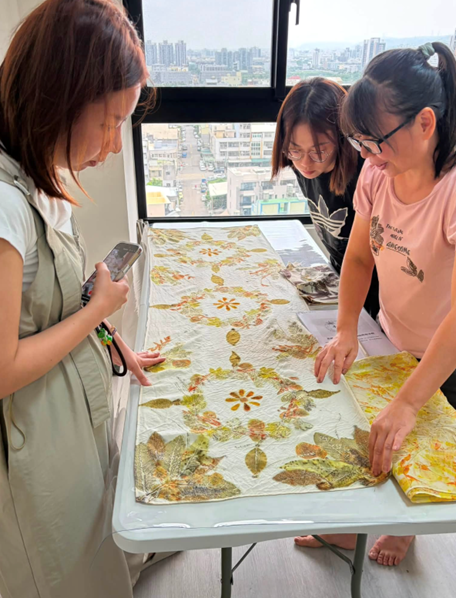
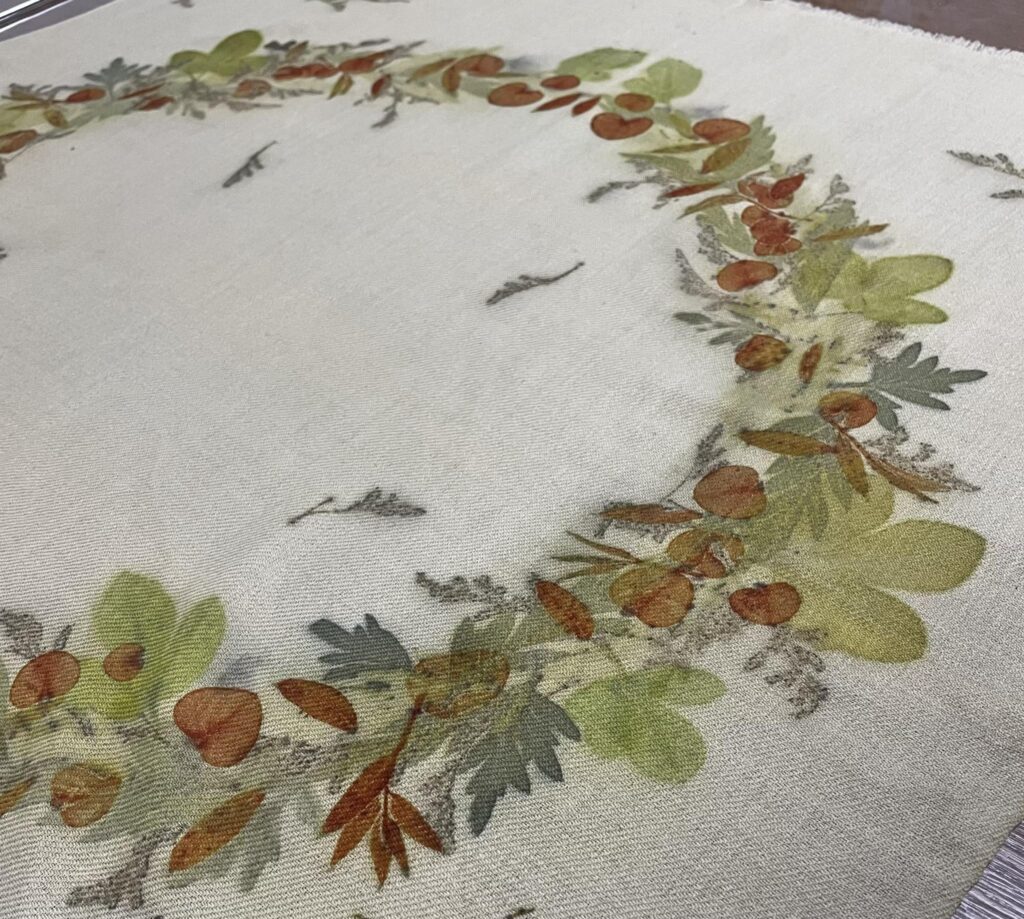
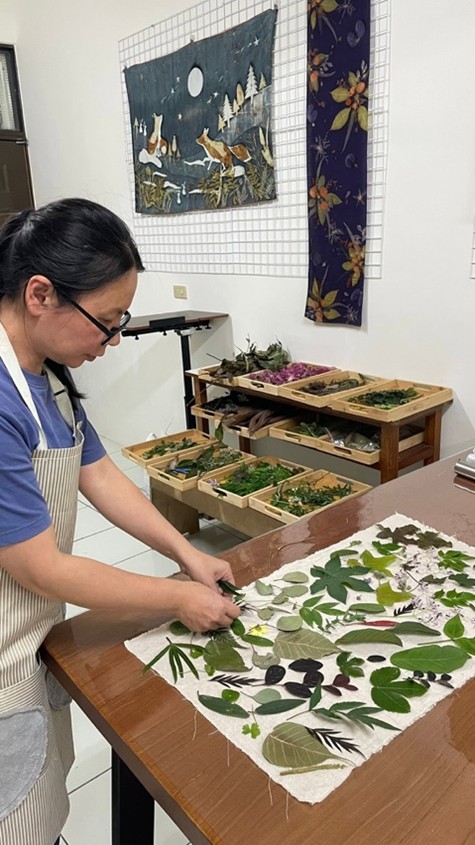
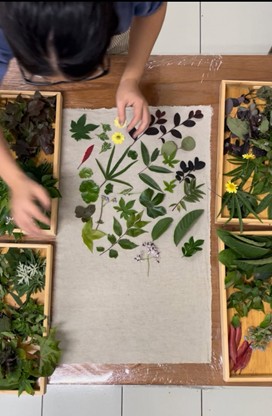
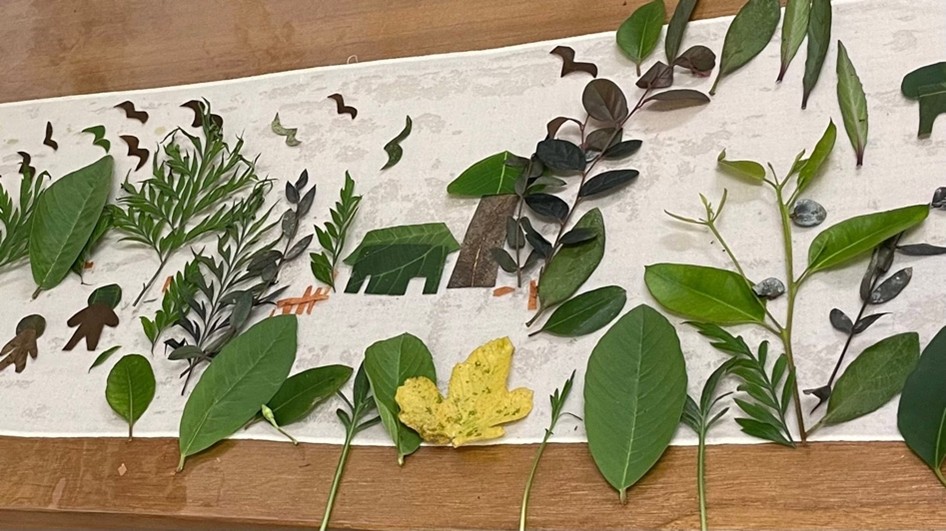
Placing leaves, flowers, or other botanical materials onto the fabric is the most creative step in botanical contact printing. You can opt for an all-over pattern, a localized composition, a border design, mirror symmetry, or a layout with ample negative space.
Beginners are advised not to use too many plants at the start, as the design can easily become cluttered, making it difficult to discern the specific effect produced by each type of plant. It is recommended to begin with a small number of plants and observe how each type of foliage behaves.
4. Rolling and Binding
Once the plants are arranged, the fabric is typically rolled up, wrapped, and bound tightly. The tightness of the binding affects the degree of contact between the plants and the fabric; if it is too loose, the imprint may lack clarity, whereas if it is too tight, it may cause localized pressure marks or areas of excessively heavy color.
5. Steaming and Waiting
Steaming is a crucial process that allows plant pigments to react with the fabric. Factors such as temperature, duration, humidity, and the condition of the fabric all influence the outcome. Once steaming is complete, some pieces can be unwrapped immediately for inspection, while others benefit from a waiting period before washing to allow the colors to stabilize.
6. Washing, Drying, and Observing Color Fixation
Once the process is complete, the fabric requires proper washing and drying. The color immediately after unbundling may differ from the color after drying; some plant-based colors may fade, while others may deepen or become more muted. This is why documenting the process is essential in botanical contact printing.
🌿The most common issues beginners face with the basic process of pad printing
Indistinct Leaf Veins
Indistinct leaf veins may result from factors such as the plant species, fabric preparation, the mordanting process, humidity levels, the pressure applied during wrapping, and the steaming duration. Beginners often assume that simply placing the leaves on the fabric guarantees success; however, achieving clear prints requires sufficient contact between the plant and the fabric, as well as appropriate mordanting conditions.
Indistinct Leaf Veins
Indistinct leaf veins may result from factors such as the plant species, fabric preparation, the mordanting process, humidity levels, the pressure applied during wrapping, and the steaming duration. Beginners often assume that simply placing the leaves on the fabric guarantees success; however, achieving clear prints requires sufficient contact between the plant and the fabric, as well as appropriate mordanting conditions.
Color Instability
Plant-based dyeing is inherently influenced by factors such as the season, the condition of the plants, water quality, temperature, the type of fiber, and the mordanting process. To improve color stability, the most important step is to maintain detailed records—documenting details such as the plant species, time of harvest, fabric material, mordanting method, steaming or boiling time, and the final result.
The finished product differs from what was imagined.
This is a perfectly normal part of the botanical contact printing process. Plant-based dyeing is not a fully controllable industrial printing method, but rather a craft that involves collaborating with nature. Every instance that falls short of expectations can serve as a basis for adjustments next time.
🌿Are there safety precautions to consider for botanical contact printing and dyeing?
Yes, precautions are necessary. Although botanical contact printing (eco-printing) utilizes plants and natural fibers, this does not mean the materials are entirely risk-free.
When gathering plants, avoid using those of unknown origin, as well as toxic, irritating, or contaminated varieties. It is not recommended to use plants from roadsides treated with pesticides, areas with heavy traffic, or public spaces where harvesting is prohibited. When handling mordants, be aware of the material properties, avoid direct contact with the eyes, mouth, and nose, and ensure proper ventilation. Exercise caution regarding the risk of burns when using pots, steamers, and hot water. Safety protocols should be established in advance, especially for educational settings or parent-child activities.
🌿How do I care for botanical eco-print artworks?
Botanical eco-print dyed items are handcrafted; gentle care is recommended.
For the first wash, use a neutral detergent and hand-wash gently, avoiding prolonged soaking. Air-dry in the shade and avoid extended exposure to direct sunlight, as natural dyes may gradually fade under intense sun. For silk scarves, garments, or delicate fabric items, wash separately to avoid color transfer from dark-colored clothing. When ironing, use a low heat setting with a pressing cloth placed between the iron and the item to minimize damage to the fibers and the dyed surface.
🌿如何保養第一次學花葉移印染,建議怎麼開始?
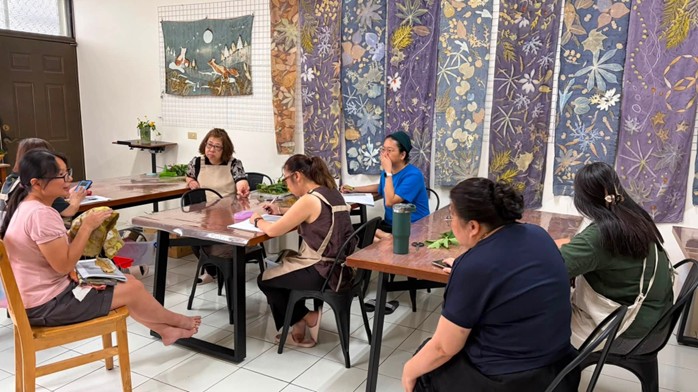
If you simply want to get a taste of the craft, you might start with a one-day workshop to experience the joy of arranging the botanicals, steaming the bundle, and the excitement of the big reveal.
However, if you aim for consistent results—or even aspire to create your own designs, teach others, or produce goods for sale in the future—it is best to begin with a systematic foundational course. This is because the true essence of botanical contact printing lies not merely in “imprinting leaves,” but in understanding the interplay between fibers, mordants, dyeing materials, steaming conditions, and composition.
When starting out, focus on practicing three things:
First, learn to observe the plants.
Second, learn to document the conditions used for each project.
Third, learn to embrace natural variations and adjust your methods based on those changes.
🌿The Allure of Botanical Contact Printing and Dyeing
The most captivating aspect of botanical contact printing is that it preserves the traces of a plant’s past existence.
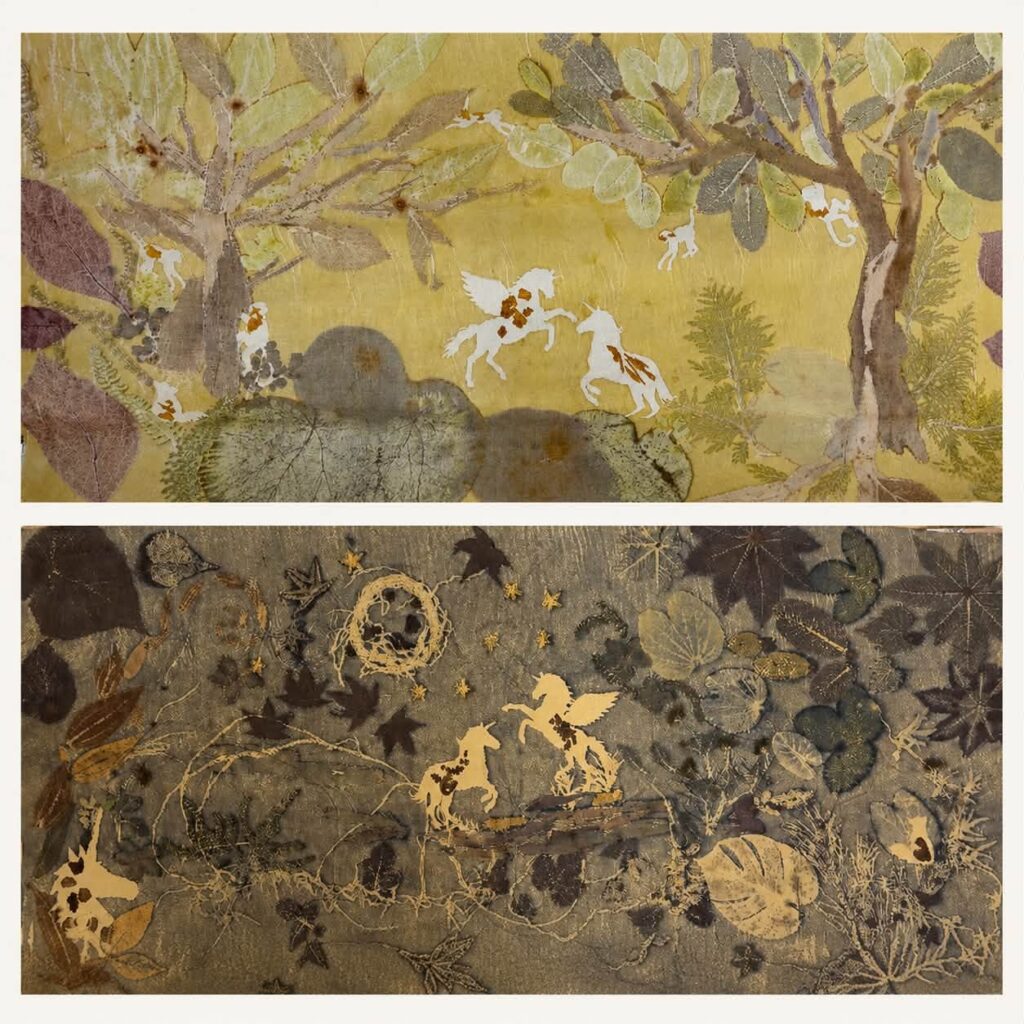
A leaf leaves behind more than just its shape on the fabric; it captures the season of its growth, the reaction of its fibers, the duration of the steaming process, and the creator’s own artistic choices. Unlike mass-produced prints where every item is identical, this process serves as a record of a collaboration between nature and the human hand. For those new to botanical dyeing, this technique offers a fresh perspective on the plants surrounding us in our daily lives—transforming leaves that might otherwise go unnoticed by the roadside, in parks, or in gardens into enduring textures and colors.
🌿結語:從一片葉子開始,走進植物染的世界
Botanical contact printing (eco-printing) is a craft that demands observation, experimentation, and patience. It embodies both science and art, balancing technical consistency with the unpredictable beauty of nature. When first starting out, there is no need to rush in pursuit of a flawless result; simply begin with a small piece of fabric, a single leaf, and a steaming pot, and observe how the plant leaves its mark on the cloth. As you come to understand the interplay between fabric, plant matter, and mordants, you will discover that this process is more than just dyeing—it is a way of rediscovering nature.
If you are interested in exploring plant-based dyeing, botanical contact printing makes for an ideal entry point. By working with leaves found in your everyday surroundings, you can unlock a creative world rich in natural textures, the warmth of handmade craftsmanship, and unique aesthetic beauty.
Further Reading: Introduction to the “Fundamentals I: Practical Pad Printing” Course ↗