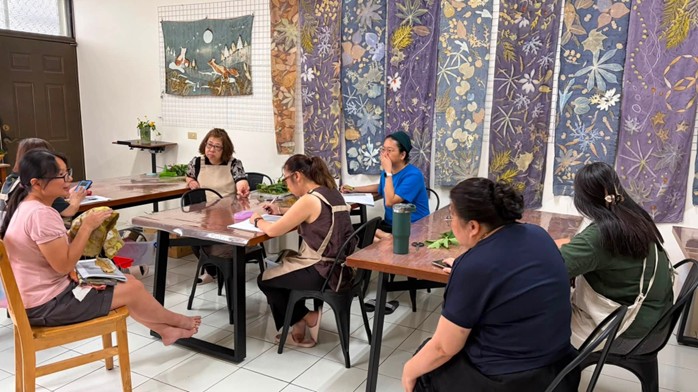


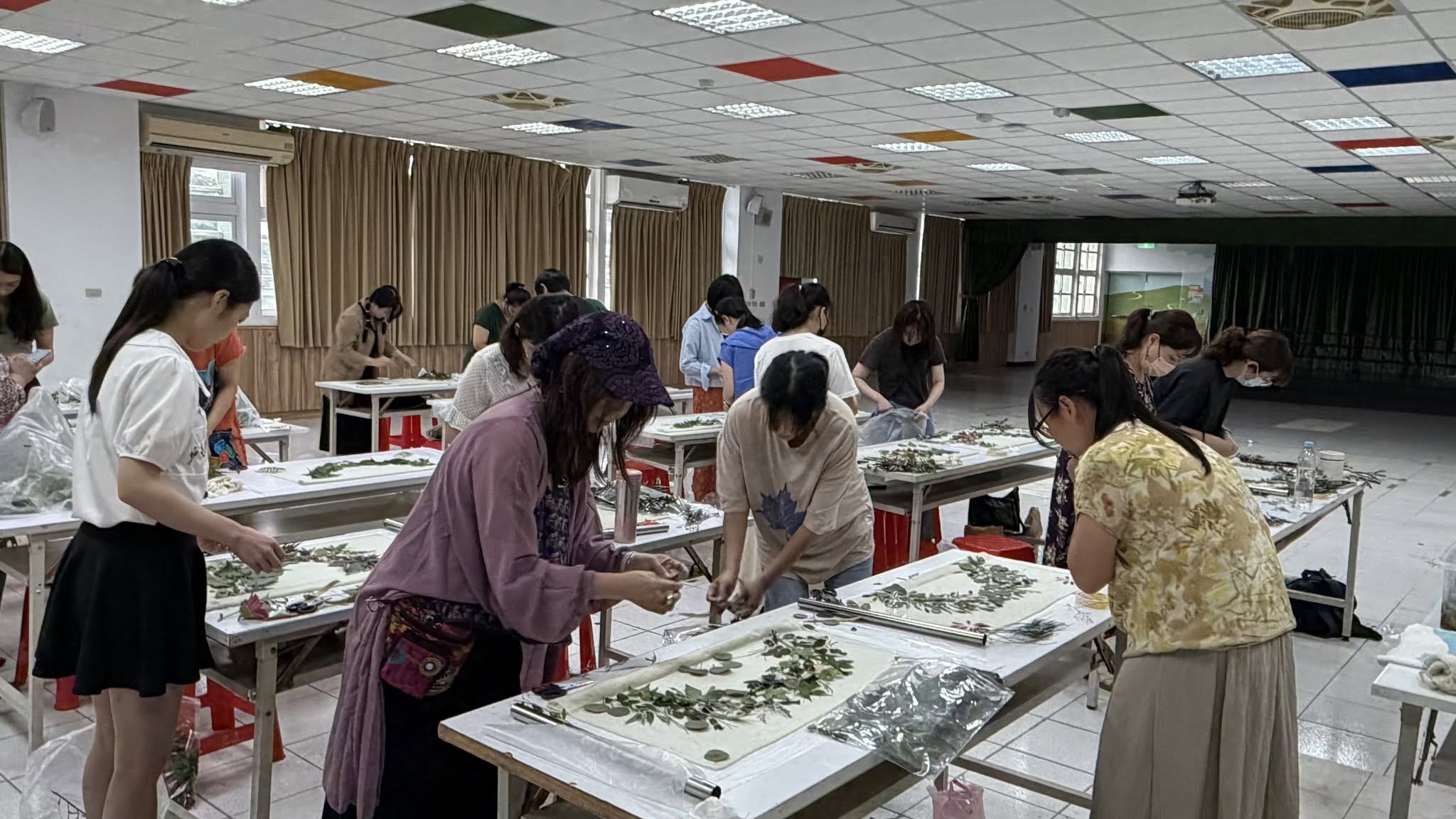
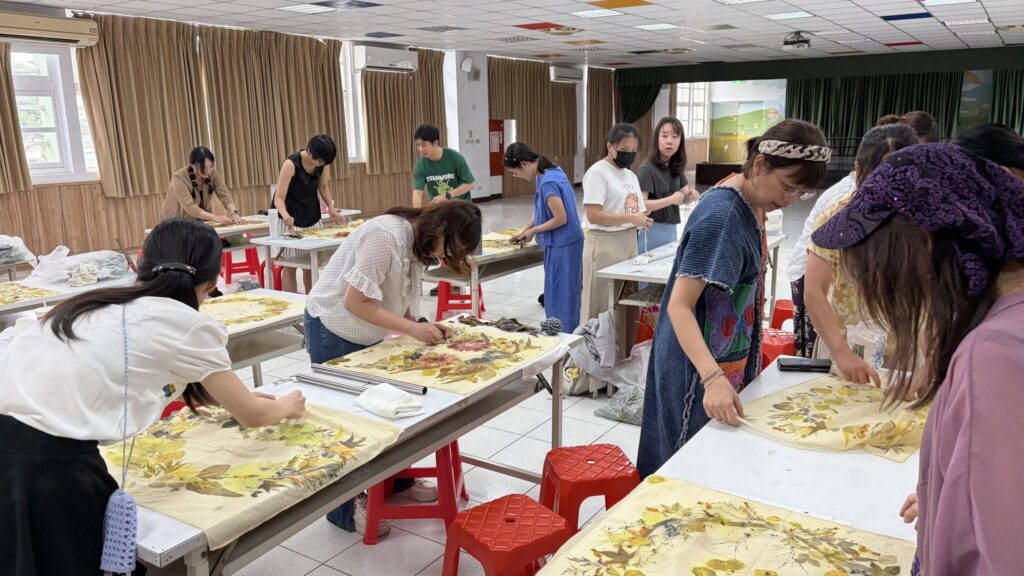
I was invited to the New Taipei City Arts Education Deep Cultivation Association to conduct a group workshop on mirror design for wool square scarves using plant transfer dyeing at Sanchong Wuhua Elementary School.
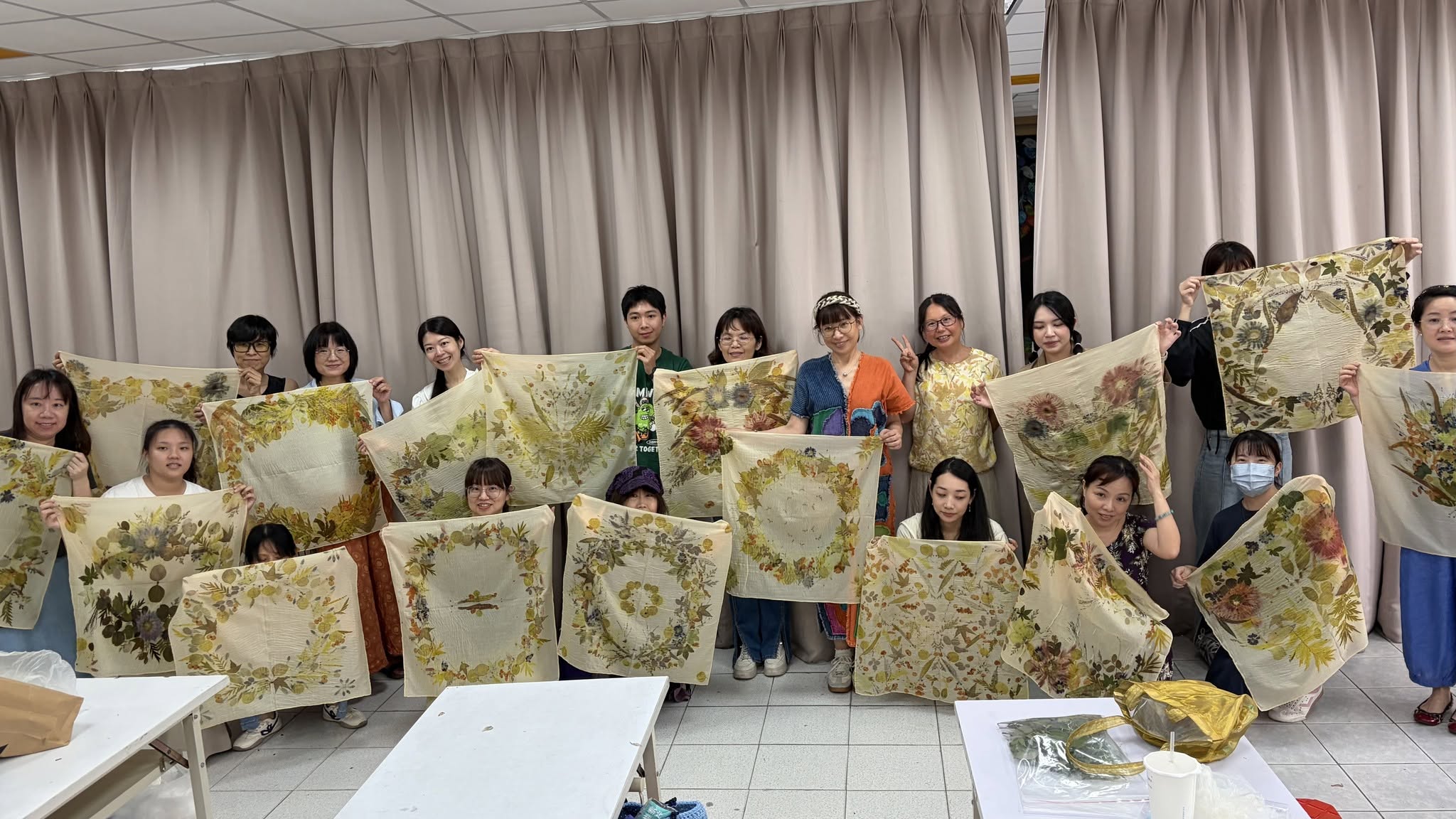
The workshop used wool square scarves as the creative medium, guiding participants from selecting plant materials, observing leaf shapes, arranging compositions, to finally completing their own mirror design works. Each piece, when unfolded, had a different expression and visual appeal; it was truly beautiful.
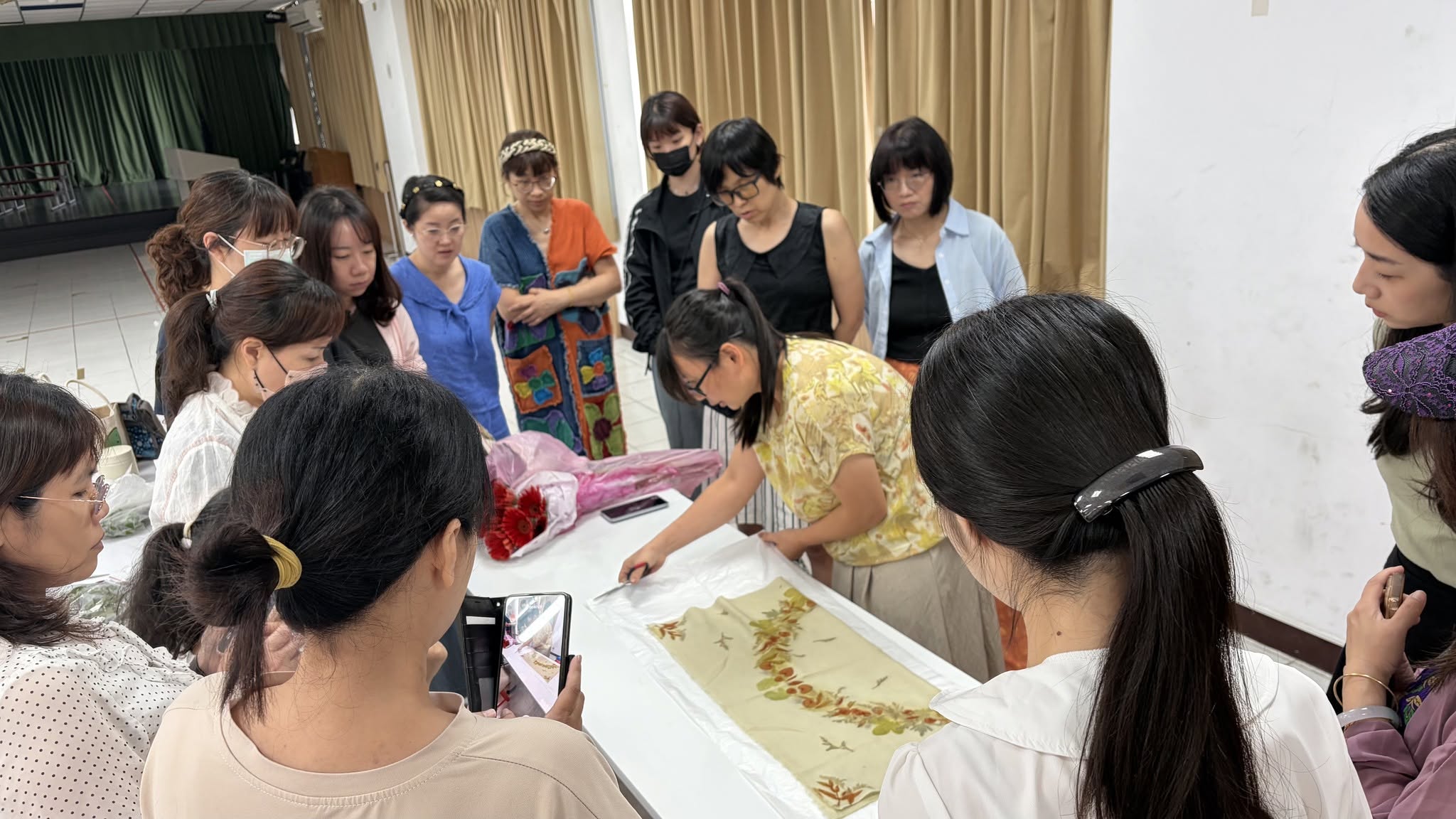
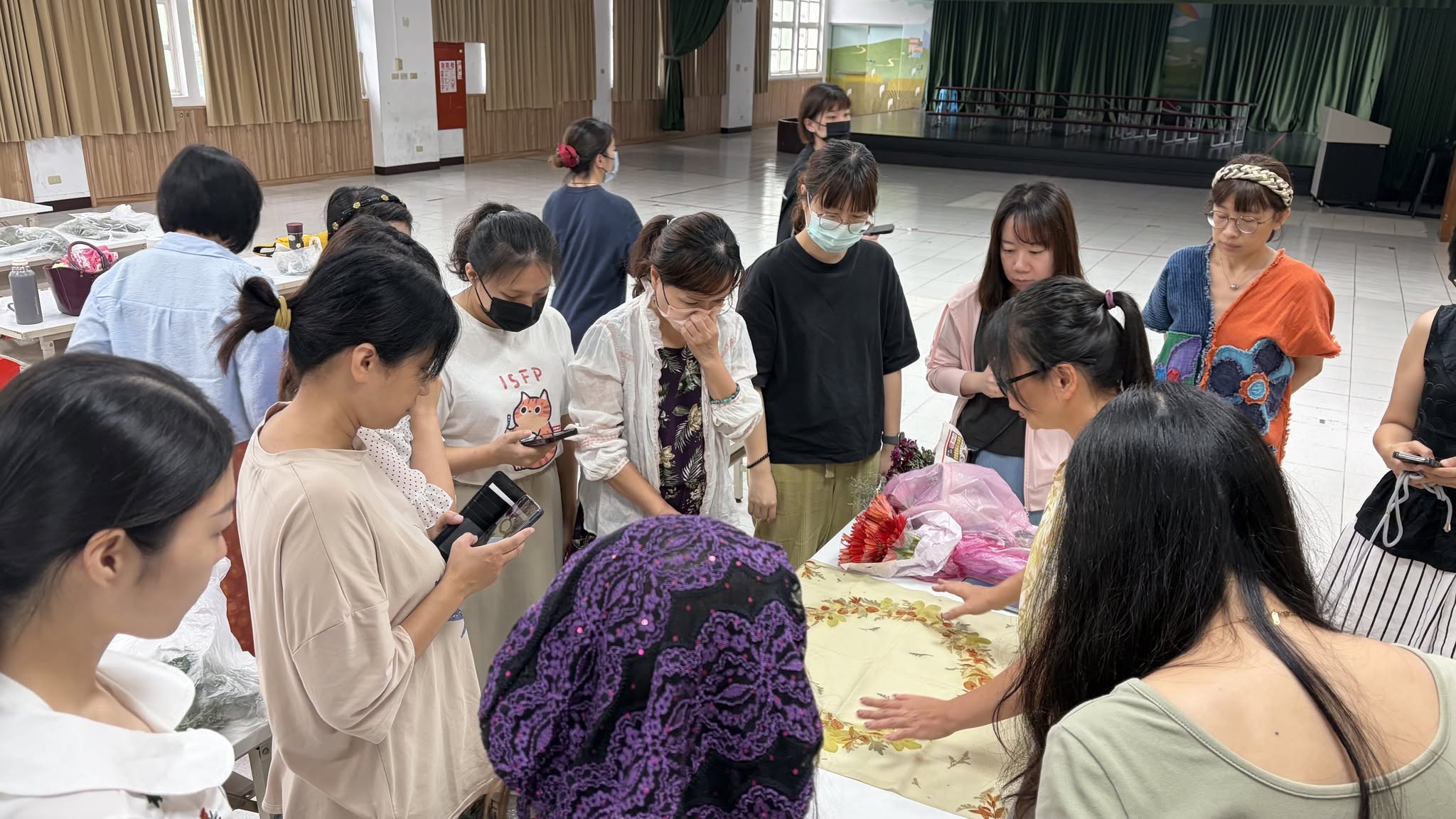
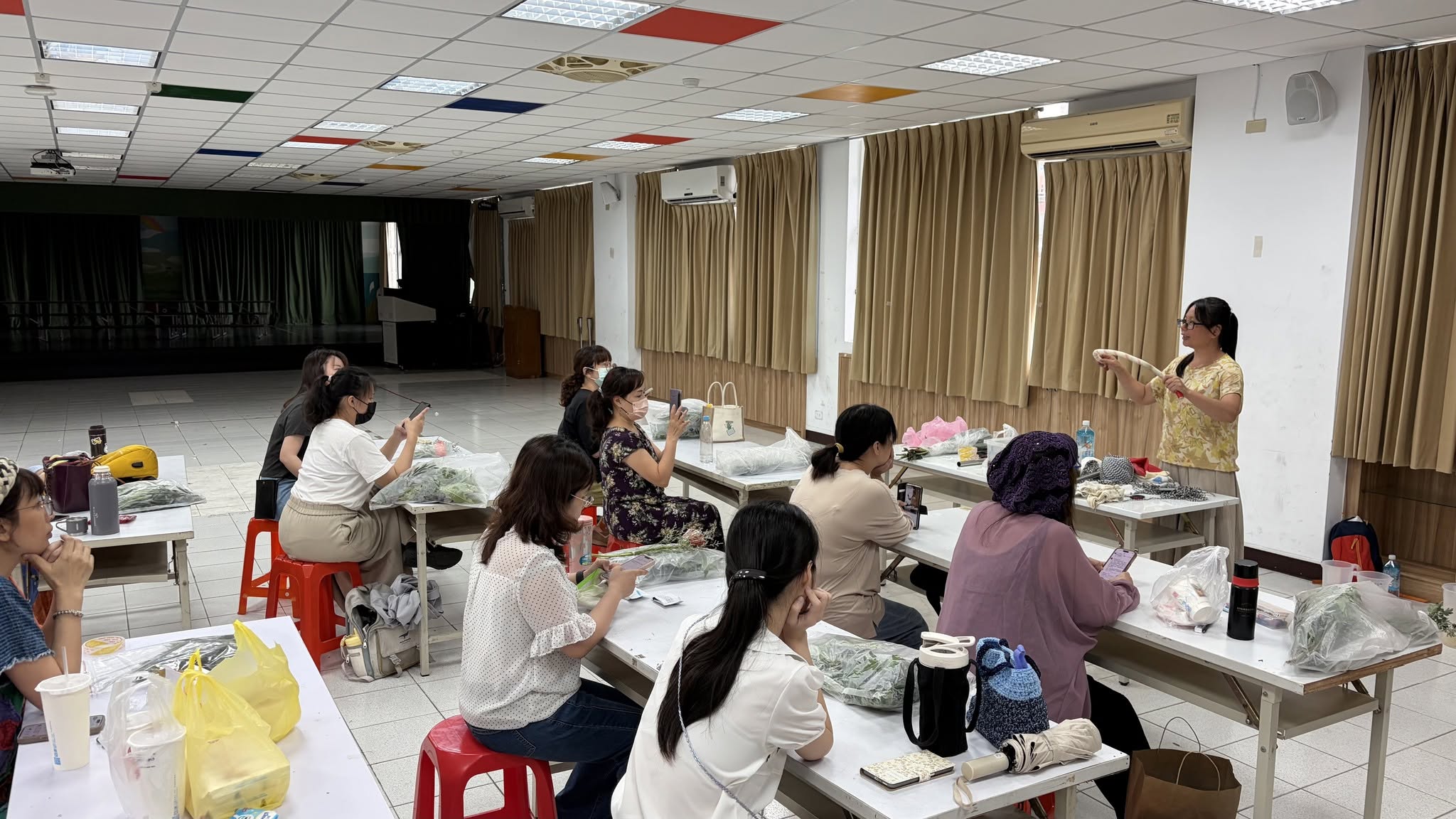
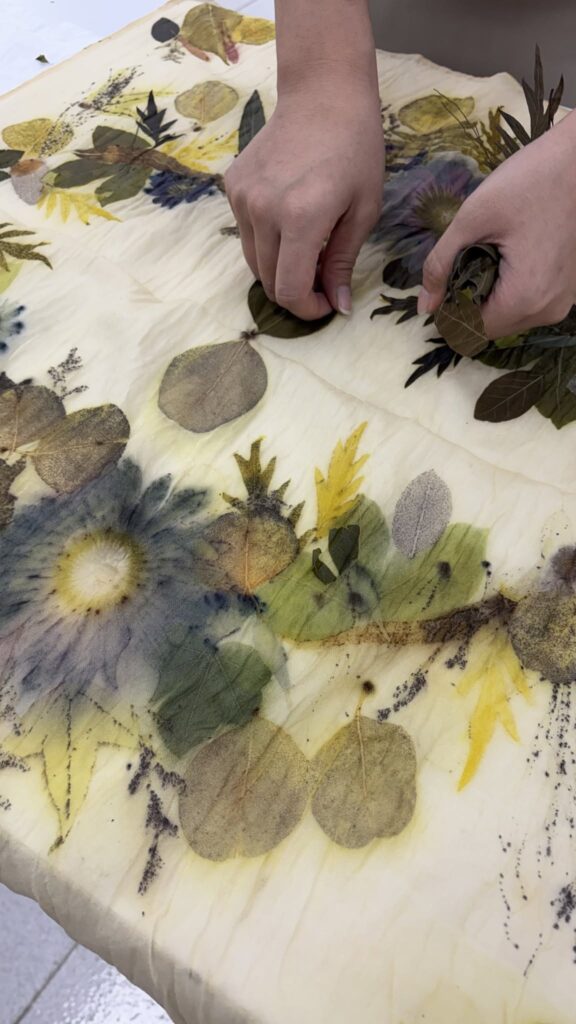
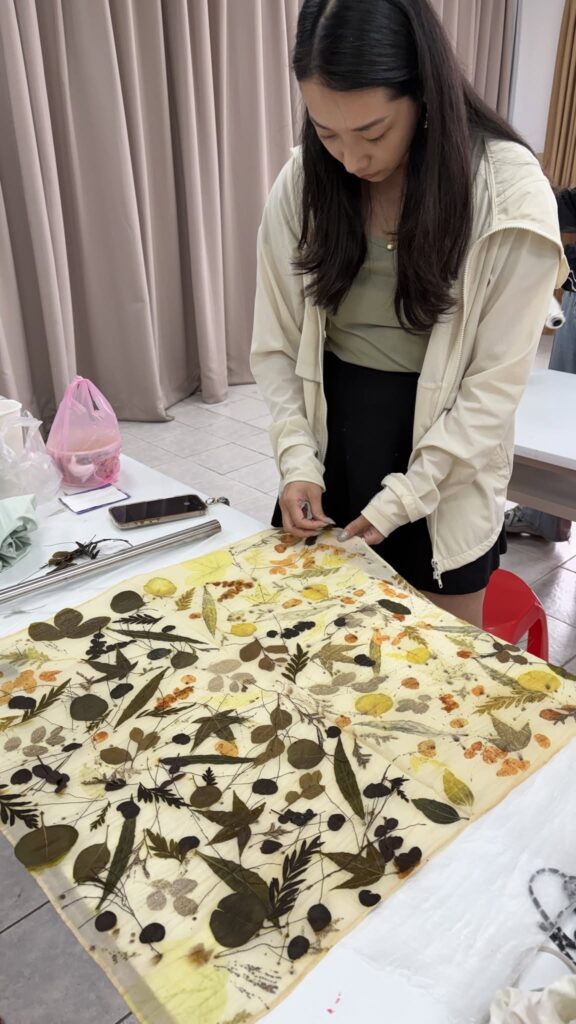
Starting with leaf selection, gradually build your own composition.
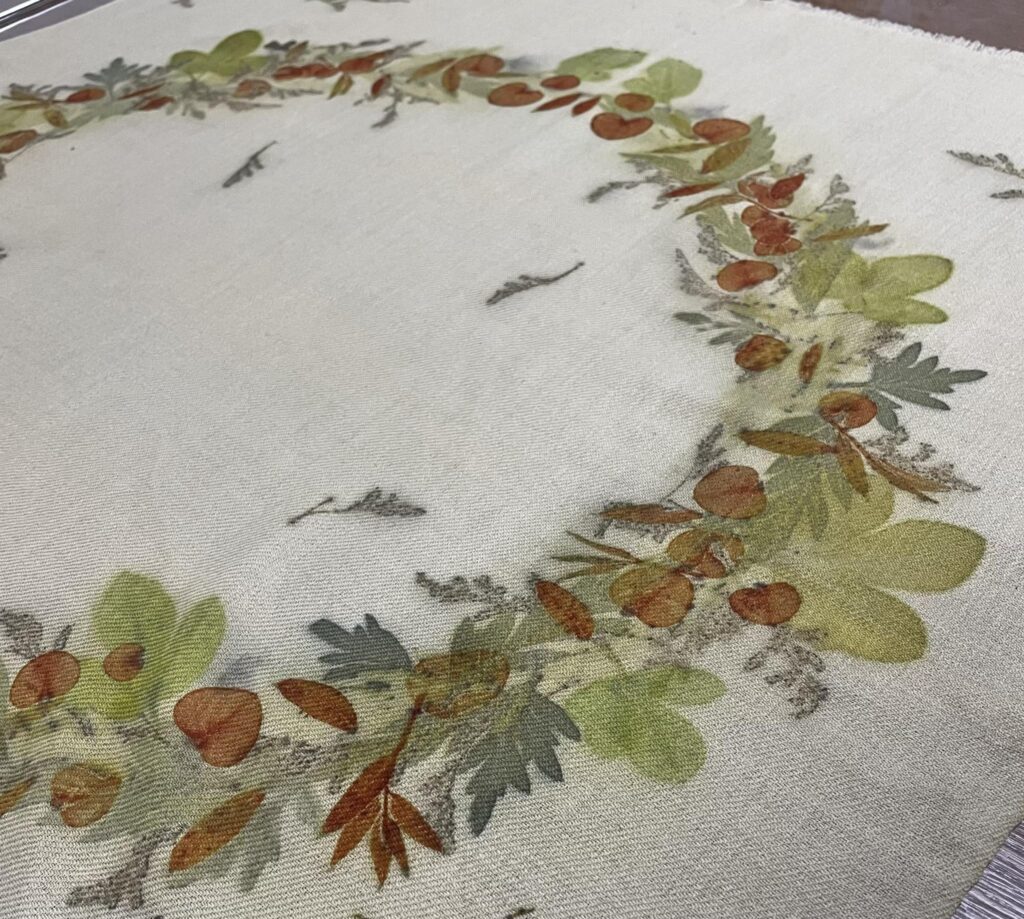
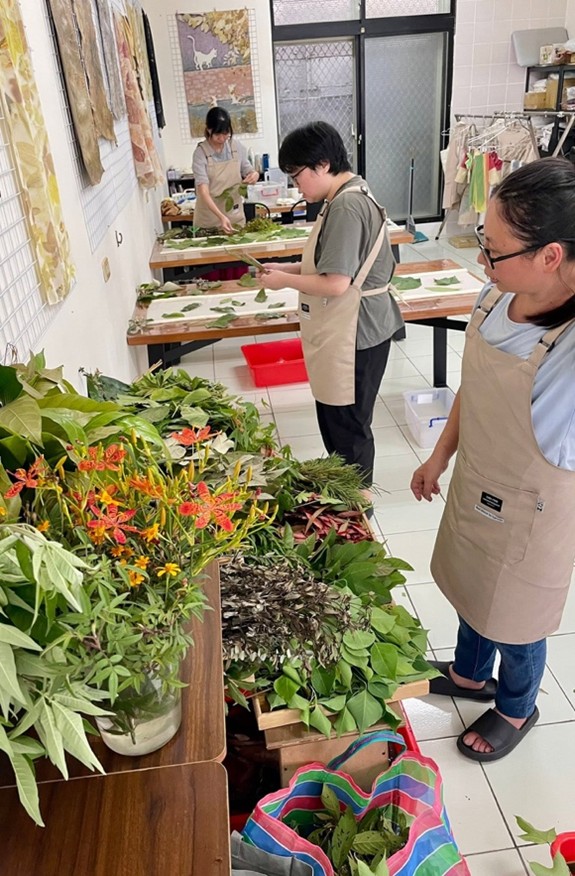
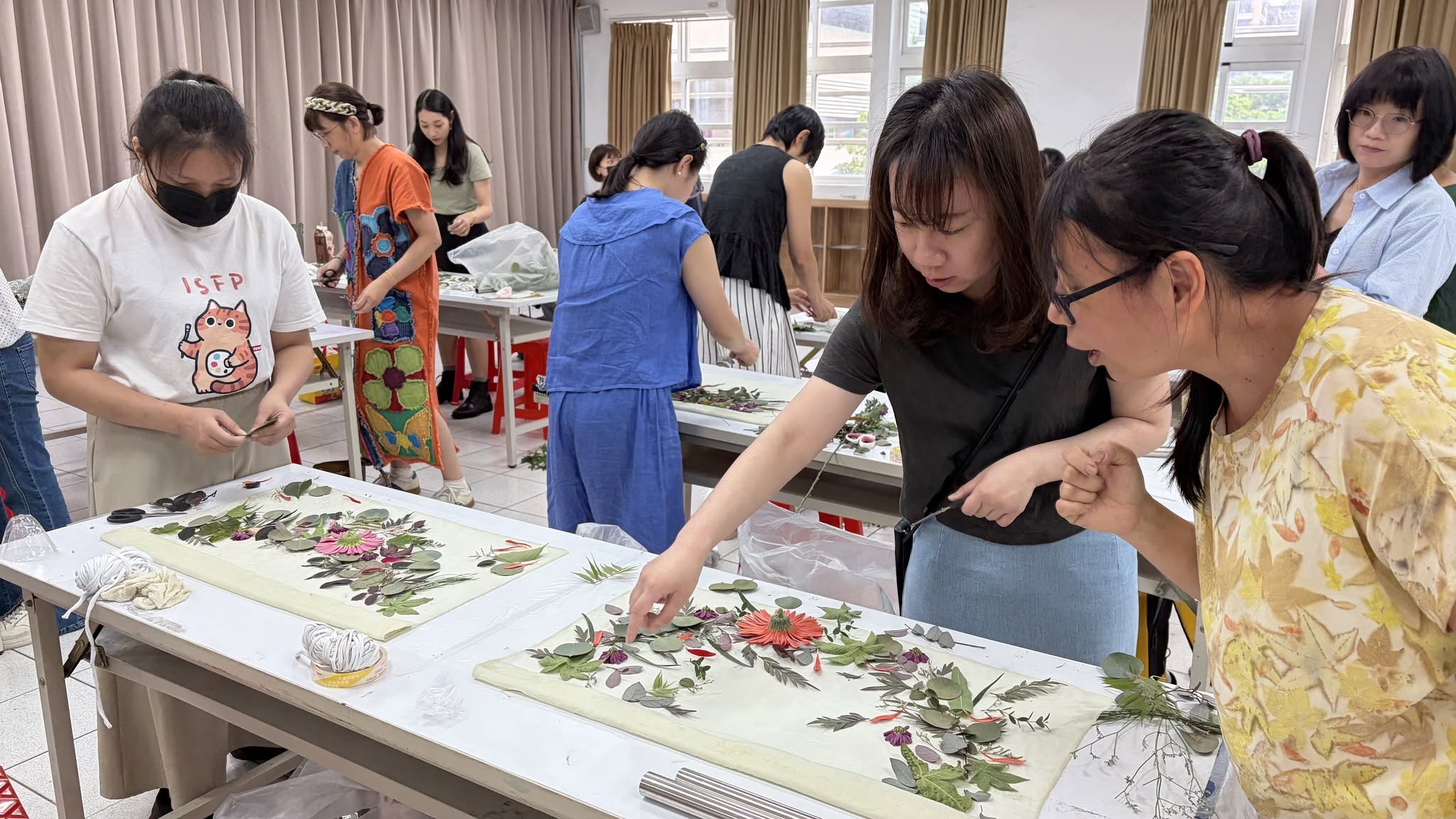
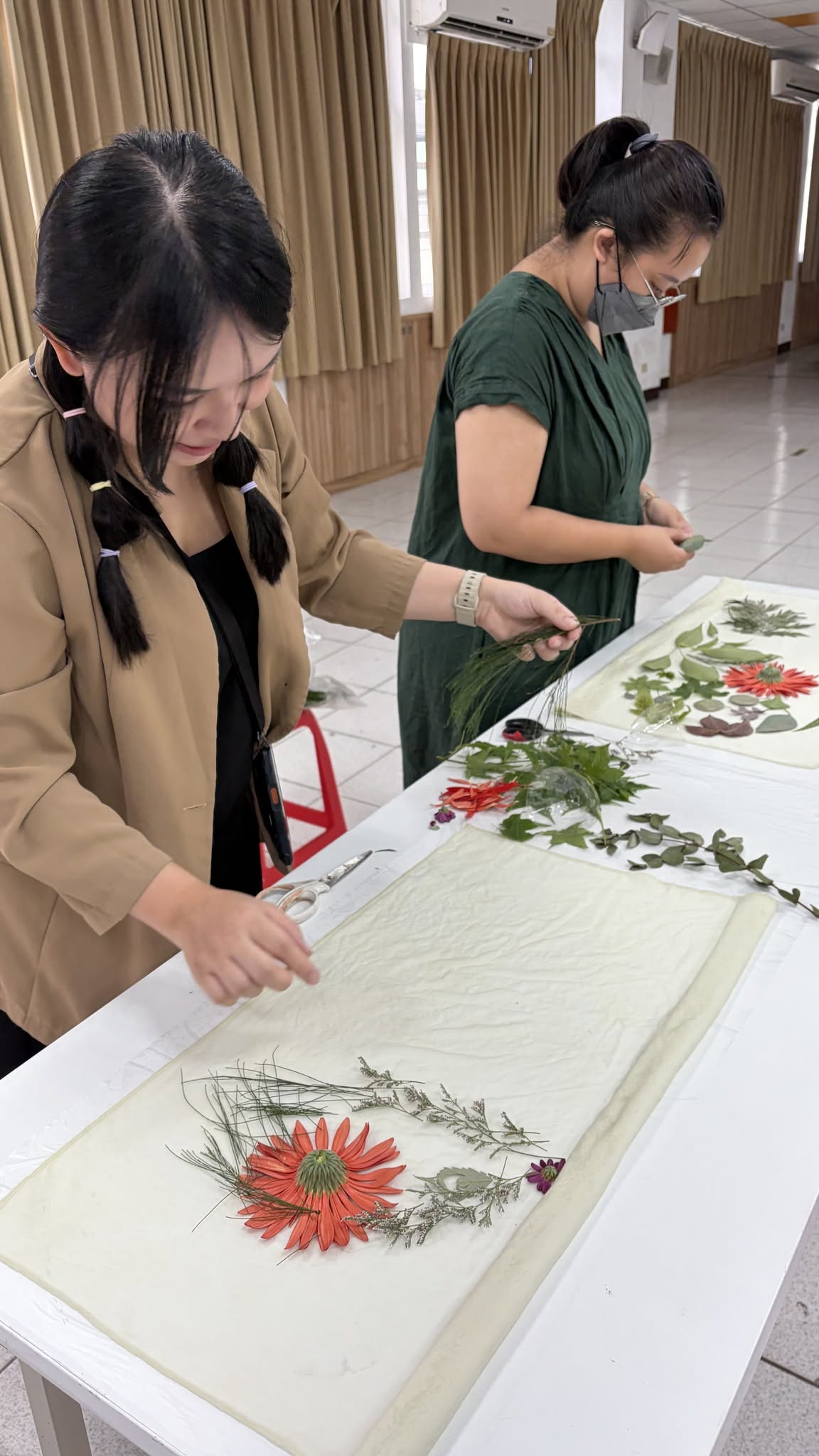
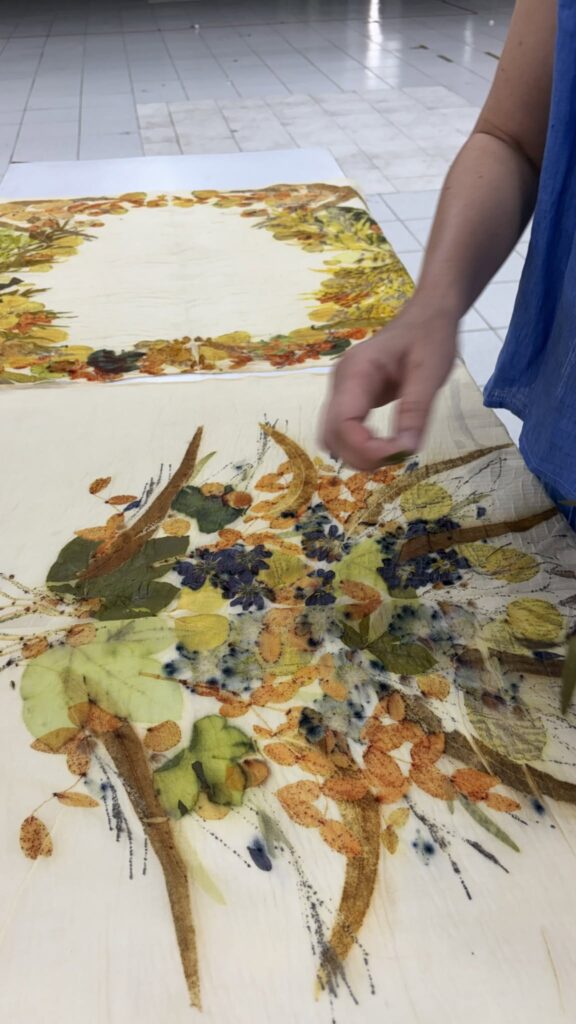
This class provided eucalyptus leaves, silver birch, casuarina, green grass, and maple leaves, allowing students to gradually choose materials suitable for their work based on the shape, size, lines, and color variations of the leaves.
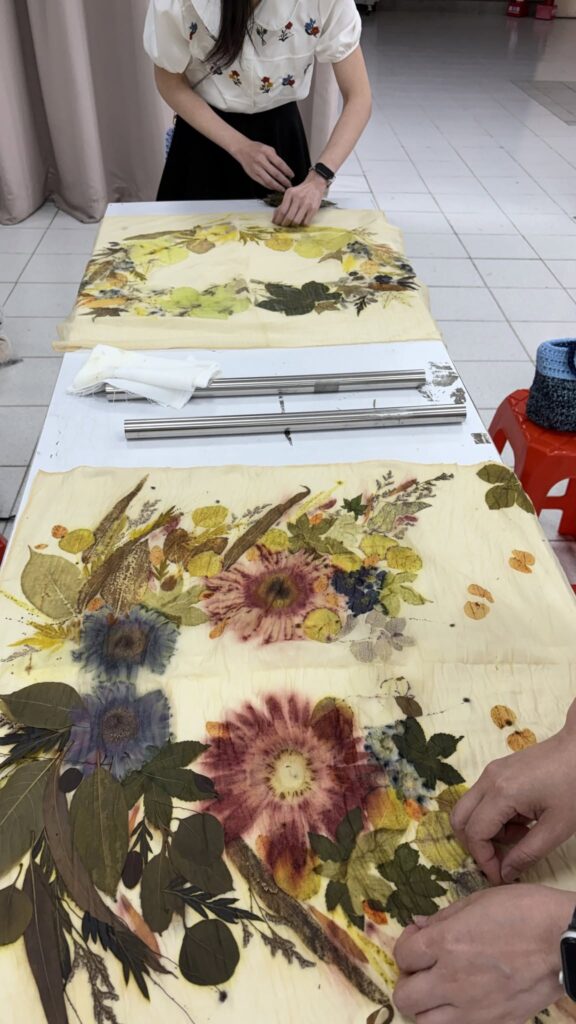
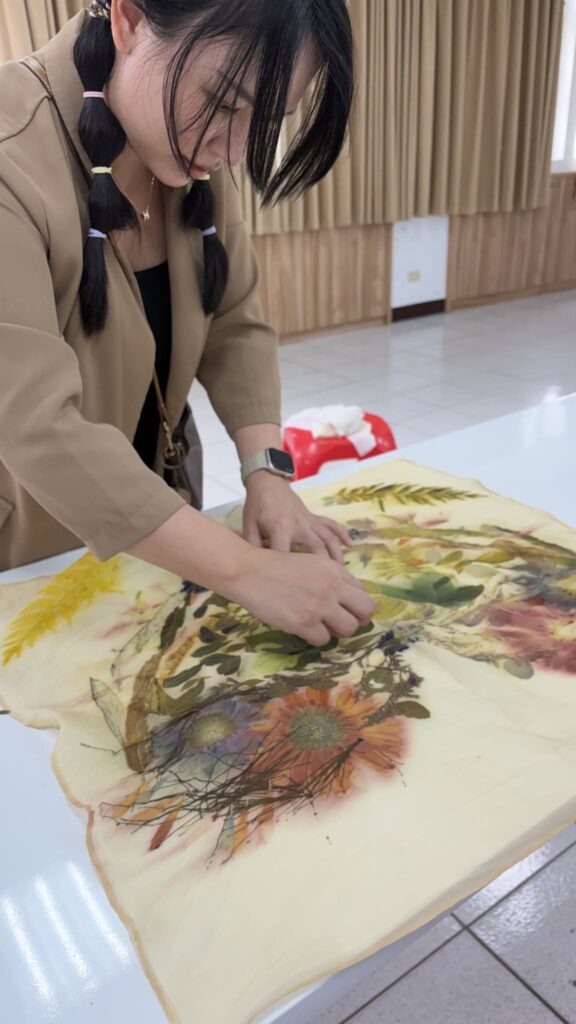
The creative process of floral and foliate transfer printing is not simply about placing leaves on the fabric. The direction, density, overlapping relationship, and negative space of each leaf will affect the final unfolded image. Especially with mirrored designs, it’s necessary to imagine the overall effect of folding and unfolding the fabric before arranging the leaves.
Some students chose delicate and quiet arrangements, resulting in soft and elegant images; others boldly used more leaves to create rich and unrestrained visual layers; still others used repetitive leaf shapes and directions to create rhythmic floral and foliate images.
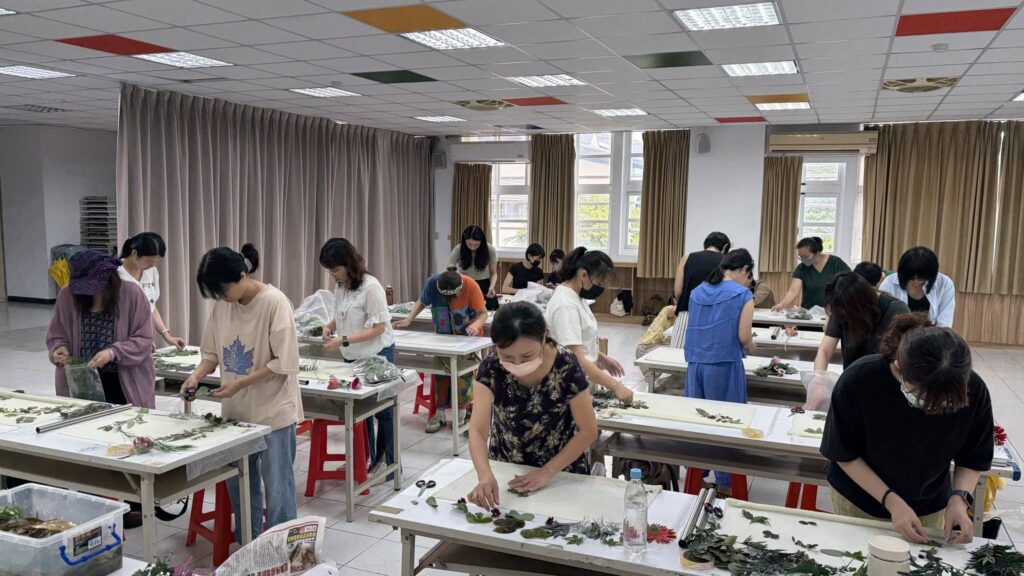
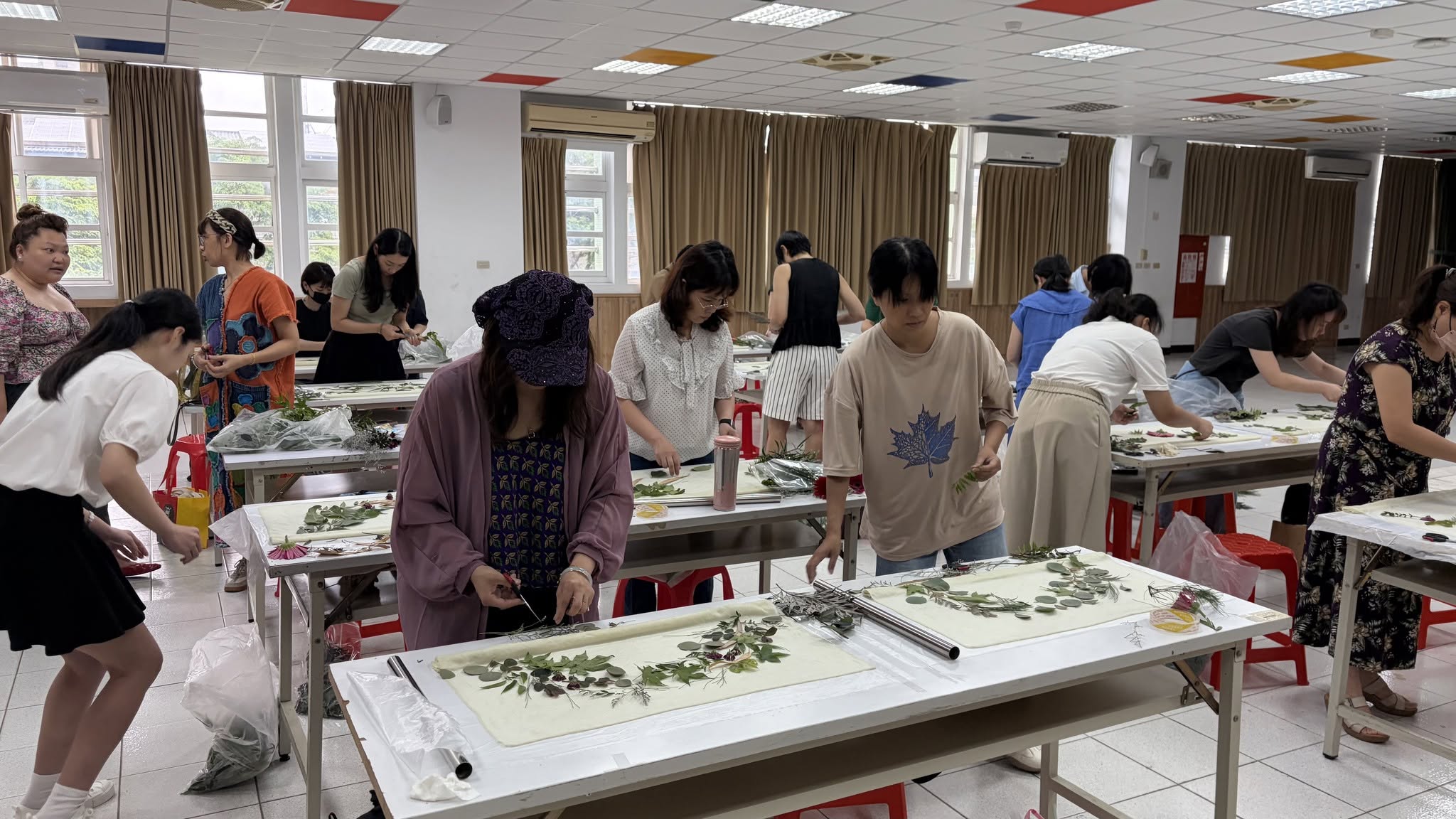
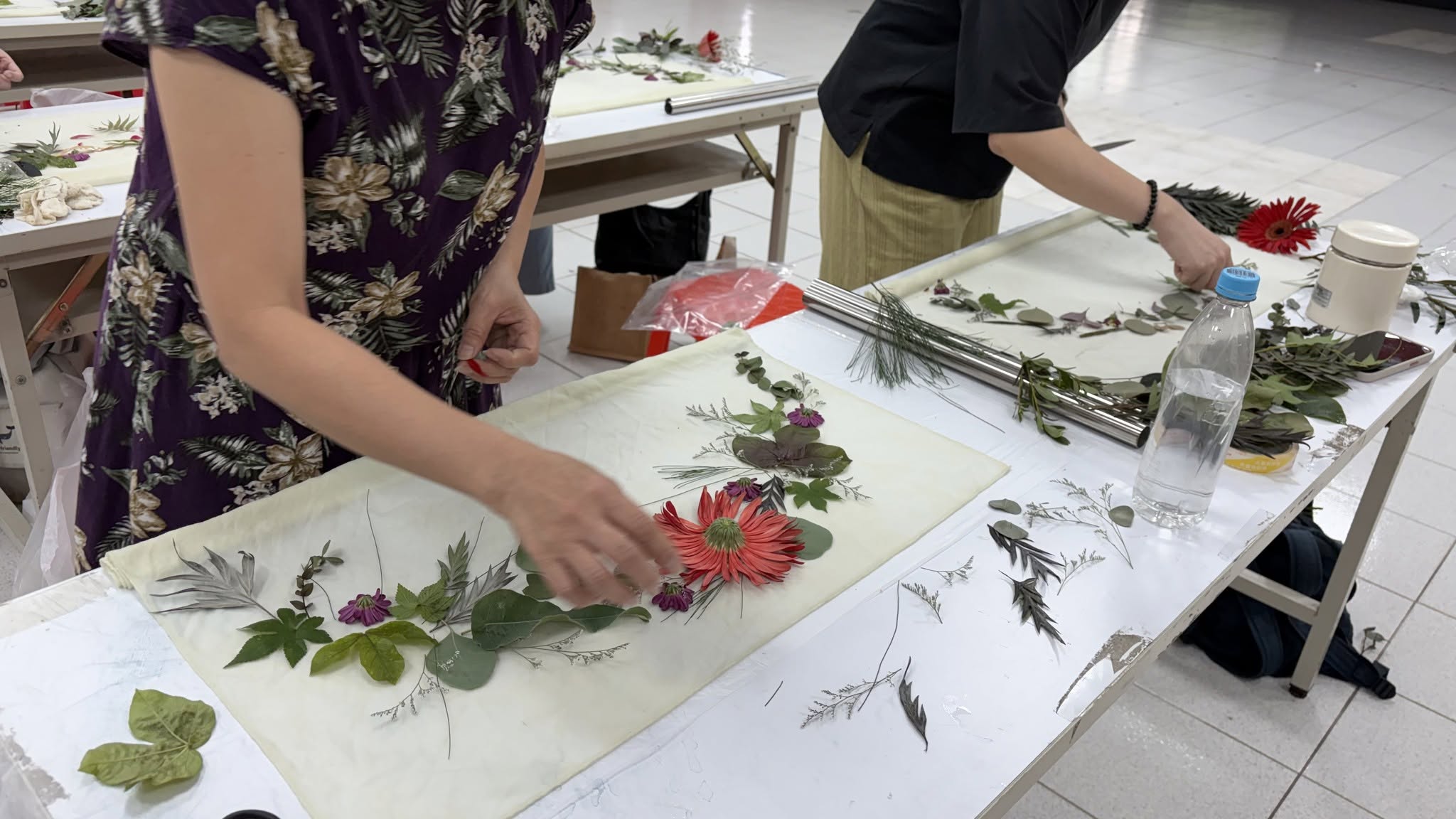
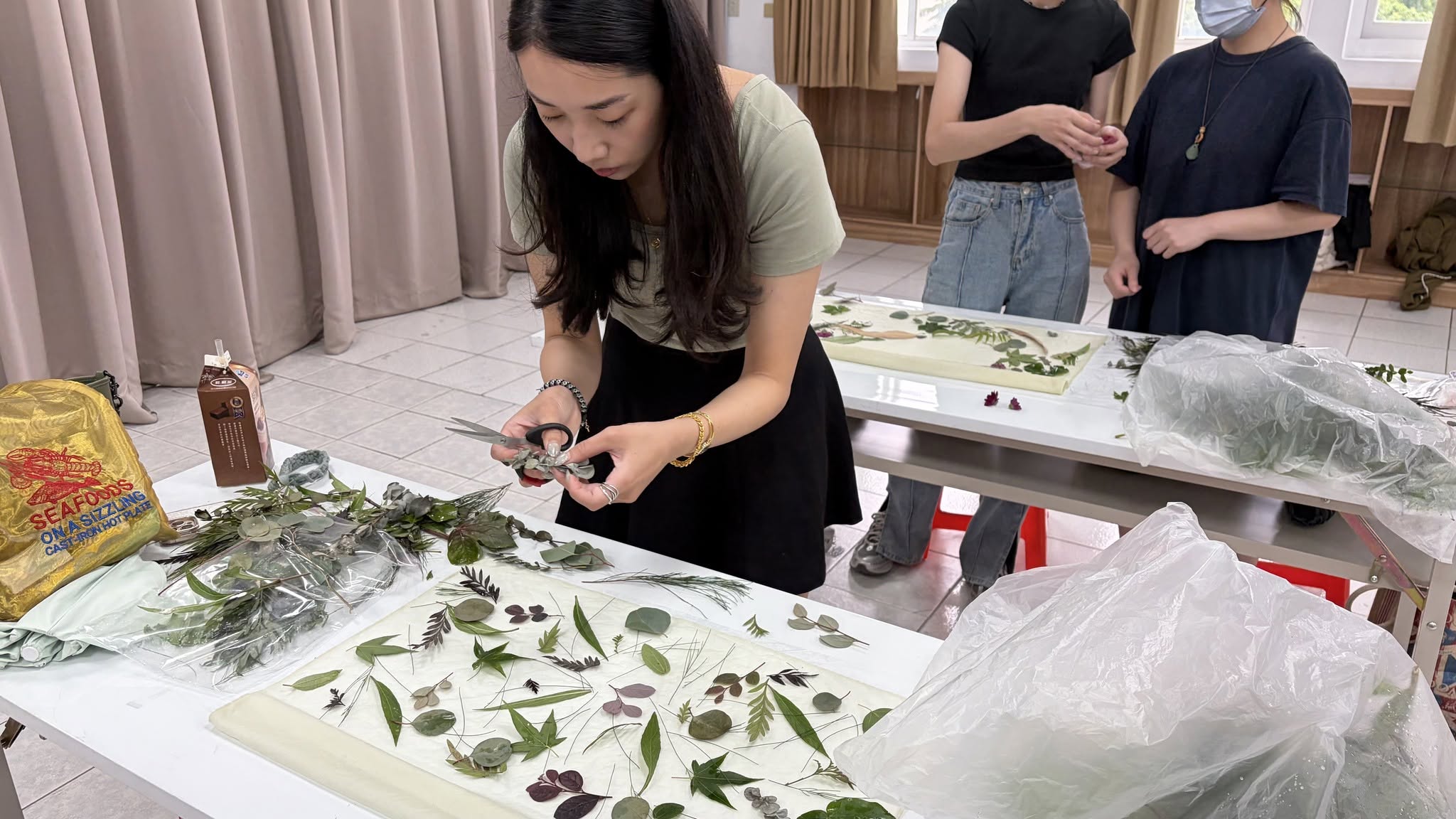
Mirror design tests both observation and patience.
The most important aspect of mirror design is maintaining observation and patience throughout the creative process.
Because before the artwork is finished, what you see is only the arrangement of the leaves on the fabric; the true picture only emerges after steaming, dyeing, and unfolding. Therefore, in class, students need to observe the lines of the leaves while simultaneously considering left-right symmetry, compositional balance, and the potential color gradations.
This process is well-suited for group classes and art education settings. Everyone uses the same plant materials and fabric, yet the final works are completely different. In each piece, you can see the student’s own choices, rhythm, and aesthetic sense.
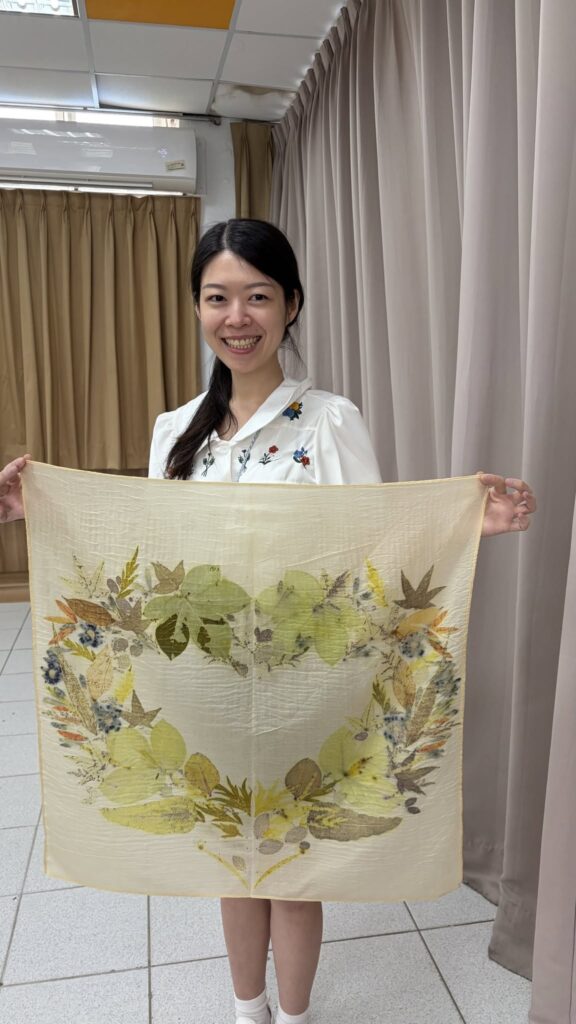
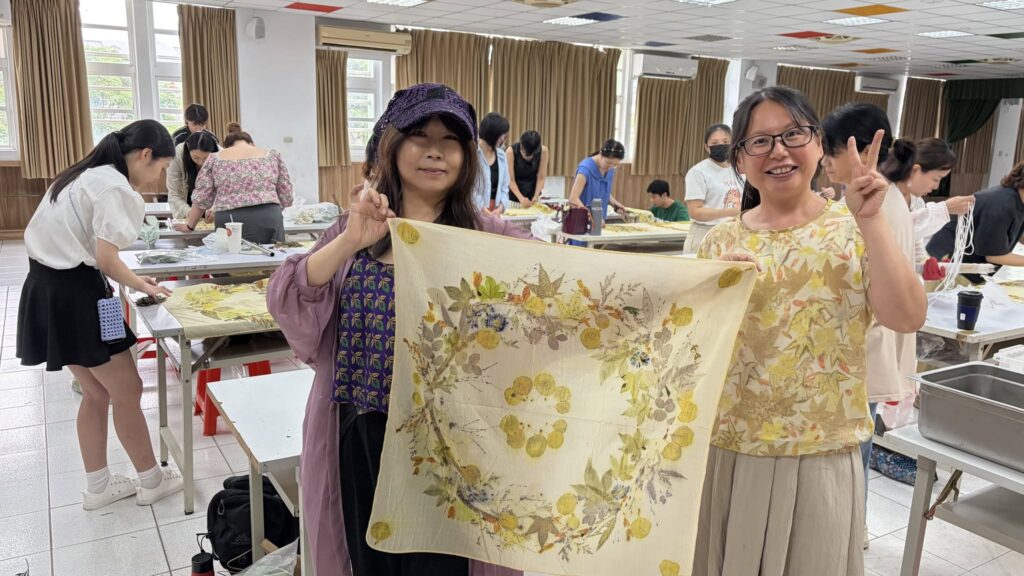
The most anticipated moment is when the artwork is unfolded. The most exciting moment in the class is when everyone unfolds their artwork together.
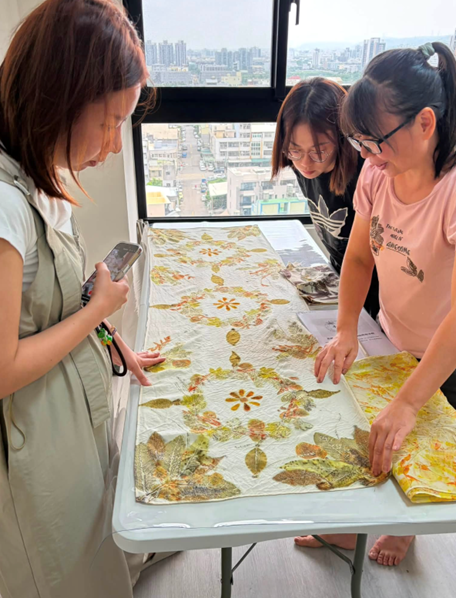
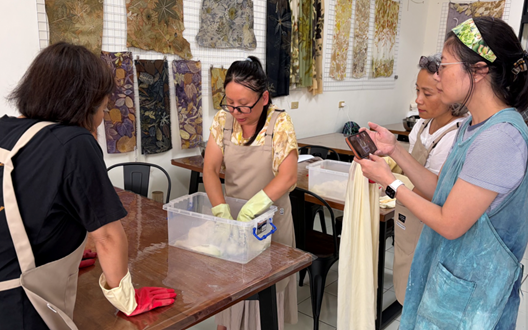
As the wool square scarves are slowly opened, the shapes, veins, colors, and mirrored compositions of the plants appear on the fabric, always filling the room with surprise. Some exclaim that their work is richer than they imagined, while others discover, only after unfolding, that the originally quiet arrangement has formed a layered picture.
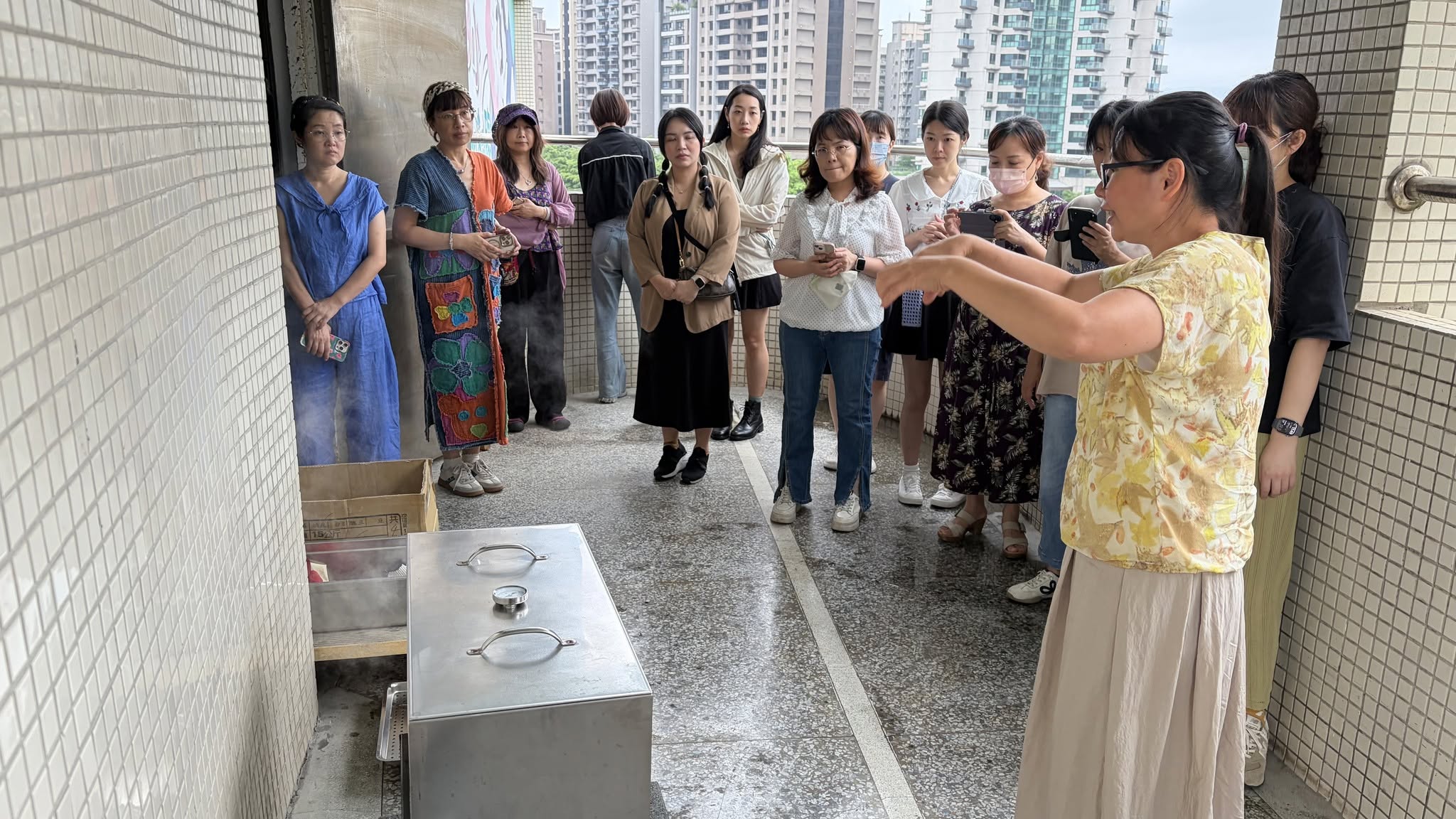
This is also what makes floral and leaf transfer dyeing so interesting: it’s not a completely controlled process, but rather leaves just the right amount of space between design and natural changes. Students arrange the composition in class, while the plants leave their own marks during the steaming and mordant dyeing process.
What remains on the fabric is not just the shape of the plants, but also the compositional ideas that each person gradually develops during the creative process.
Each piece has its own unique character.
The wool square scarves completed by the students this time are all very distinctive.
Some pieces resemble quiet botanical paintings, some possess a natural and unrestrained rhythm, and others present a beautiful sense of symmetry when unfolded in mirror form. Through floral and leaf transfer printing, everyone left the lines and colors of plants on the fabric, completing a piece of everyday life that can be used and collected.
Thank you to the New Taipei City Arts Education Association for the invitation, and thank you to Sanchong Wuhua Elementary School for providing such a wonderful teaching space. This was a very solid and heartwarming lesson in floral and foliate transfer printing.
We look forward to more opportunities in the future to bring plants, fabrics, and handicrafts into different teaching settings, allowing more people to create a truly unique piece of art with their own hands.