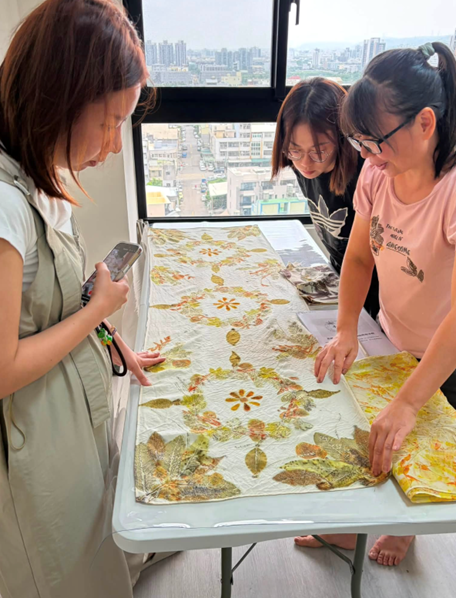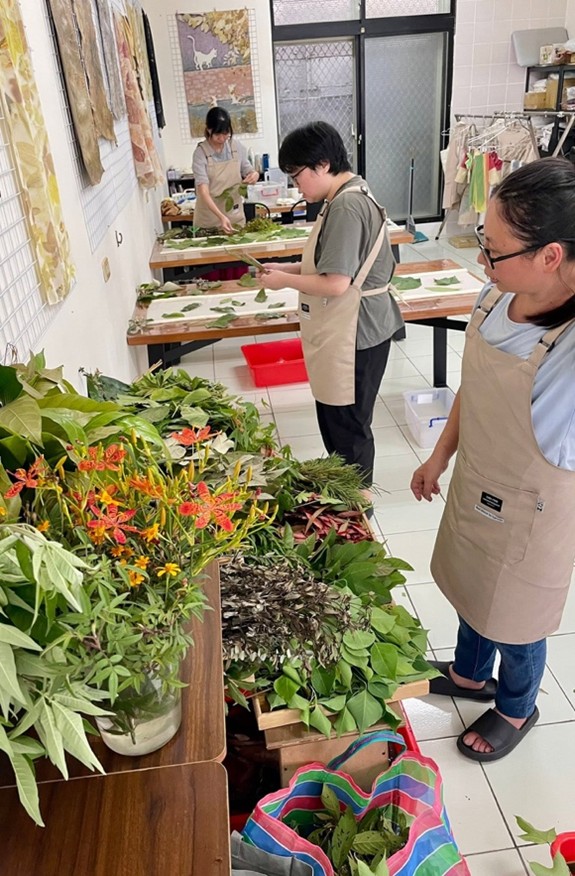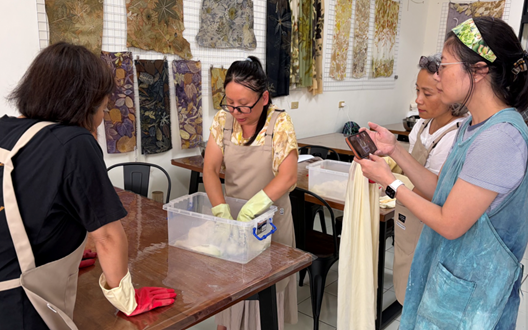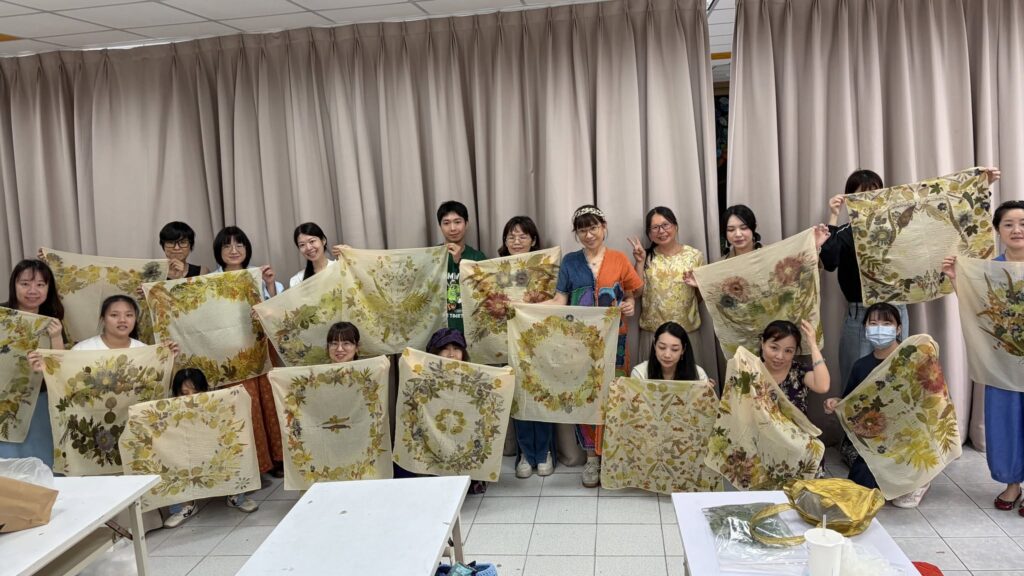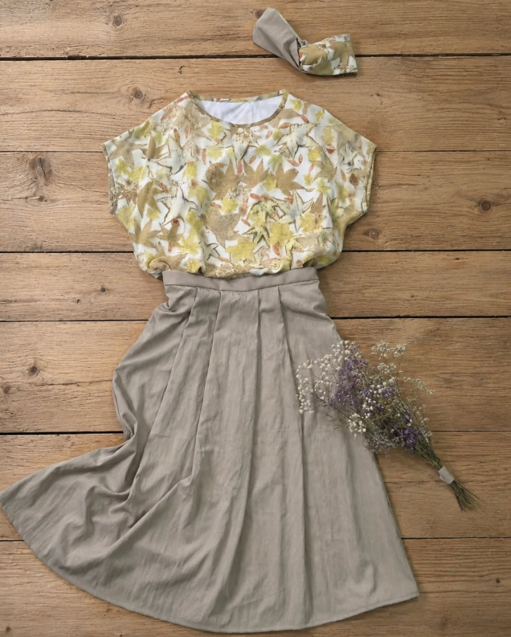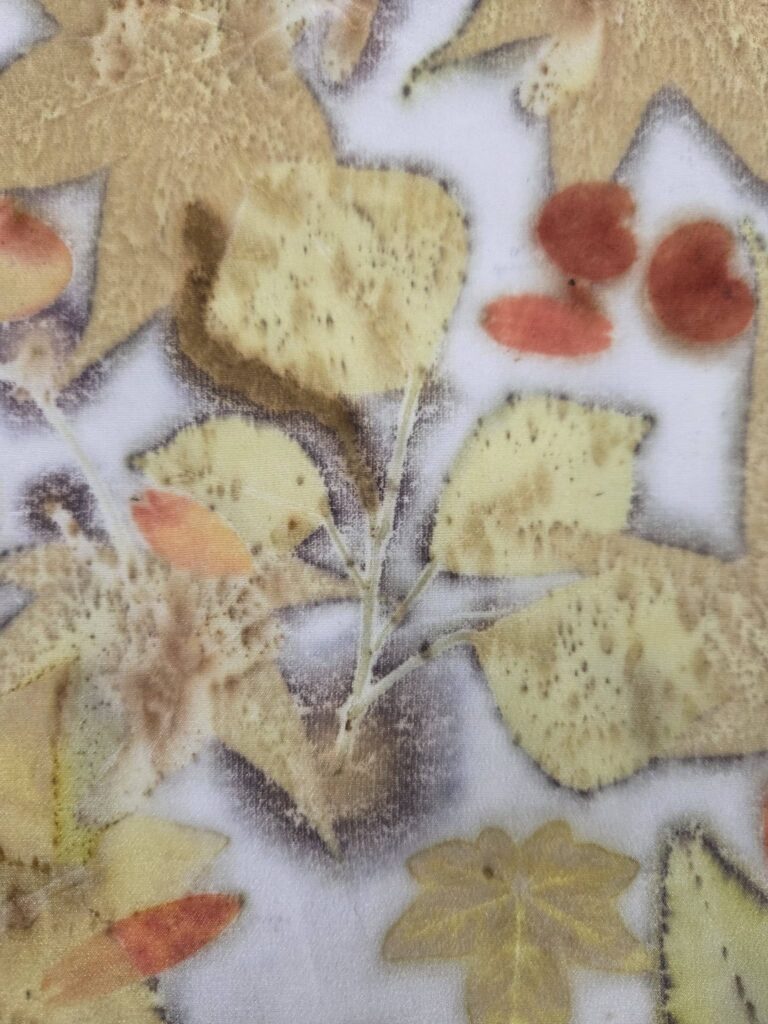


In the process of creating floral and leaf transfer dyeing, we use real flowers, leaves, and branches. Through mordant dyeing, arrangement, binding, and steaming, we transfer the natural colors and textures of the plants onto the fabric. Each leaf has a unique shape, veins, and color. Even using the same plants and methods, different seasons, harvest times, mordant methods, and fabric conditions can result in different dyeing outcomes. These naturally occurring variations are what make floral and leaf transfer dyeing so interesting. However, a complete work, besides the colors and shadows left by the plants, also needs composition to create focus, depth, and rhythm. Therefore, in our hand-dyeing daytime course, we not only practice how to successfully transfer plant dyes but also gradually incorporate concepts of composition design.
Composition isn’t something you learn only when you’re at an advanced level; it’s a skill you can gradually develop from the very first foliage arrangement. Hand-dyed Hiyori integrates compositional elements into courses at different stages, guiding students through observation and practice in real-world scenarios:
Different plants have different outlines and textures. Round leaves, long leaves, serrated leaves, and fine foliage create different visual experiences when placed in a picture.
The direction of leaves, the extension of branches, and the arrangement of plants all affect the viewer’s line of sight and the dynamics of the image. By arranging directions, a work can convey a sense of flow, convergence, radiation, or extension.
Large leaves can become the focal point of an image, while small leaves are suitable for adding details and rhythm. Learning to adjust the size ratio of plant materials can make the image more balanced.
A fuller arrangement doesn’t necessarily mean a more complete picture. Leaving appropriate space allows the texture of plants to be clearer and also allows the eye to linger and breathe.
By arranging the size, color depth, density, and spatial relationships of the plants, the artwork is not merely a flat arrangement of leaves, but gradually forms a picture with a theme and layers.
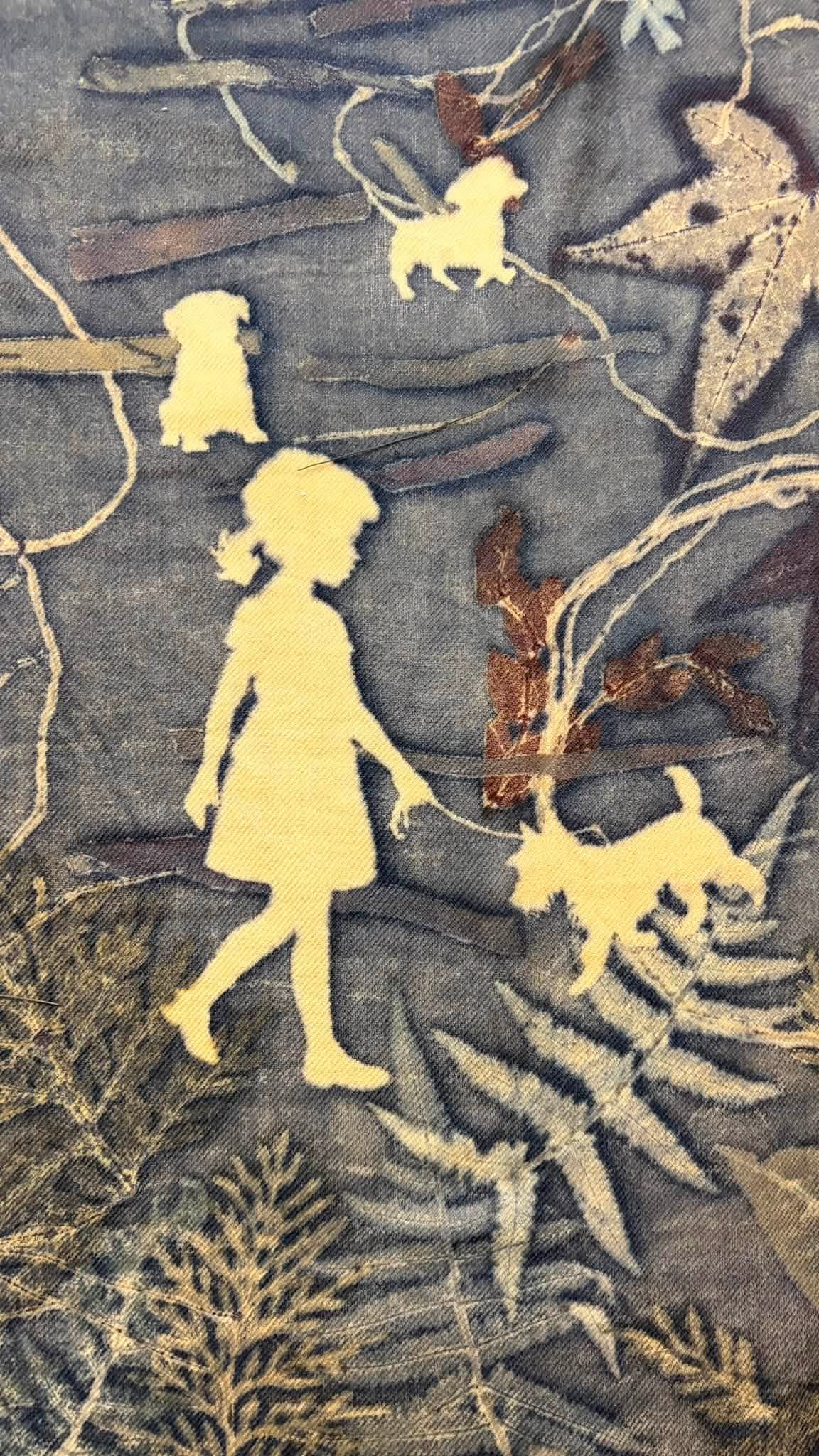
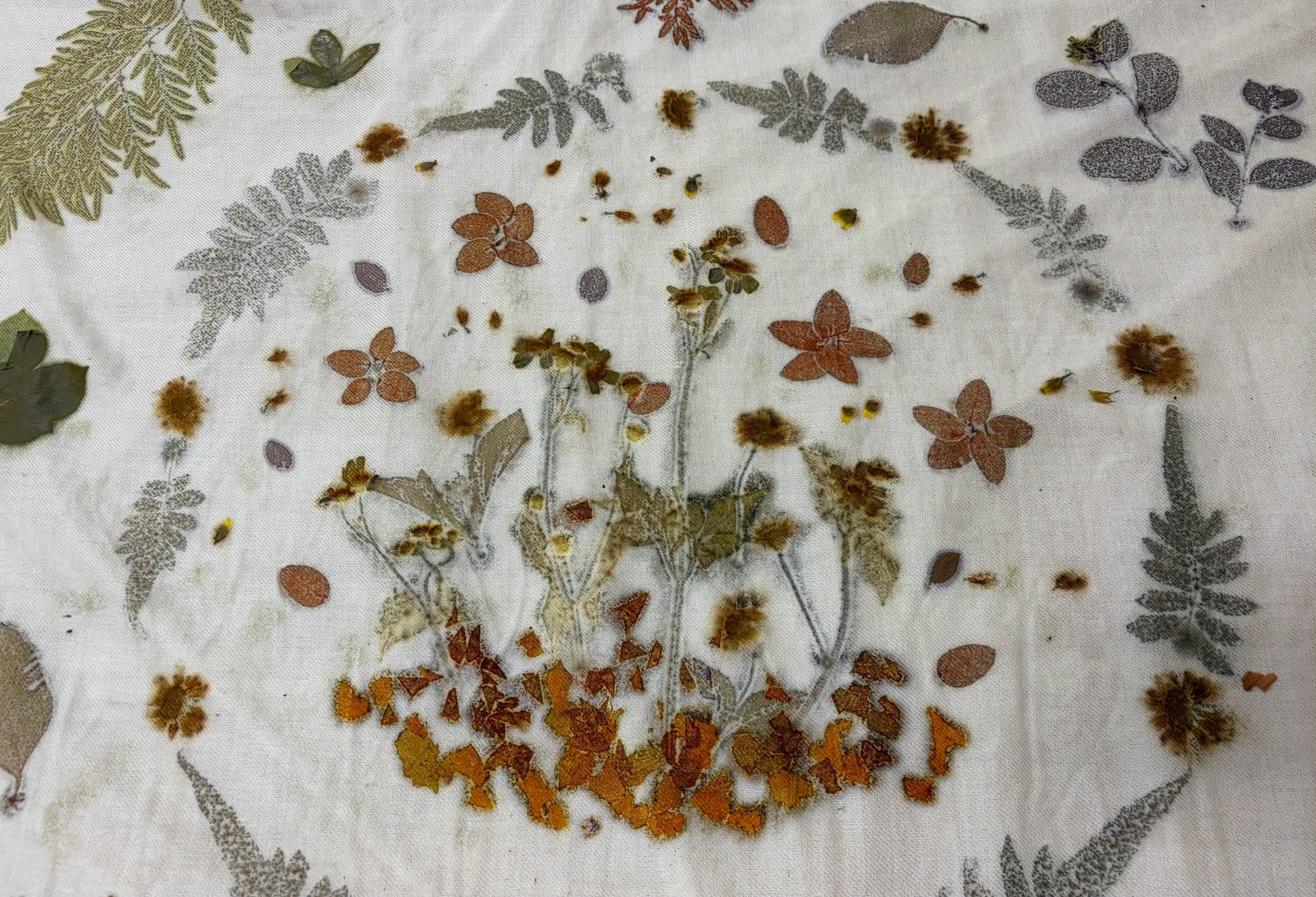
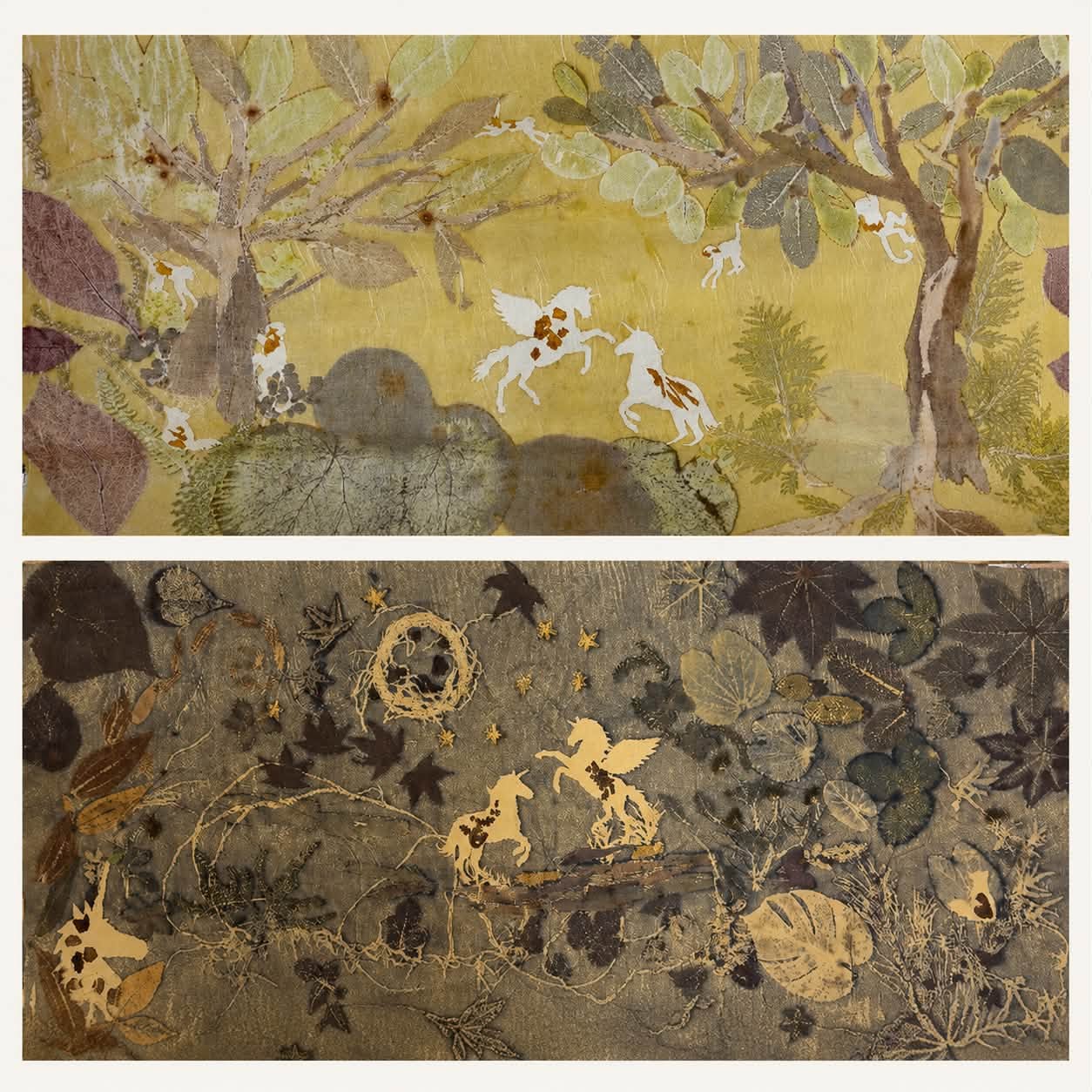
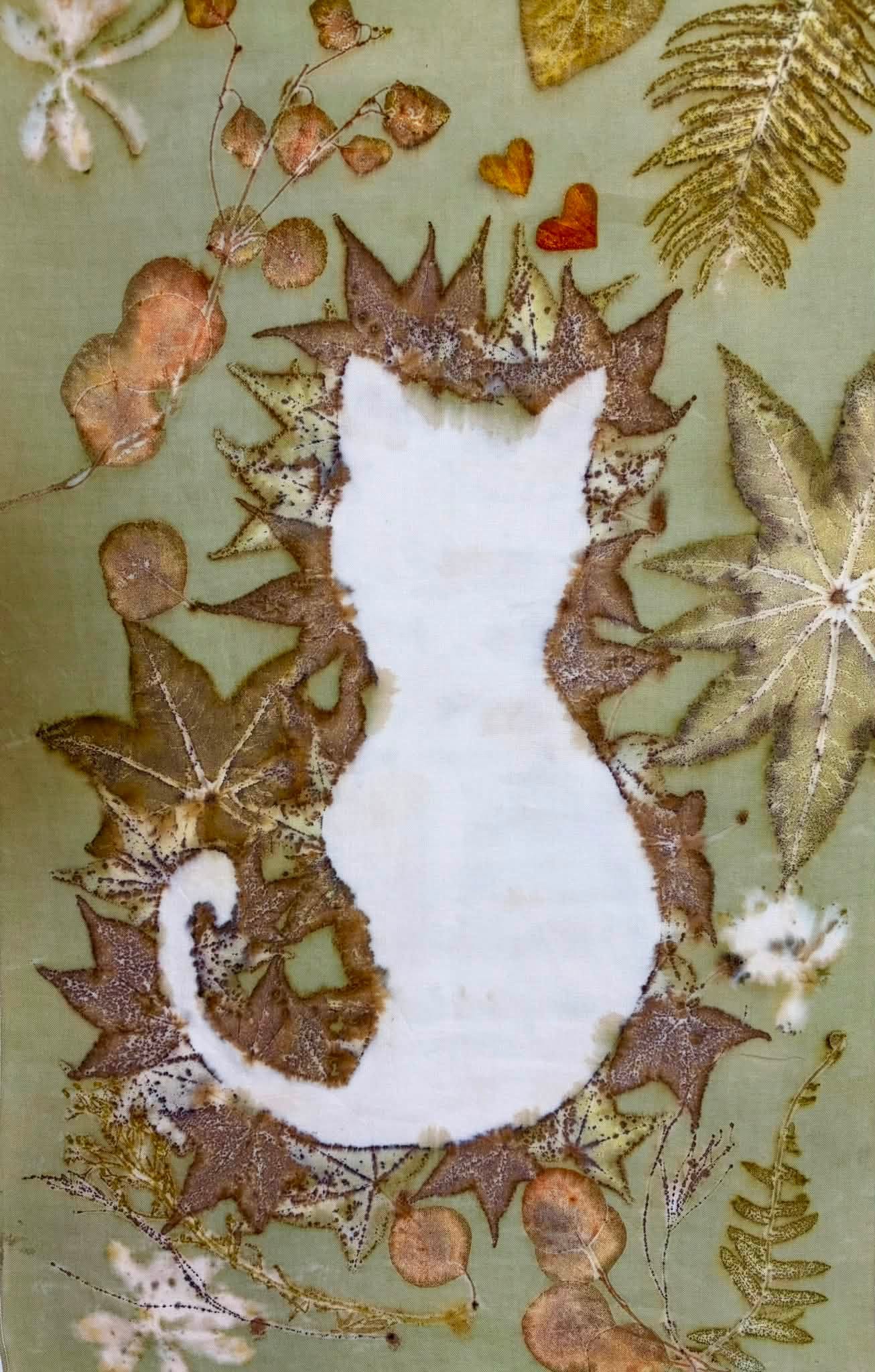
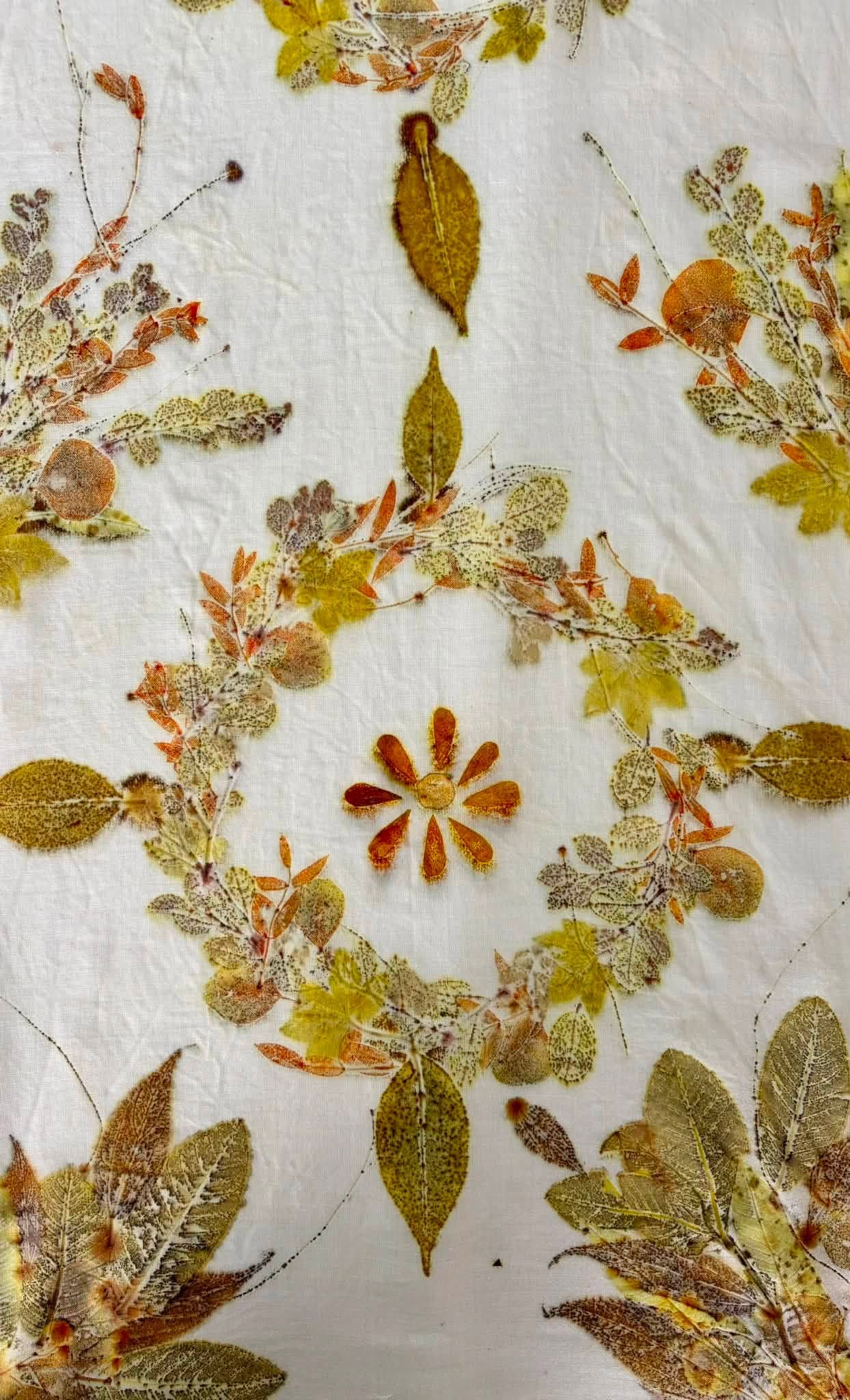
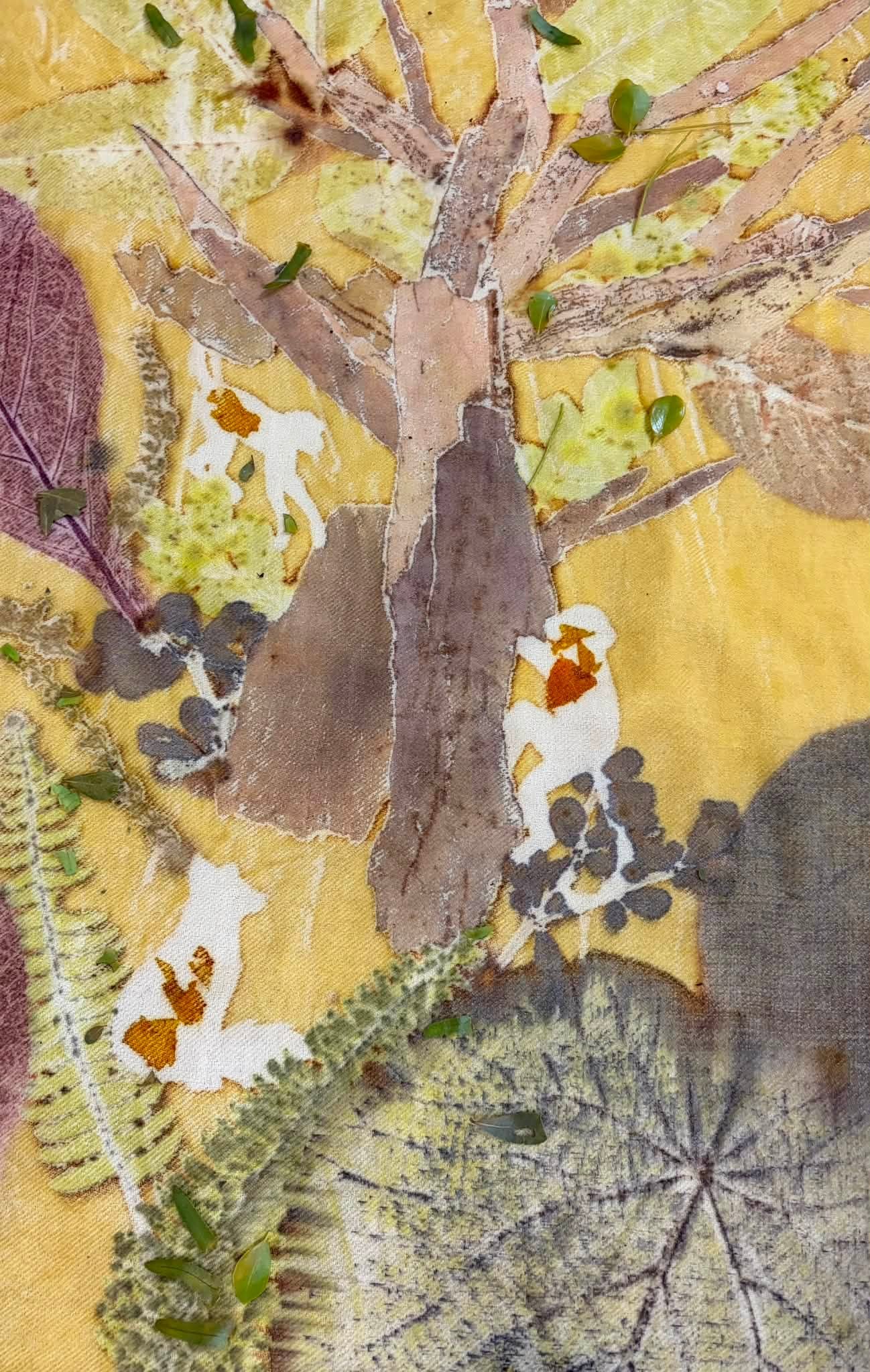
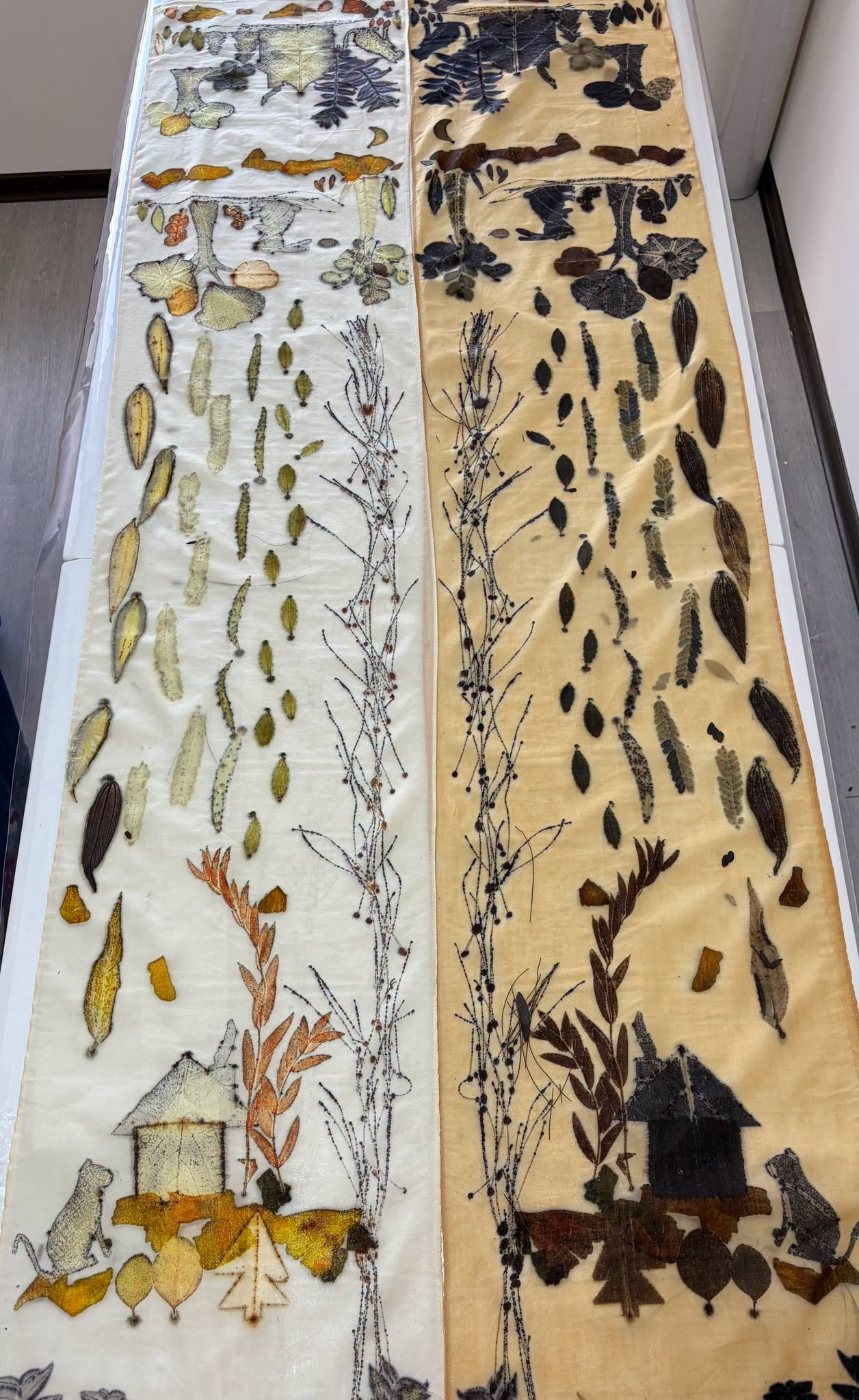
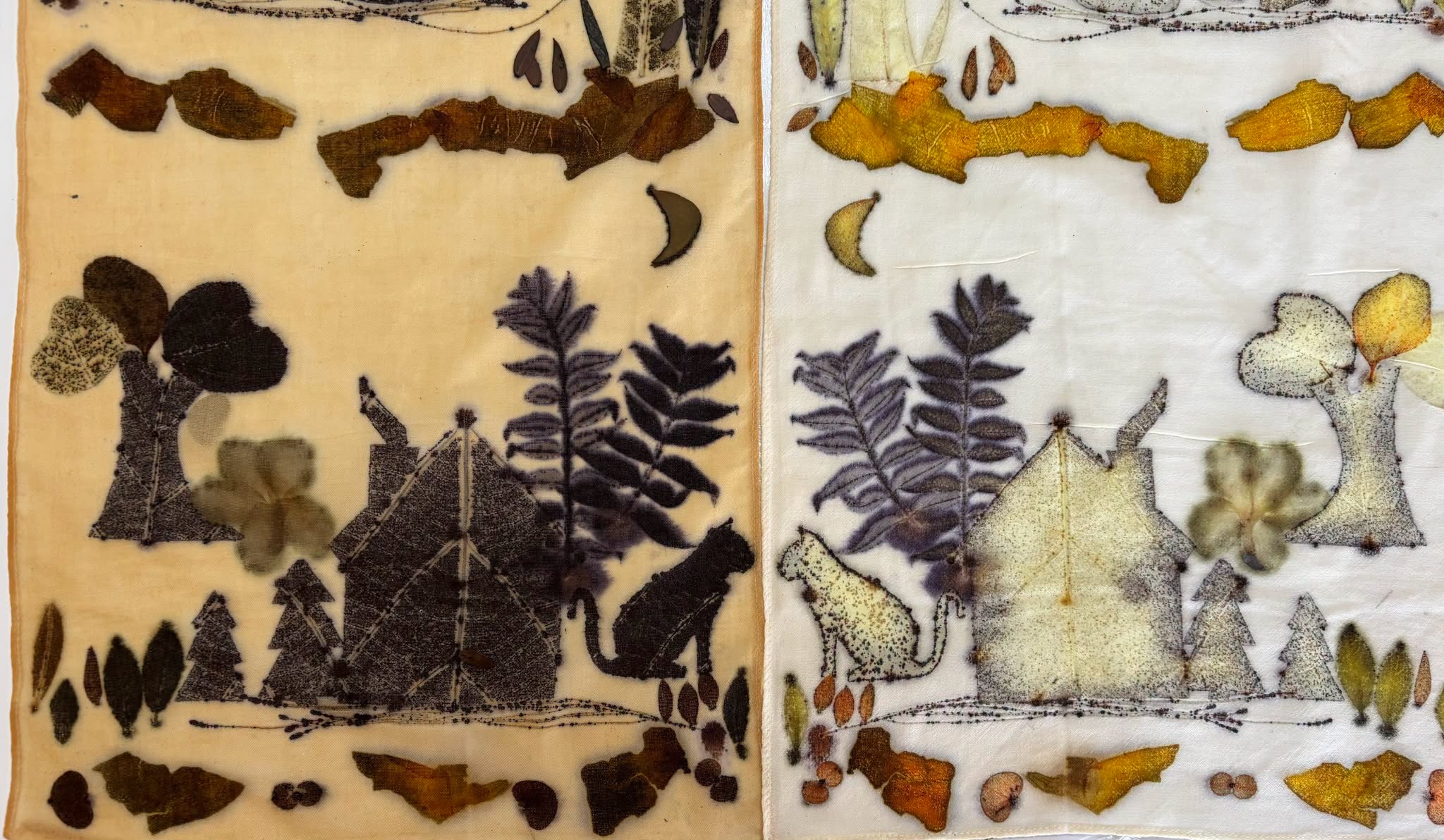
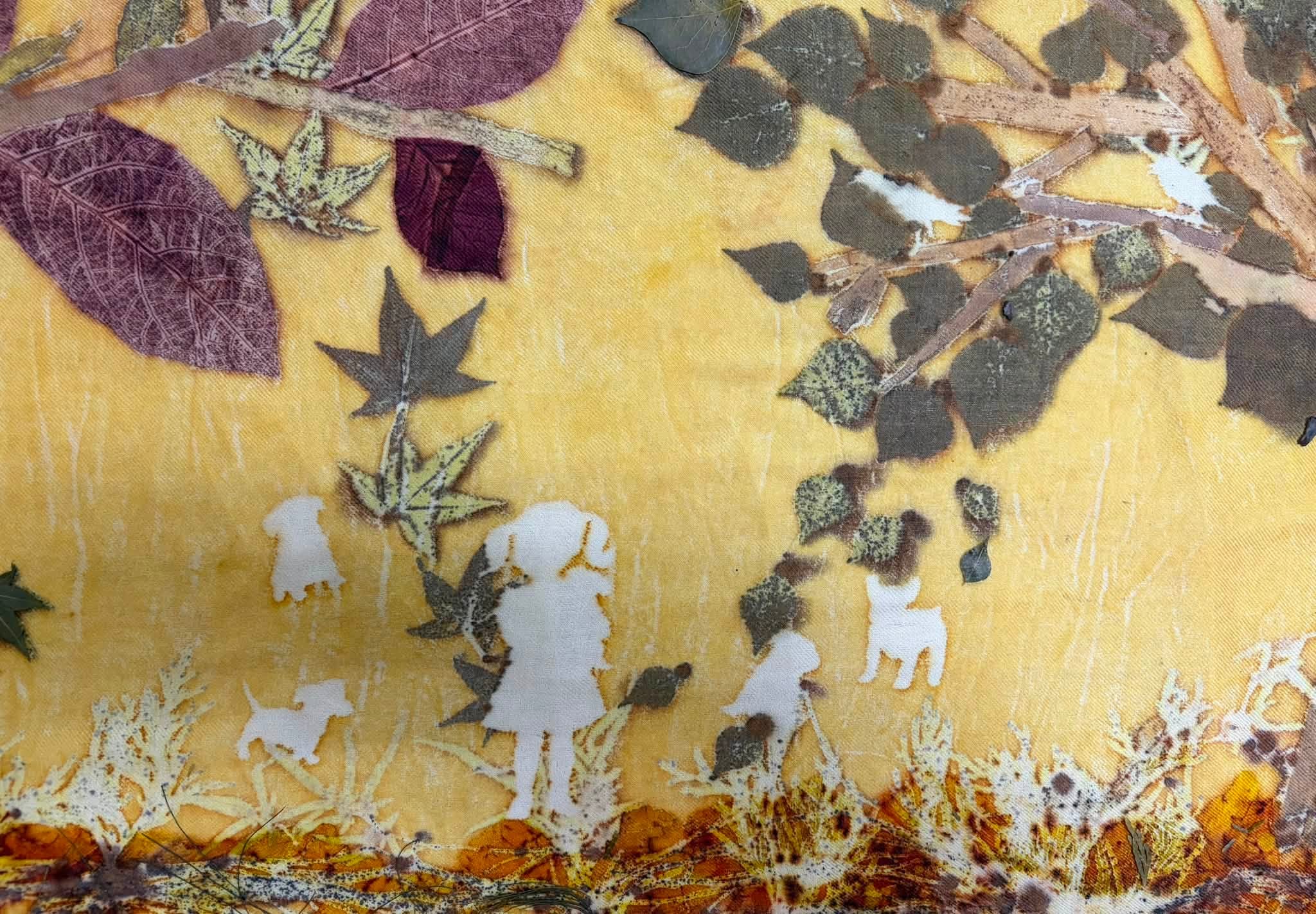
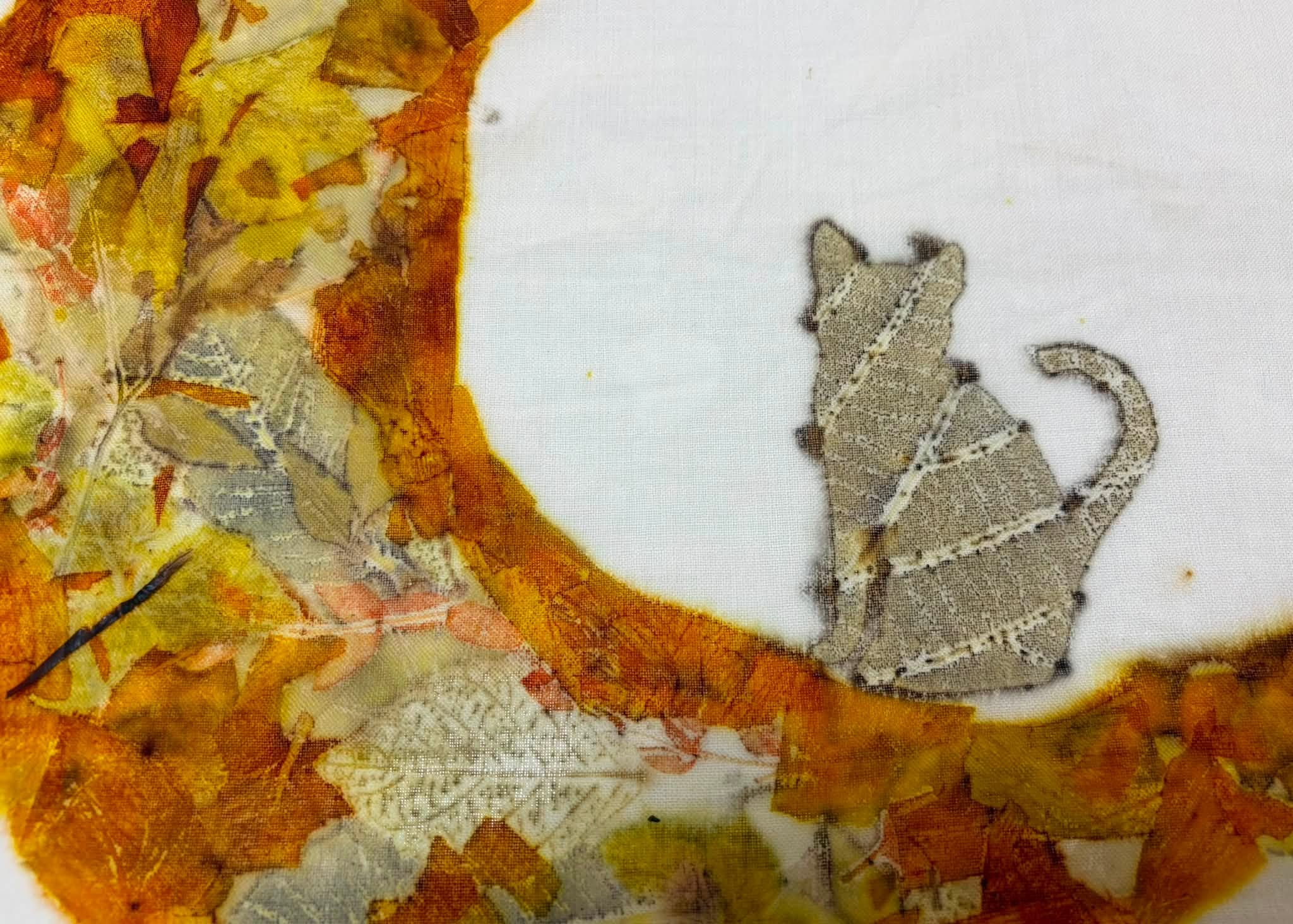
When first introduced to leaf and plant transfer printing, students typically focus on mordant dyeing, fabric treatment, and plant color development, aiming to reliably transfer leaf textures onto the fabric. As they become more familiar with the basic techniques, their creative thinking gradually shifts. They move from simply asking, “Can this leaf be printed?” to considering:
Where would this leaf be placed?
What is the main subject of the image?
Should the plants be close together, or should some distance be maintained?
Do you want the artwork to convey a sense of tranquility, richness, fluidity, or order?
When students begin to ask these questions, leaf and plant transfer printing transcends mere technical skill; it gradually enters a stage of creative expression and personal design.
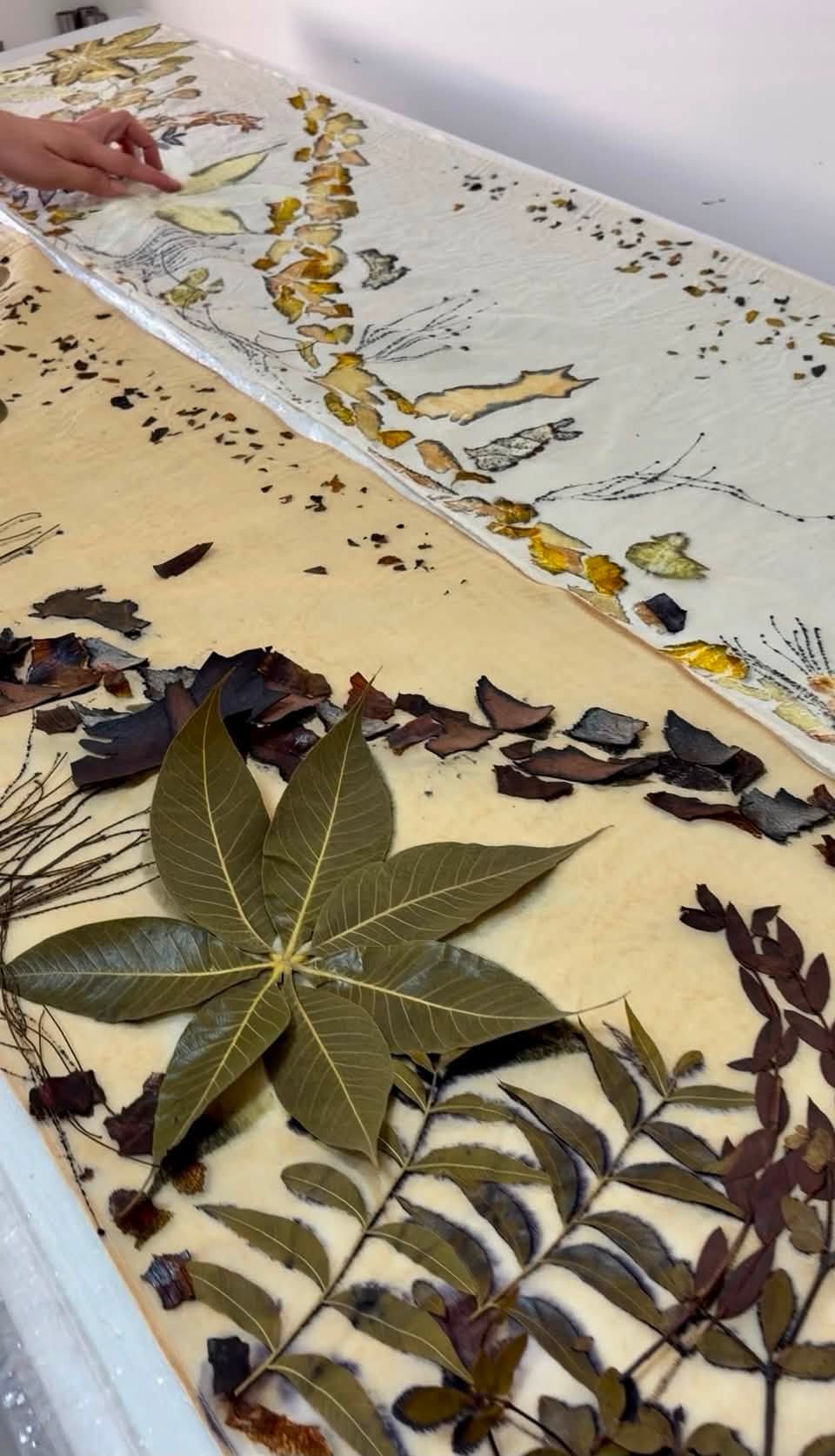
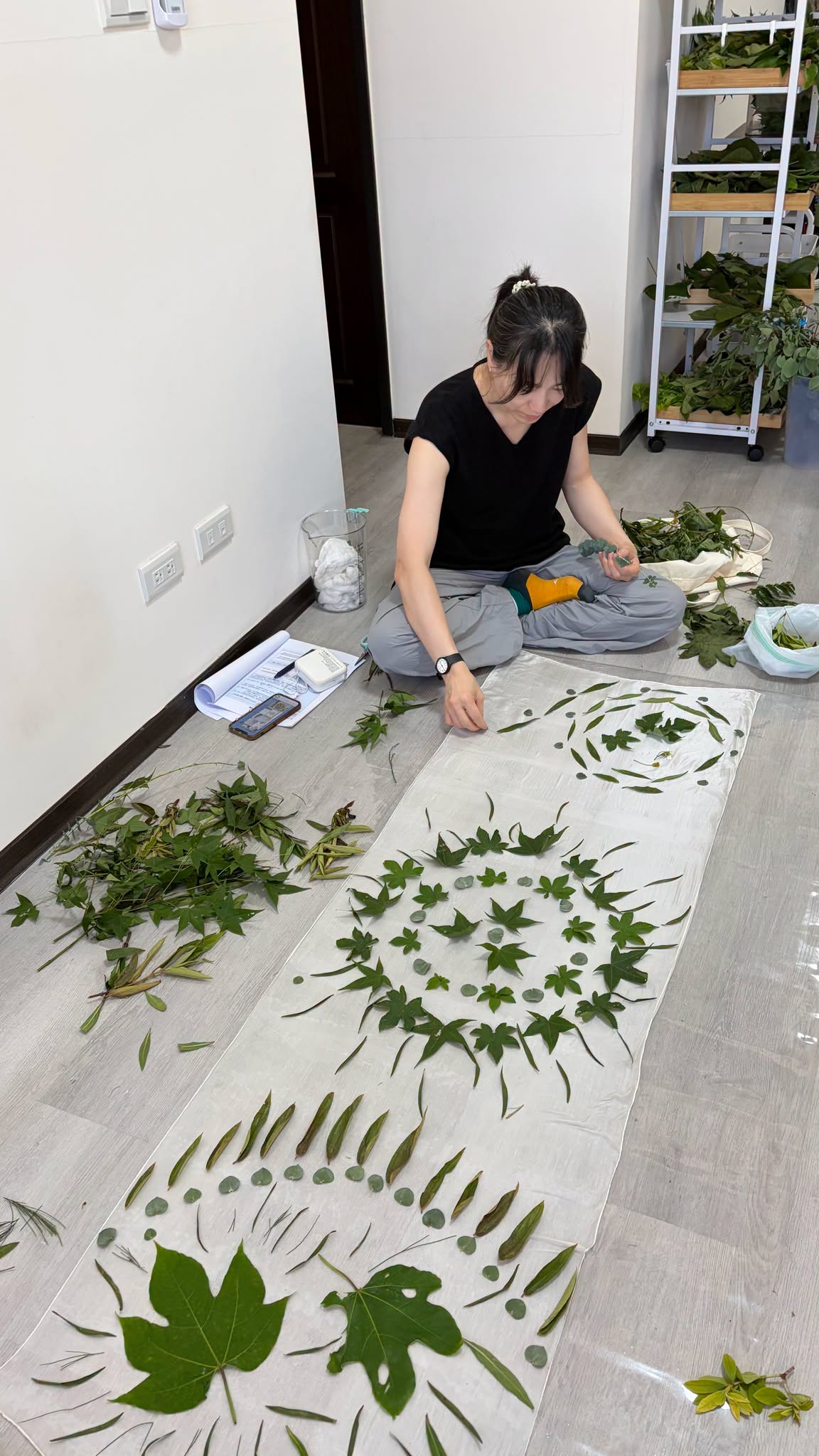
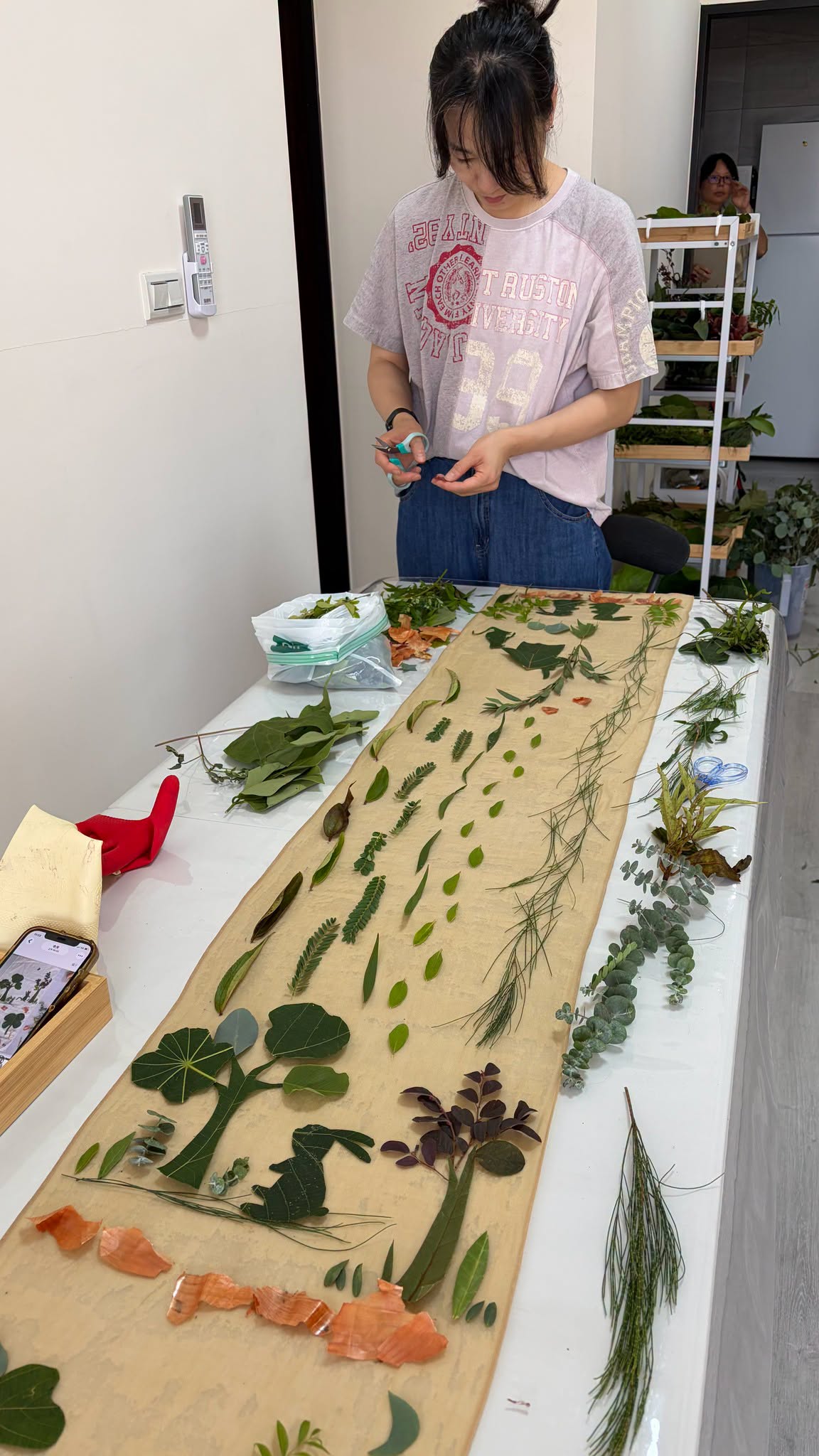
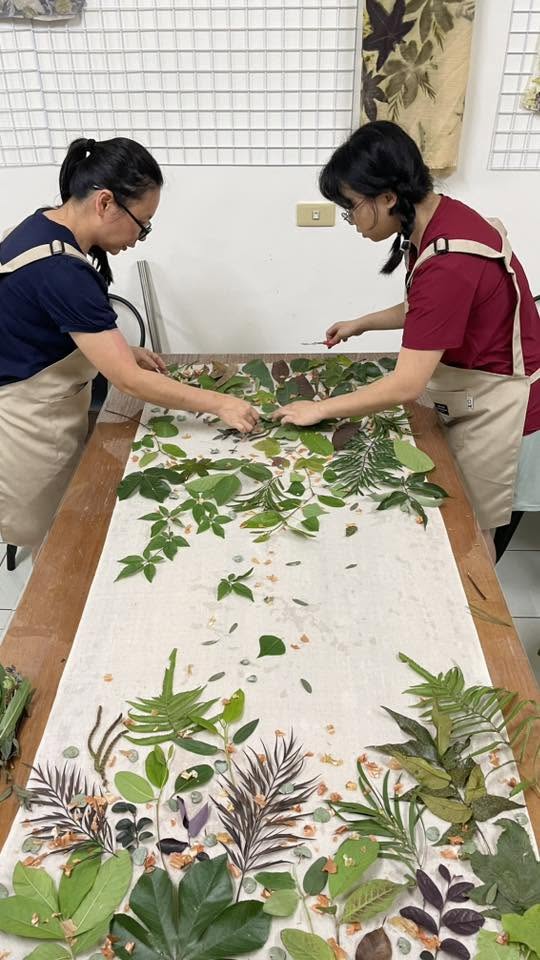
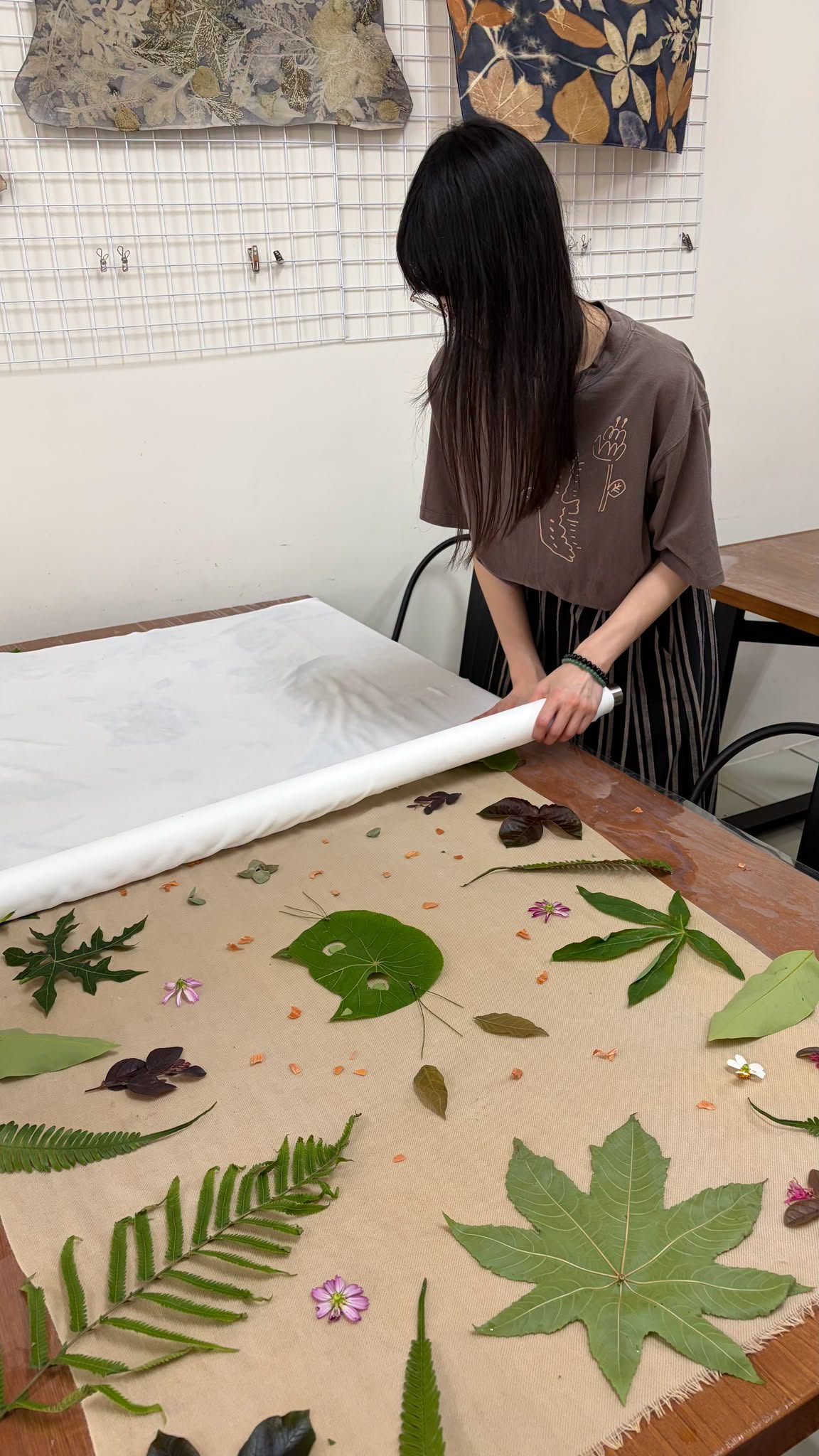
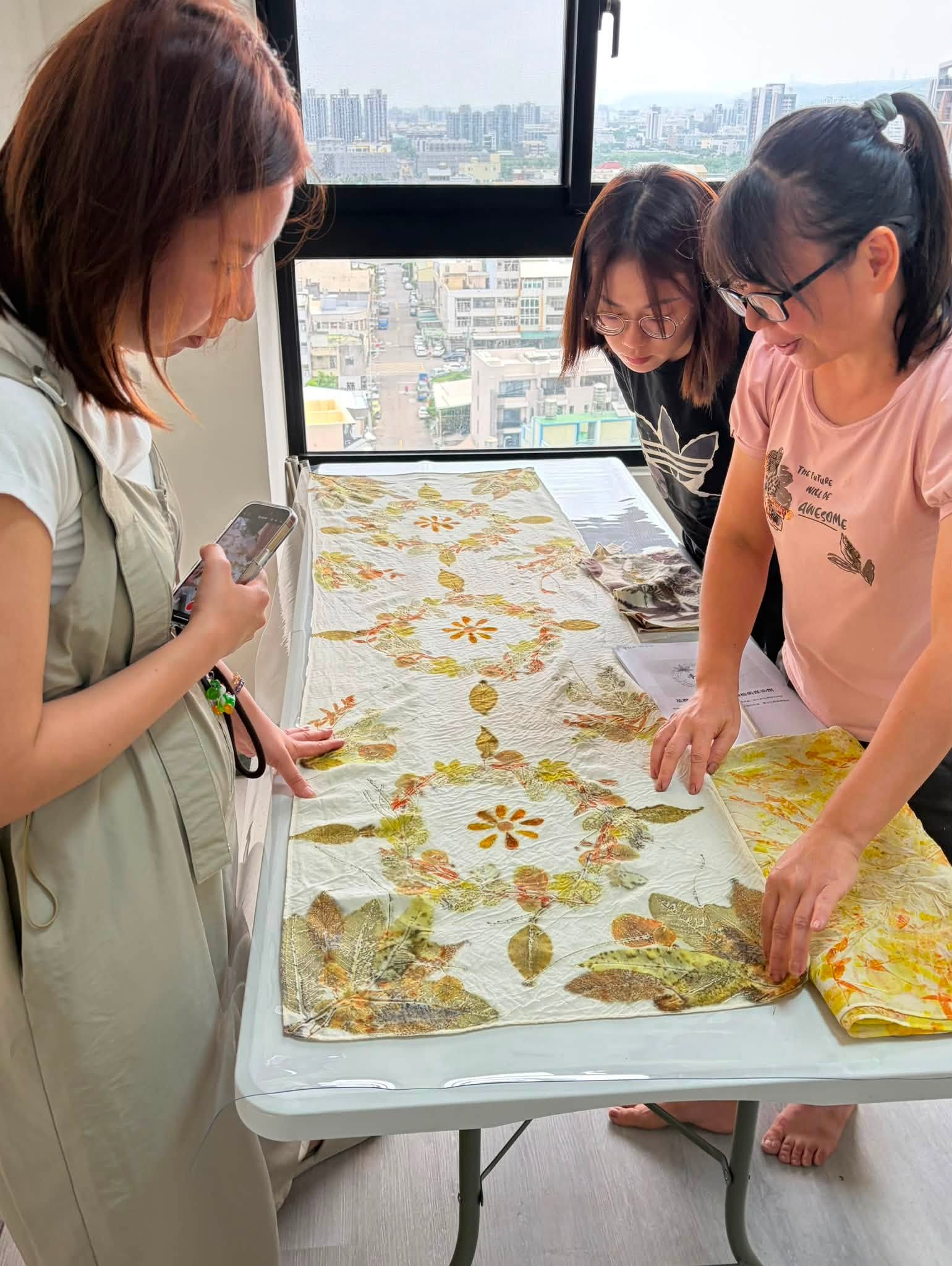
To give students more direction in foliage arrangement and composition during class, they can collect some images and materials they like beforehand, such as: plant photography, floral arrangements, pattern designs, natural landscapes, illustrations, fabric patterns, or works with colors and compositions they like. These materials don’t need to be directly imitated, but rather used to help them observe: Is the image you like concentrated or dispersed?
Is the plant arrangement regular or naturally extending?
Does the image retain a lot of space?
Is the main visual focus located in the center, a corner, or developing along the edges?
Through pre-class observation and collection, students can more clearly transform their ideas into actual foliage arrangements during class.
The creation of floral and foliate transfer dyeing takes time. From collecting plants, organizing materials, and processing fabric, to arranging the shape and position of each leaf, the creator naturally focuses their attention on the plants and the scene before them. The process of arranging leaves may seem quiet, but it involves continuous observation, selection, and adjustment. When we slow down and focus on the shape, texture, and arrangement of the leaves, we can allow our complex thoughts to gradually settle. Each completed piece is not just about obtaining a piece of dyed fabric, but also a record of the choices and state of mind at that moment.
Some people prefer neat and orderly arrangements, while others prefer the free-flowing appearance of plants; some express vitality with vibrant colors, while others find peace in simple blank spaces.
There is no single answer to creation. What’s important is to gradually understand one’s own way of viewing the scene and expressing feelings through repeated practice.
At Hand-Dyeing Sunrise, we hope students learn more than just how to complete a floral and foliate transfer dyeing artwork. We aim to help them gradually accumulate plant knowledge, mordant dyeing experience, and composition skills at each stage of the course. From basic techniques to creative expression, from observing plants to understanding the composition, each leaf arrangement is a composition exercise and a time for quiet reflection.
Let the plants leave their textures, and let the creators leave their own thoughts and feelings on the canvas.