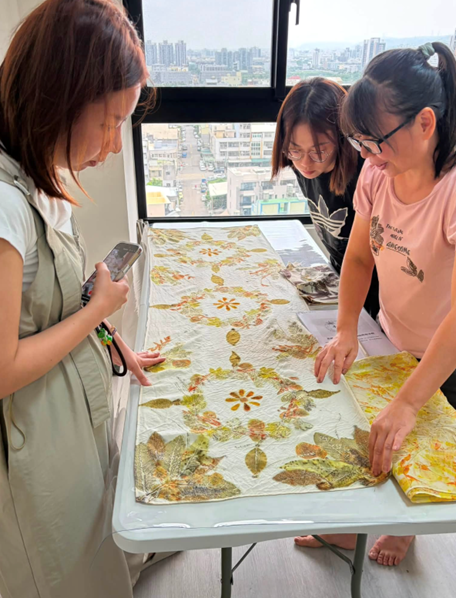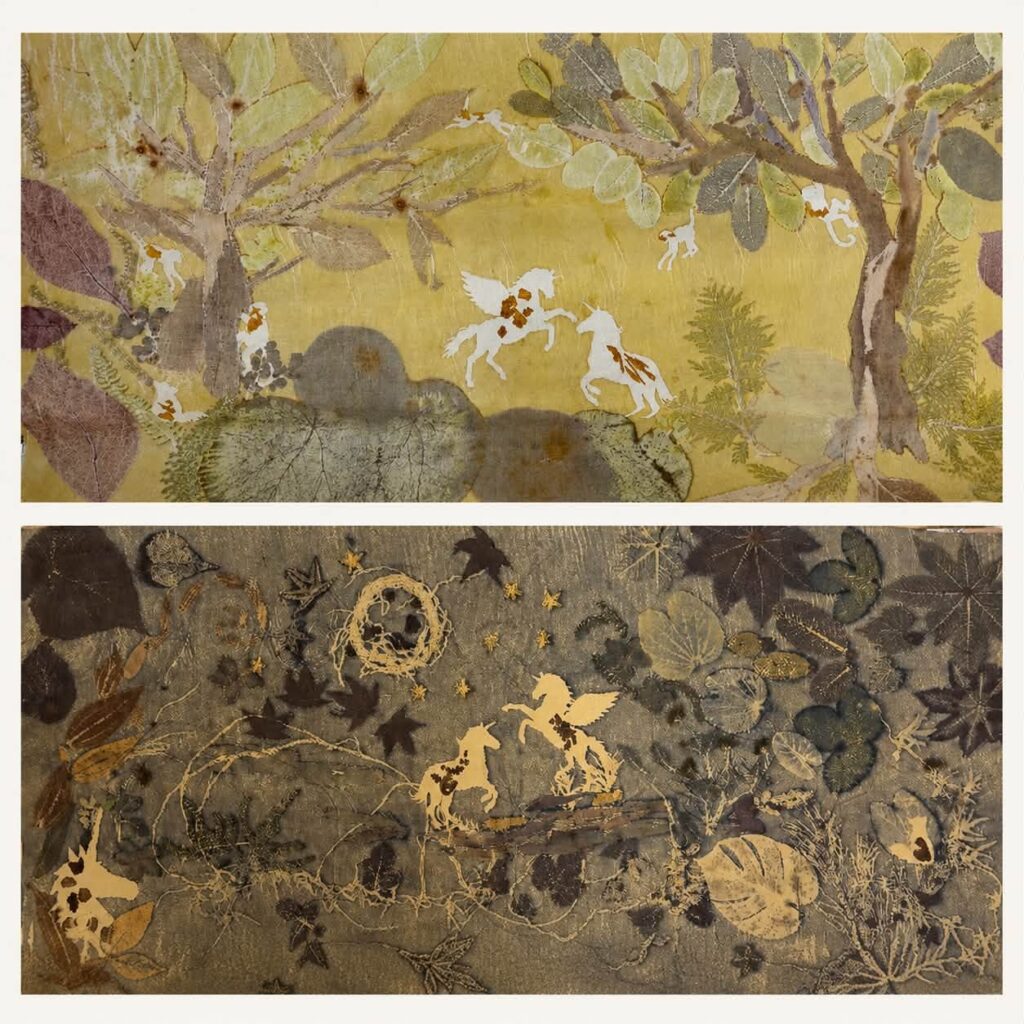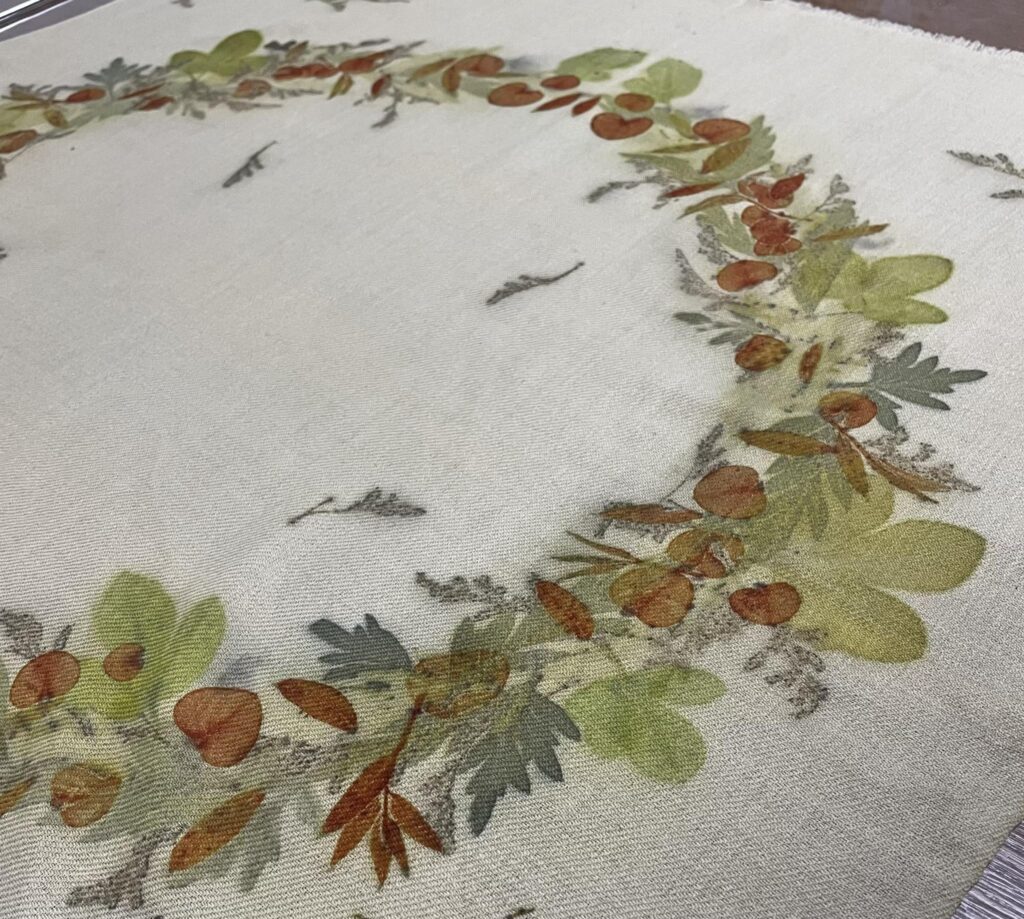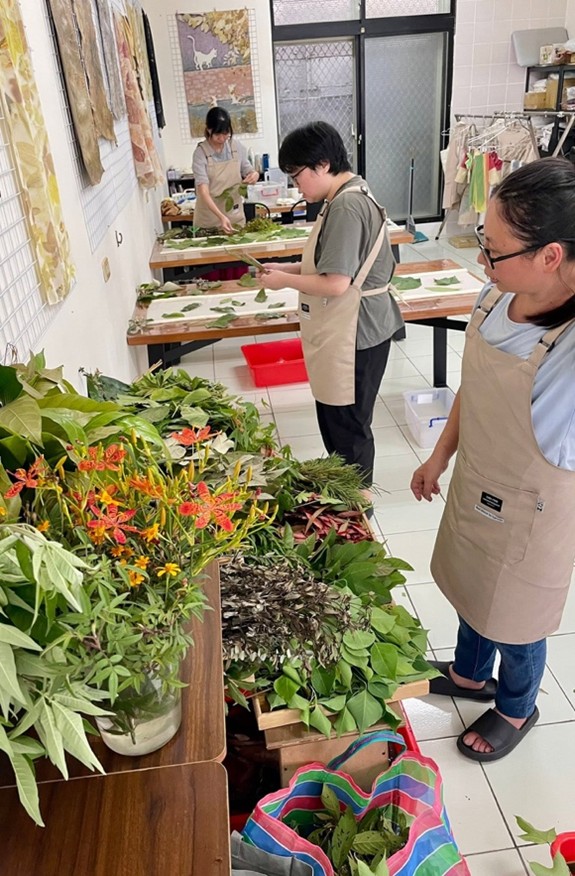


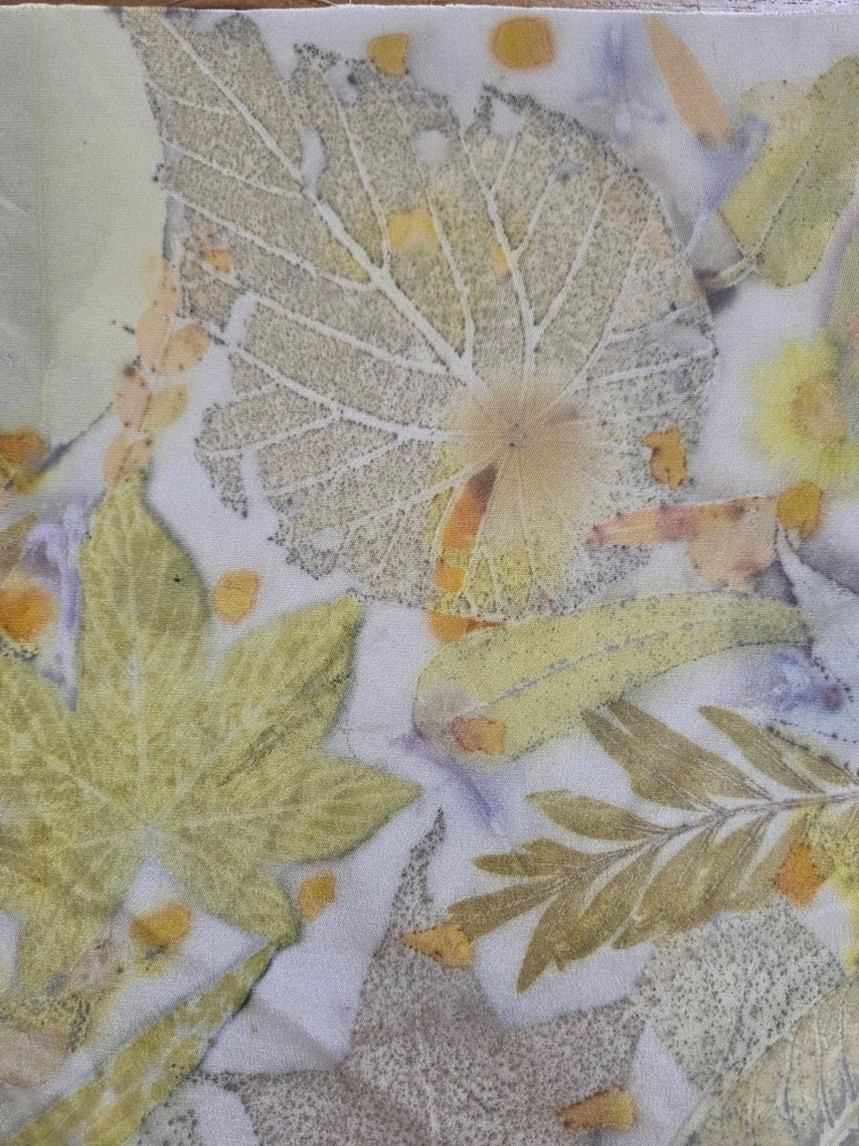
Silk mosaic pad printing is a natural dyeing and printing technique that transfers plant pigments, leaf veins and natural traces to silk fabrics through time, temperature, humidity and pressure.
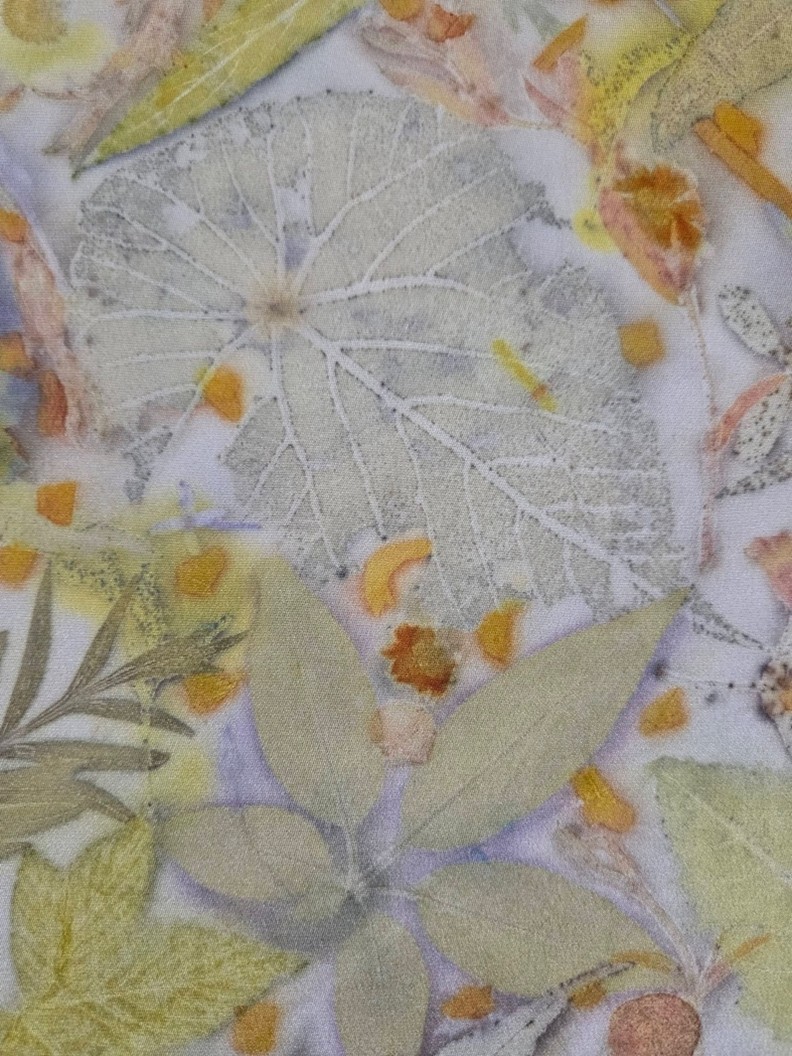
Silk itself is delicate, light and soft. The most charming thing is its unique light transmission and warm luster. When the colors of the flowers and leaves fall on the silk fibers, they are not covered in a thick layer, but appear as if they are gently held up by the light, showing looming layers. The veins, petals, color spots and smudged borders will become more delicate in the translucent texture of the fabric, giving the work a quiet, soft and breathing temperament.
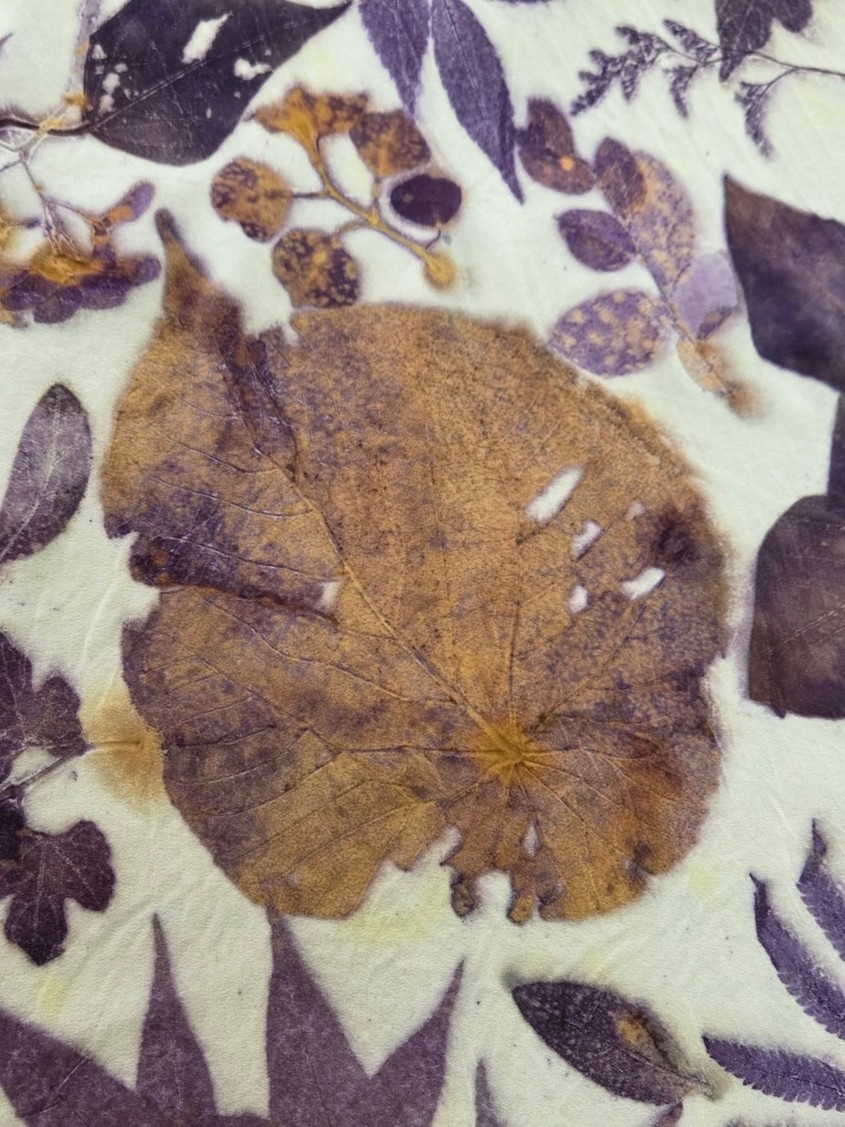
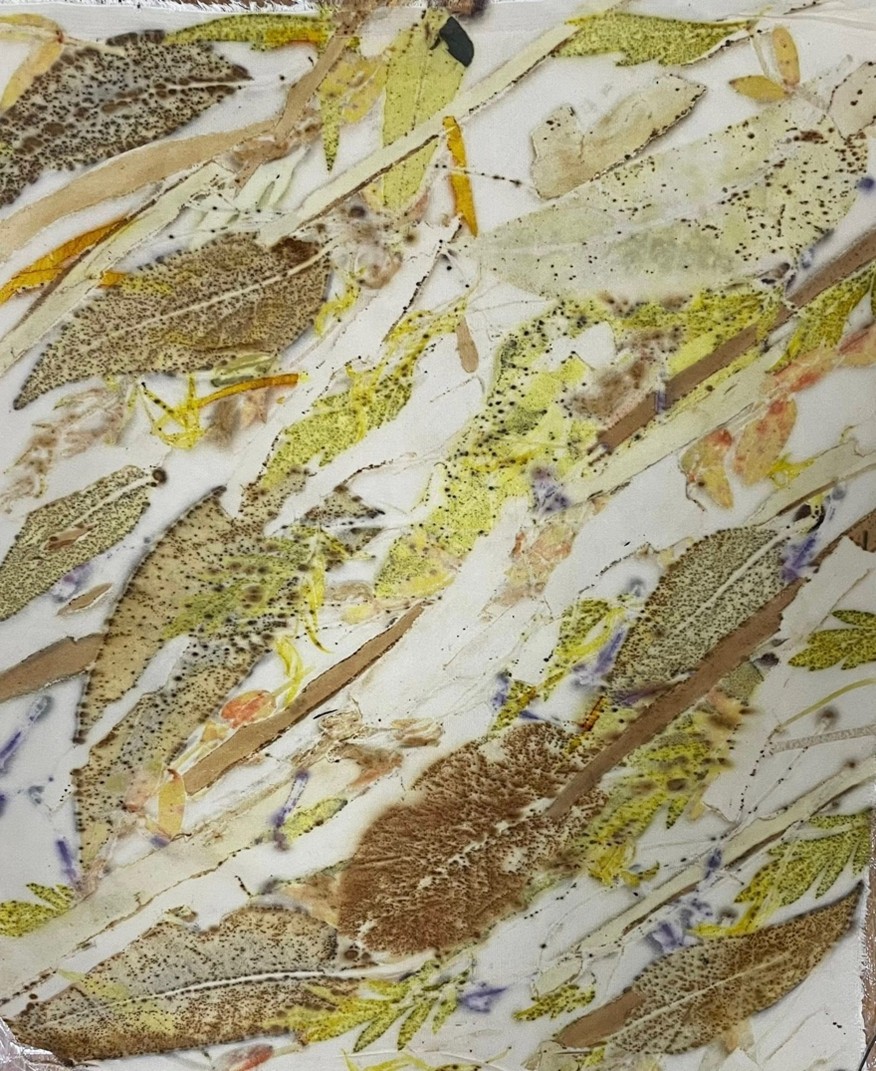
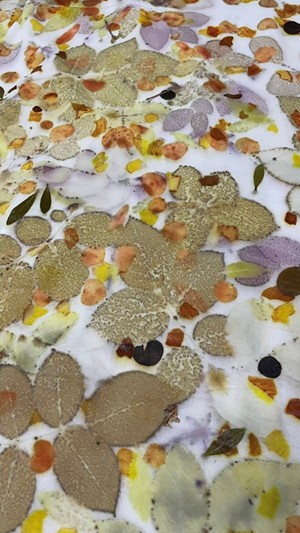
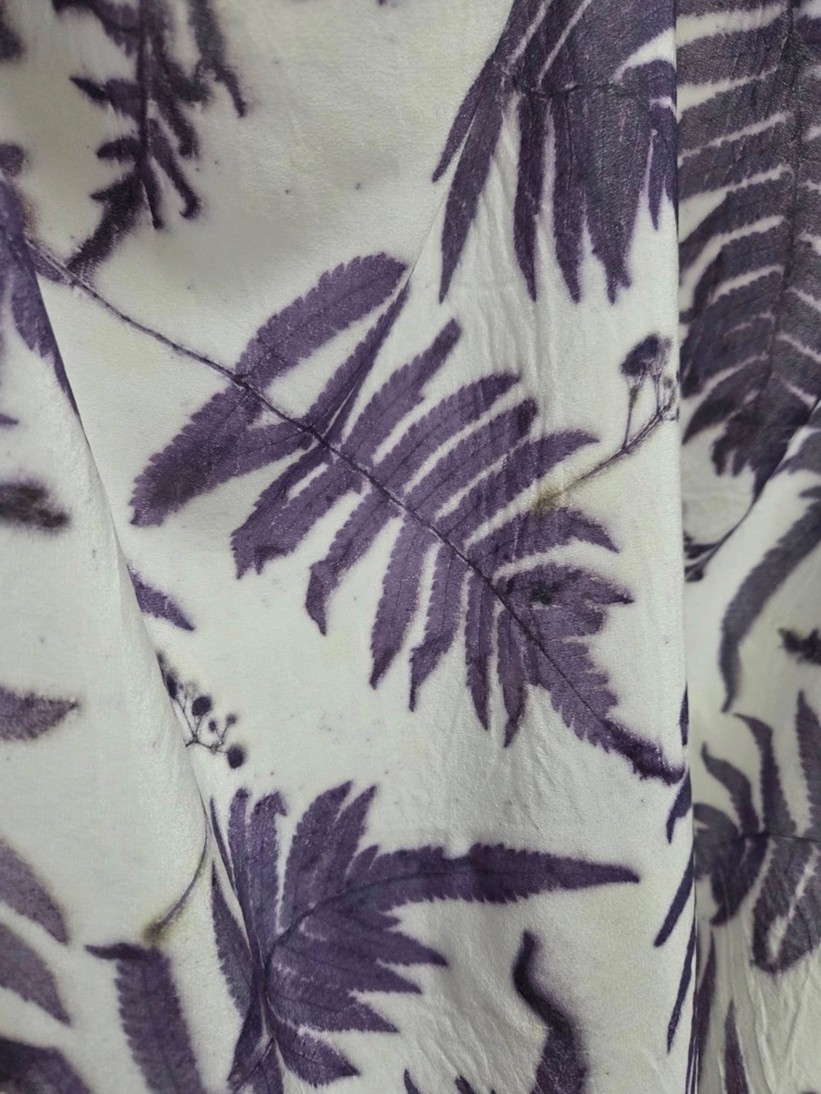
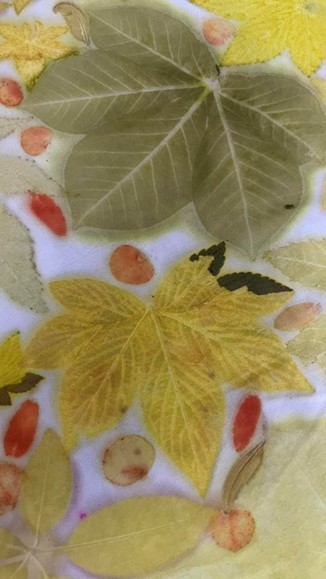
When pad printing and dyeing mosaics and leaves on silk, the technique control is also more detailed. Silk fiber is relatively delicate. Excessive friction, pulling or improper high-temperature treatment may affect the feel and luster of the fabric, so every step needs to be gentler and more precise.
Compared with fibers such as cotton and linen, silk absorbs plant colors more gently. It doesn’t just absorb the color, but allows the traces of the plant to blend with the sheen of the fabric itself. When viewed from different angles, light will pass through the cloth, causing the floral and leaf imprints to change in depth, making the work not just a flat pattern, but like nature being collected in a thin layer of light.
After the work is completed, every leaf vein, every smudge, and every faint color mark are natural marks left by plants and silk. It is not a simple dyeing, nor is it a printing that can be reproduced in large quantities, but a creation completed by flowers, leaves, fibers, time and light.
1. Get the fabric moisture level just right
If silk is too dry, the plant pigments won’t transfer easily; if it’s too wet, the pattern can blur. Slightly damp, soft, and able to sit closely against the plants is the ideal state.
2. The front and back sides of the blade will affect the transfer effect.
The leaf veins are usually more obvious on the back of the leaf, making it easier to leave texture; the leaf surface may show softer color patches. Different plants need to be tested to learn the best aspects.
3. Rolling and bundling should be even
Silk is soft and smooth, so avoid shifting when covering it. If the binding is too loose, the leaves will easily move; if it is too tight, it may cause excessive indentation or excessive local color patches.
4. The cooking time and temperature should not be too rough.
Silk requires gentle handling to allow the plant pigments to be slowly released. Excessive high temperature or too long time may weaken the luster of the fabric and may also make the color dull.
5. The reaction between mordant and plants must be tested first.
Different mordant dyeing methods will cause plants to produce completely different colors, some of which will be yellowish, gray, green, or brown. The color development of silk is delicate, so it is important to test the sample.
6. Keep the light transmittance of silk and don’t make the picture too full.
The most beautiful thing about silk works is the breathiness between the traces of flowers and leaves and the white space on the fabric. Moderate white space can make the light, leaf shadows and fabric temperament more obvious.