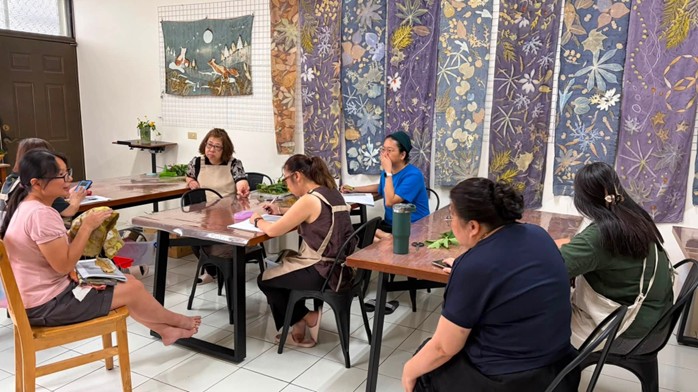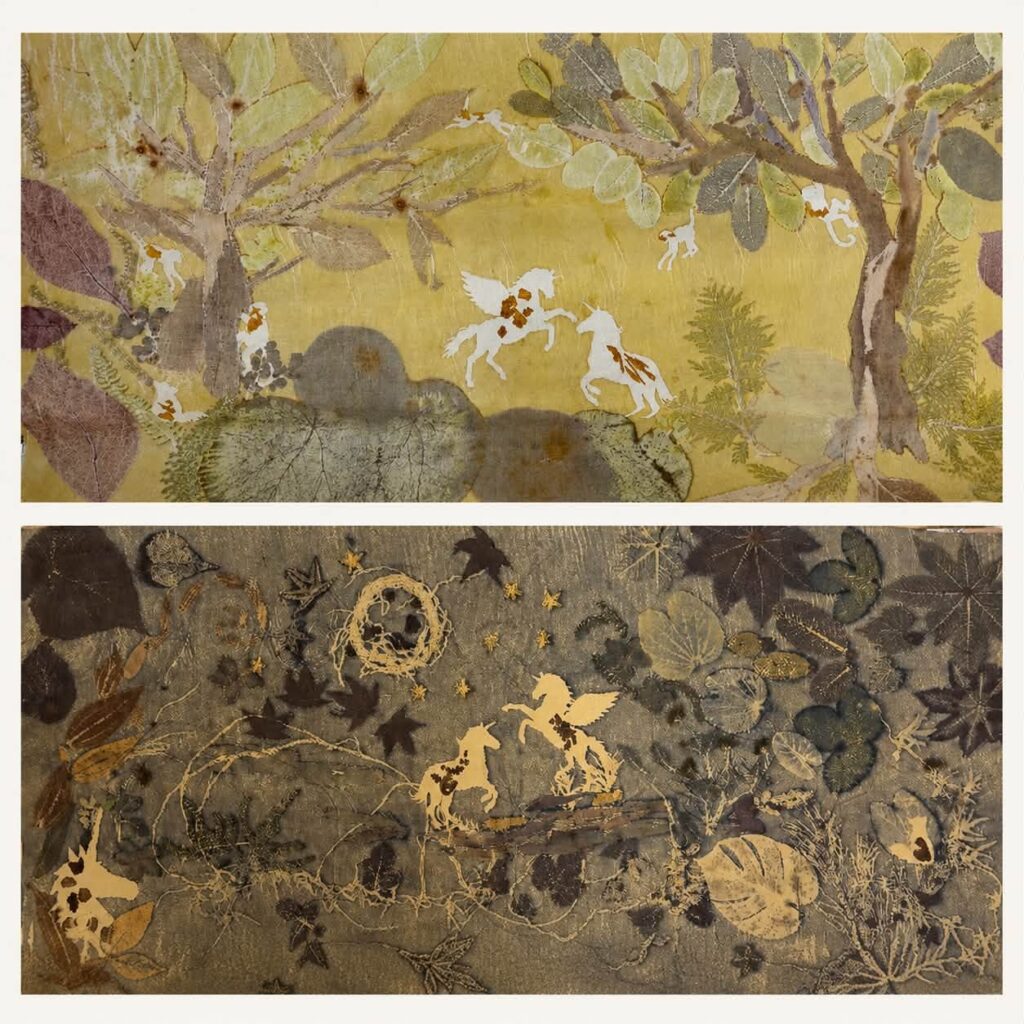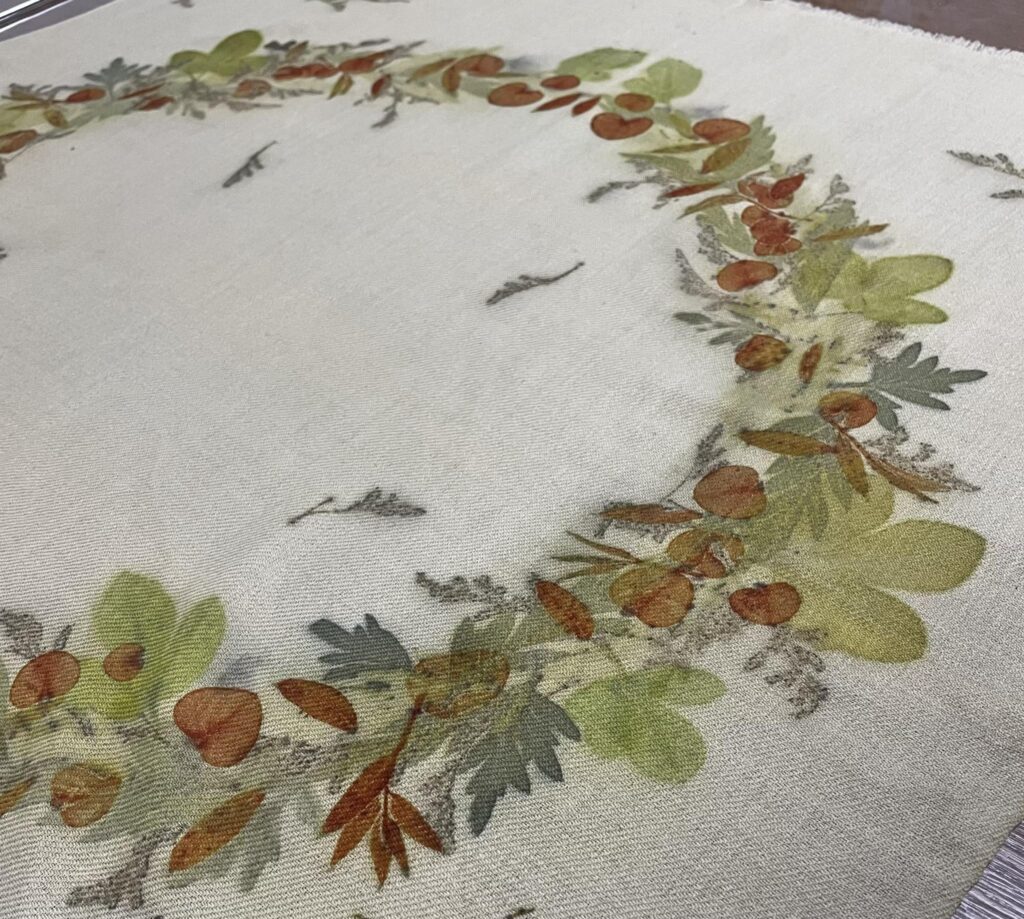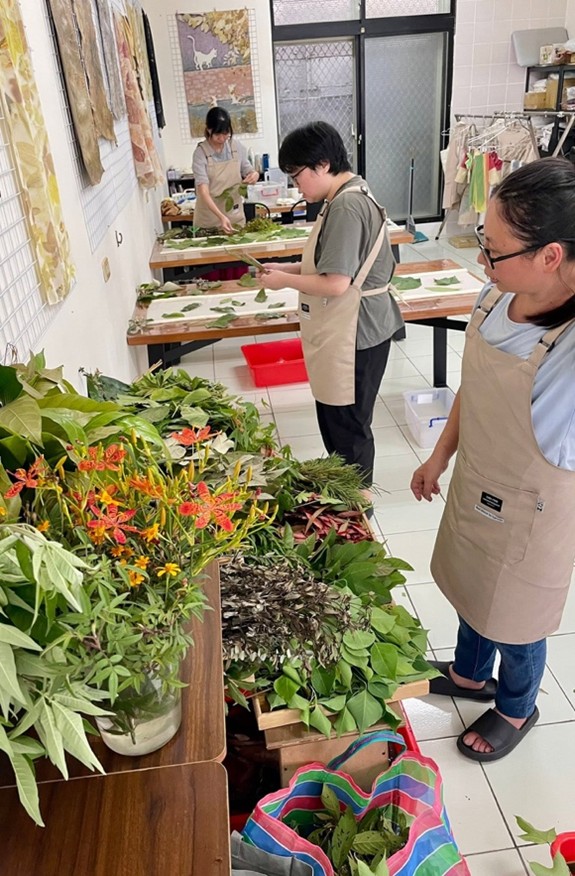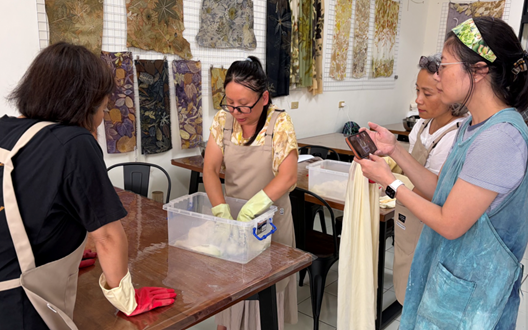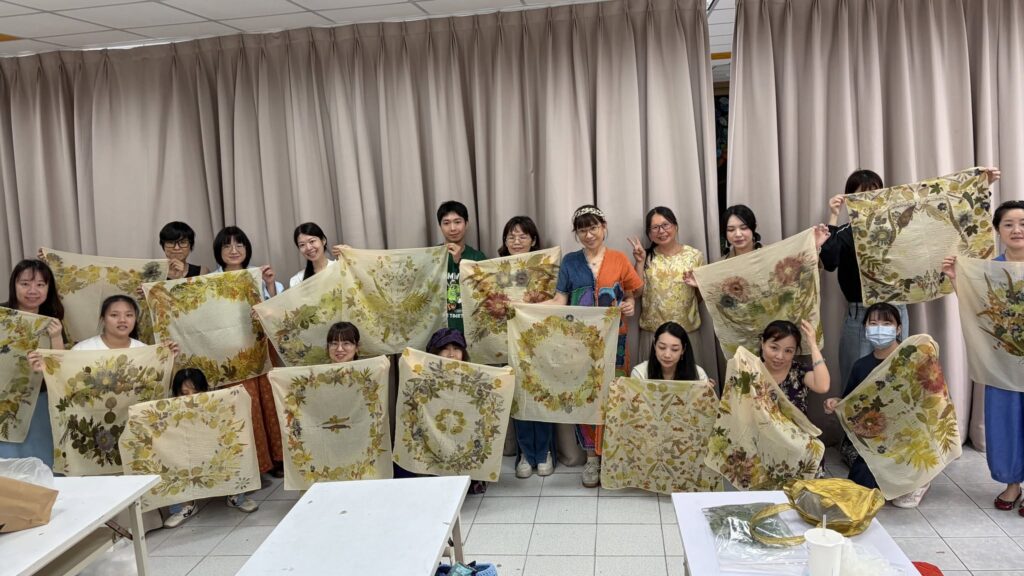


Botanical contact printing is more than just a dyeing technique that captures the forms and colors of plants on fabric; it is an artistic process that allows one to reconnect with nature, focus on the present moment, and perceive one’s inner state through the act of creation.
From venturing into nature and gathering plants to observing the shapes, textures, and patterns of the leaves—and moving on to selection, composition, color arrangement, dyeing, and the unfolding of the final piece—every step demands time and focus. As the hands begin their work, attention gradually shifts away from the bustle of the outside world, returning instead to the leaf, the fabric, and the colors right before one’s eyes—and to the self in the present moment.
This also represents a natural connection between botanical eco-printing and “art therapy.”
🌿 What is art healing? Creating art doesn’t necessarily require a standard answer.
The value of art therapy lies not merely in creating a “beautiful artwork,” but—more importantly—in the feelings, choices, and self-expression that emerge during the creative process. At times, it is difficult to articulate our emotions directly in words; however, colors, lines, shapes, arrangements, and imagery can serve as an alternative form of expression.
Do you want to choose bold colors or subdued tones today?
Do you want to arrange the leaves neatly and in an orderly fashion, or let them spread freely?
Do you want the composition to be rich and full, or would you prefer to leave more negative space?
These seemingly simple creative choices actually reflect the creator’s immediate feelings and aesthetic judgments. There is no single right answer in artistic creation, and the process of botanical contact printing introduces an element of nature itself that cannot be fully controlled. Thus, what we practice goes beyond mere technique; through the creative process, we also learn to observe, accept, adjust, and make new choices.
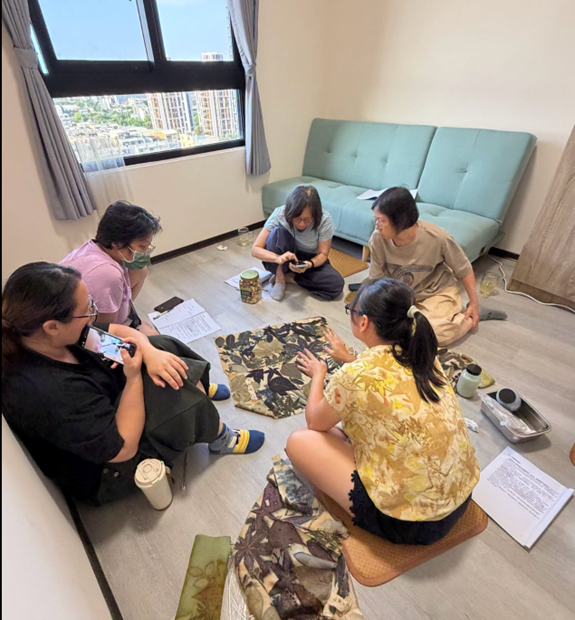
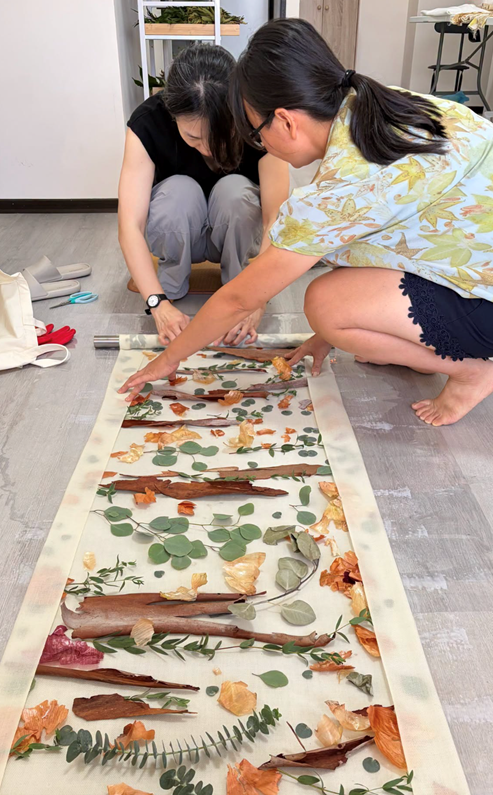
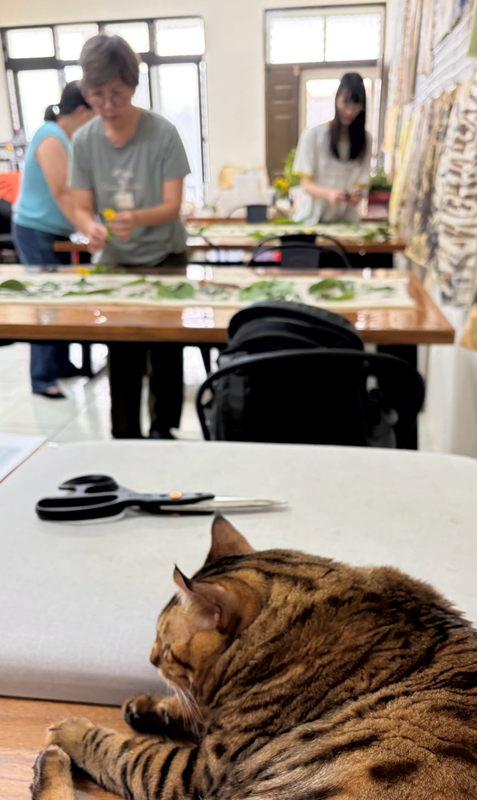
🍃 Connect with plants and reawaken your sense of nature.
A distinctive feature of botanical contact printing is that the materials used for creation come directly from nature.
A freshly picked leaf, a segment of a branch, or a flower in season—each possesses its own form, scent, texture, and traces of life.
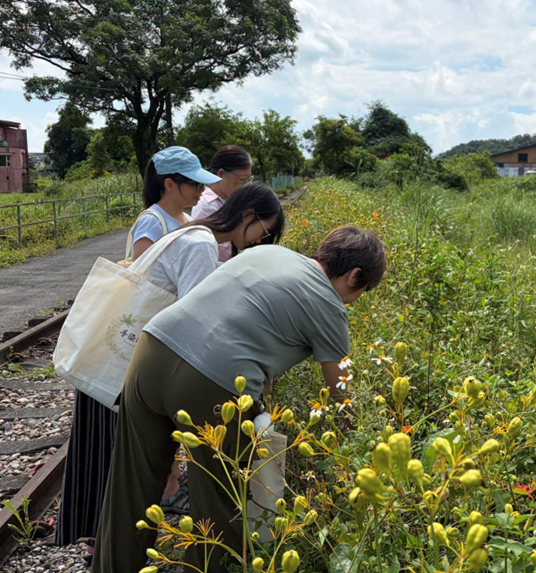
As we begin to seek out plants, identify foliage, touch leaves, observe veins, and even notice how the seasons alter the plants’ colors, our senses gradually reawaken.
This process means that “creation” no longer takes place solely at the workbench; in fact, the creative act begins the moment one starts gathering materials outdoors.
Walking, observing, selecting, touching, and bringing plants back to the workspace—these processes allow one to step away from the rapid-fire pace of information and daily life, refocusing attention on the tangible environment and physical sensations.
🎨 Color is another form of expression that requires no words.
In artistic creation, color often conveys highly intuitive feelings.
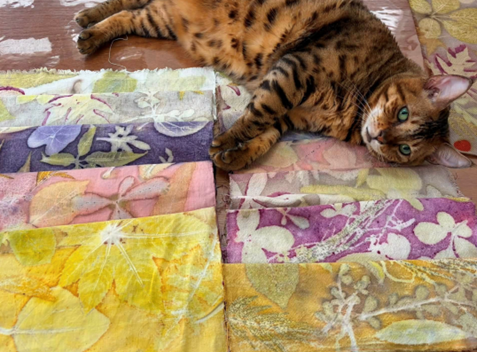
The colors in botanical contact printing are not simply applied directly via pigments; rather, they emerge from the interplay of plants, dyeing materials, mordants, fibers, temperature, and time. Consequently, every creation carries an element of the unknown.
Some prefer low saturation and earth tones, while others favor bold color contrasts; some find comfort in abundant negative space, whereas others like to fill the entire frame with plants.
When creating, instead of rushing to judge whether something is “right or wrong,” we can first simply experience it:
Why do I like this color?
Why do I want to put the leaf here?
What kind of feeling does an image like this evoke in me?
When the creative process begins to incorporate such reflections, the work transcends mere technical achievement, gradually evolving into an expression of personal sentiment and aesthetic experience.
🌱 Focus on what your hands are doing, and let your mind gradually quiet down.
Botanical contact printing is a creative process that cannot be rushed.
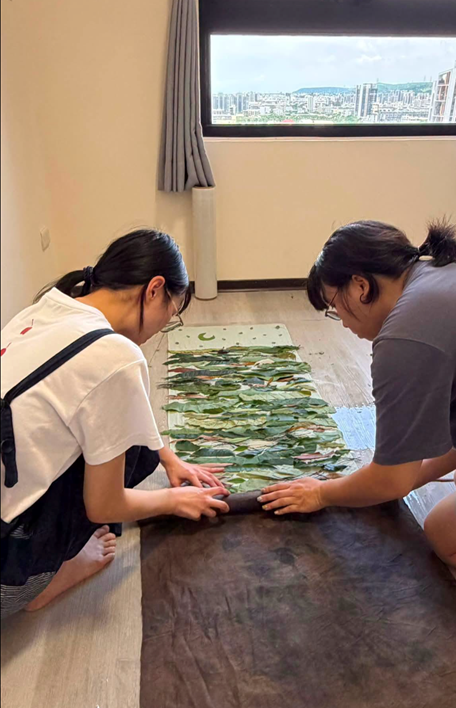
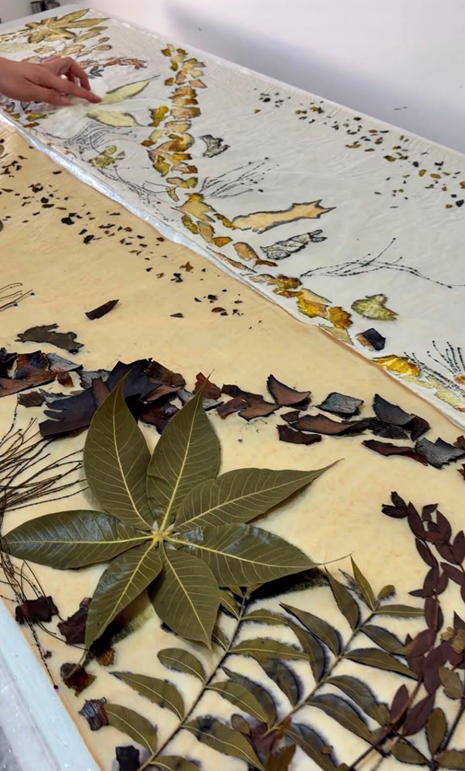
The fabric requires processing, the foliage must be selected, and the composition arranged; then follow the steps of rolling, binding, steaming and dyeing, and waiting.
Many steps require repeated two-handed operations.
When attention is focused on the placement of leaves, the texture of the fabric, the tension of the binding, and the details of the composition, it is easy to enter a state of deep concentration on the task at hand.
This kind of focus is, in itself, a crucial part of artistic creation.
For the time being, we do not need to juggle multiple tasks; instead, we dedicate our time to a single work in progress.
For many, this is the most comforting aspect of botanical contact printing: it is not about forcing yourself to stop thinking altogether, but rather about finding a place to anchor your attention through the tangible act of creating.
🍂 Embracing the “unpredictable” is also a form of practice in the creative process.
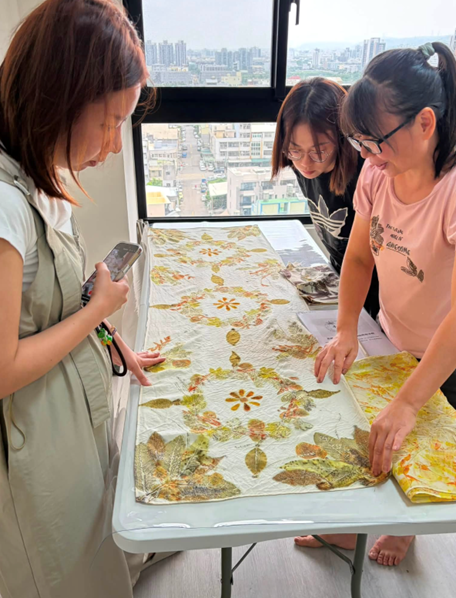
The most anticipated moment in botanical contact printing is often when the fabric is slowly unfurled after the steaming process. Yet, before opening it, no one can know the final outcome with absolute certainty. The same plant can yield vastly different results depending on factors such as the season, the age of the leaves, the mordanting method, the type of fiber, and variations in temperature and duration. Some leaves reveal intricate vein patterns, while others leave behind soft, subtle outlines; at times, the expected colors emerge, while at others, unexpected bleeding effects and transformations occur.
Therefore, leaf-print dyeing also allows us to practice facing the fact that we cannot exercise complete control. Not every leaf needs to be perfect, nor does every dyeing result have to align exactly with our initial vision.
When the outcome differs from expectations, we can revisit and reinterpret it—or even turn the unexpected into a clue for our next creative endeavor. We embrace the serendipity offered by nature and accept that a work need not be perfect. It is precisely this uncertainty that makes every act of creation unique.
🧘 Practicing self-awareness through the creative process
Art therapy is about more than just feeling relaxed after completing a piece of work; its deeper value lies in becoming attuned to your own feelings during the creative process.
Am I really afraid of making a mistake?
When something unexpected happens with my work, do I rush to fix it, or am I willing to take a moment to look at it first?
Do I tend to pack the frame, or do I need a lot of space?
When choosing colors, should I follow the teacher, or start trusting my own intuition?
There are no standard answers to these.
Yet, when one begins to observe one’s own choices, emotions, and reactions, the act of creation can become a gentle mirror. Rather than rushing to analyze ourselves, we draw closer to our own feelings through the repeated processes of choosing, arranging, and waiting.
🌿 Moving from Mastering Techniques to Free Expression
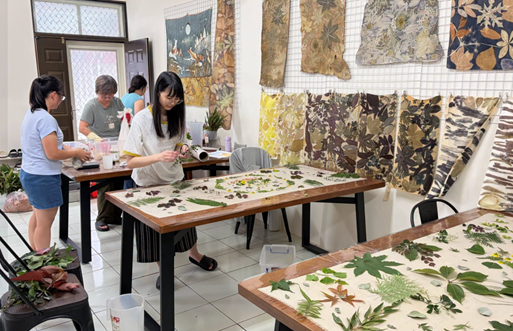
We believe that truly artistic botanical contact printing should not merely be a replication of the instructor’s work.
Technique is very important.
Understanding plant characteristics, fiber processing, the roles of dyeing materials and mordants, and the control of temperature and time forms a crucial foundation for the steady development of one’s creative practice.
However, technology should ultimately serve the creative process.
Once learners have gradually mastered the fundamental principles, they can begin to consider their own use of color, composition, subject matter, and visual language.
It gradually shifted from “the teacher telling me where to place the leaf” to “I want the leaf to appear here.”
Moving beyond “how to achieve this color” to “what I want to express with this color.”
This shift marks a crucial step from the study of techniques to artistic creation.
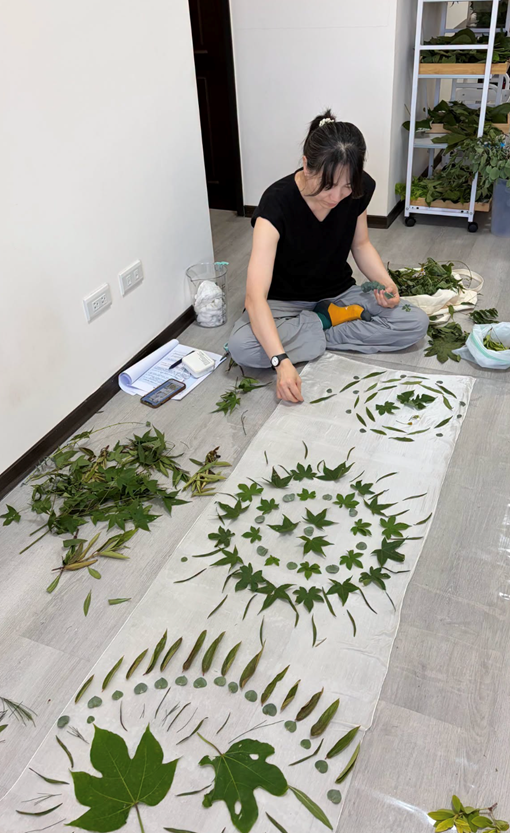
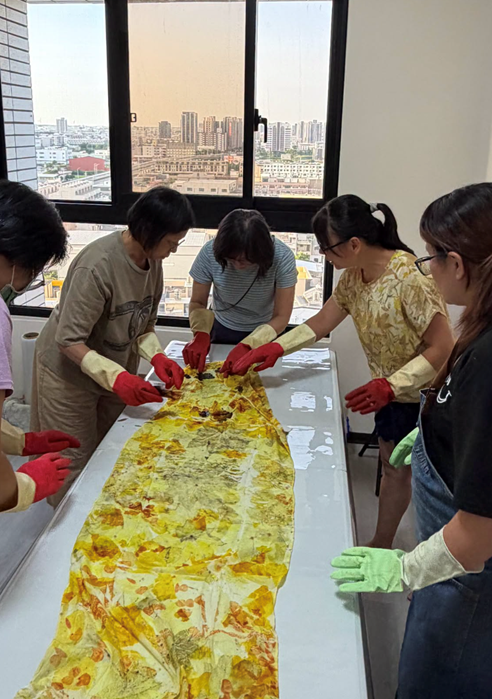
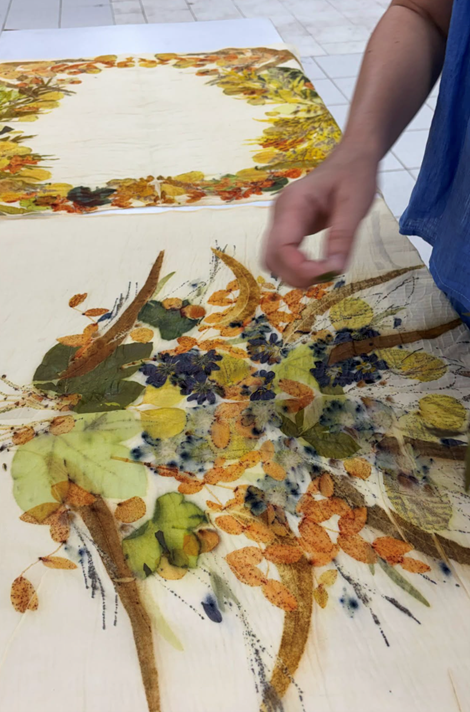
💚 Botanical contact printing: letting nature become a medium that accompanies the creative process.
The therapeutic value of the art of leaf-print dyeing does not necessarily stem from any single step, but rather resides in the entire creative journey—from stepping into nature and observing plants to the hands-on work and focused composition; from the anticipation of the dyeing process to embracing unpredictable outcomes; and from mastering techniques to gradually discovering one’s own unique palette and creative style.
In our interactions with plants, we also engage with our own feelings.
What remains in the end is not merely the imprint of plants on the fabric.
It could also be a period of focused attention, an opportunity to reconnect with yourself, and a creative experience shared between you and nature.
Using leaves as brushes and colors to paint—inviting nature into the artwork, and bringing creativity into everyday life.
Botanical contact printing is about more than just capturing the shapes of plants; it can become a quiet, authentic dialogue between nature, color, and the heart.